Faber
Un été à la ferme - L'âge d'or
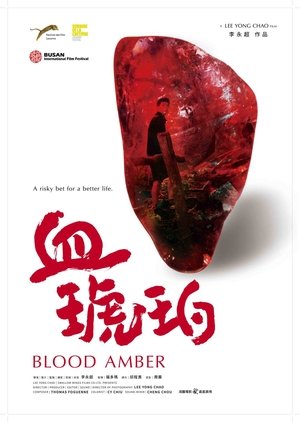
Somewhere in Myanmar is a forest rich in amber and controlled by the Kachin Independence Army (KIA). Most of its inhabitants work in a mine, digging the earth night and days in the hope of finding the precious ore that will get them out of poverty. But on top of the excruciating hardship of the work, they also have to fear an attack from the army.
At the beginning of the 70s, Sahia Studio produced a number of social investigations commissioned by the Central Committee of the Romanian Communist Party, intended to expose the so-called "social parasitism". The decision was taken after the theses of July 1971, which provide that "one of the main objectives of political work, especially among the youth, is the firm fight against the tendencies of parasitism, of an easy life, without work, the cultivation of responsibility and the duty to work , in the service of the country, the people, the socialist society". The most famous films, made with the competition of the Ministry of the Interior and the Ministry of Justice, are Să treacă vara and Iarna unor pierde vară
A more experimental aproach to labor protection films. In the line of Săucan's style, the soundtrack is as important as the image, the threatening music, full of shrillness, composed by Ion Dumitrescu potentiating the visual construction that mixes - in a montage reminiscent of the Soviet avant-garde school of the 1920s - all kinds of shooting techniques and frame combinations.
It is a fetish, a mantra, a secret religion to modern man: work. In times of the financial crisis and massive job reductions, this documentary movie questions work as our 'hallow' sense in life in a way that both humors and pains us.
Stylized with dramatic interiors and a distorted frame rate, this early documentary miniature from Szulkin depicts six sequences of solitary, repetitious labor.
La Meilleure Façon de tracer
Luminous Shores
This is the story of an ordinary man transformed by history. A simple baker from Besançon who became a political symbol of resistance. That of a France that knows how much it needs others to grow. Of working classes rejecting the siren calls of populism. He says: "I was nothing and I became a monster" to express the vertigo of his transformation. And so the baker entered politics, visited the United States in the footsteps of Martin Luther King, brought aid to the Ukrainians, and ran for legislative elections. Fearless. Fighting with all his heart. It is this inspiring, touching, and funny human epic that Pedro da Fonseca's camera followed closely, capturing his doubts, his hesitations, and his emotions.
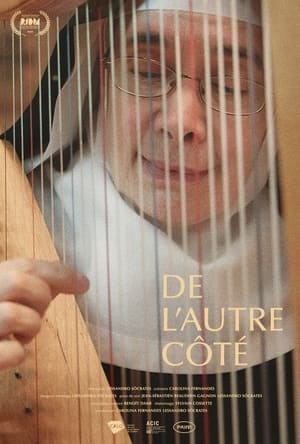
The oldest Quebecois Benedictine convent open its gates to a documentary filmmaker for the first time. Observed up close, life behind its walls is busier than one would expect. About twenty cloistered nuns, most of them over 70, share their daily life with diligence and humor. A contemplative portrait of a community of sisterhood and solidarity emerges, punctuated by prayer, work and games evenings.
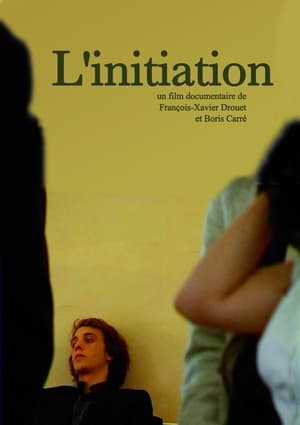
Hannah, Laure, Adrien, and Halima are students at the Regional Institute of Social Work in Paris. Four students among the fifty in the first year of training to become educational support workers. They chose this profession out of commitment and vocation. Between the classroom and their field placements, they will confront their dreams and ideals with the realities on the ground, discover new sides of themselves, and begin to shape the contours of the profession they will practice—each in their own way.
East of Walbrzych
What we tend to identify with the acting profession has little to do with what is really this profession. Thirty-six Spanish actors reflect on their work and contrasted their experiences. As thread, the contrast between the voices of veterans and images of young theater students , for whom everything is still possible. Among the many actors are interviewed Javier Bardem, Antonio Banderas, Victoria Abril, Carmen Maura, Fernando Fernán Gómez, José Luis López Vázquez, José Coronado, Emma Suarez, Alberto San Juan, Ariadna Gil, Ana Belén, Pilar Lopez de Ayala and many other.
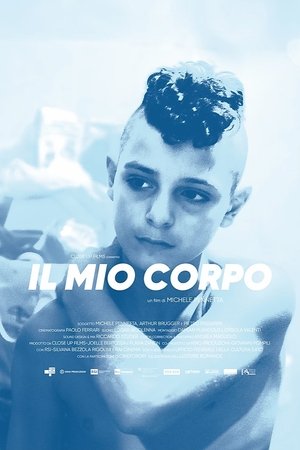
Oscar, not quite a child anymore, scavenges for scrap metal for his father. He spends his life in improvised landfills among what remains of leftovers. Worlds apart, yet close-by, there is Stanley. He tidies the church in exchange for a monetised hospitality, picks fruits, herds sheep: anything that keep his foreign body busy. Oscar, the young Sicilian, and Stanley the Nigerian don’t seem to have much in common. Except for the feeling of being thrown into the world, to suffer the same refusal, the same overwhelming wave of choices imposed on them by others.
Eine Schauspielerin versucht zu weinen
Immigrant workers build a shopping mall for the upcoming 1972 Olympic Games in Munich. In 2016, nine people with migrant backgrounds are killed in a racist attack at the same mall.
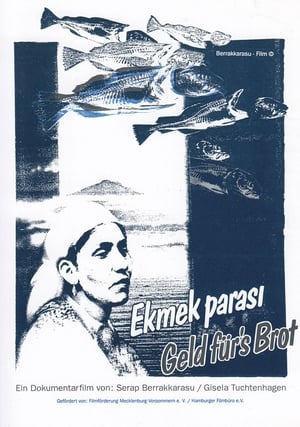
The viewpoints of women from a country that no longer exists preserved on low-band U-matic tape. GDR-FRG. Courageous, self-confident and emancipated: female industry workers talk about gaining autonomy.
Les Couturiers de l'Église
Isaac, a failed actor and Skies employee, shows us the daily life of workers in an average call center, facing the boredom to get to the end of the work day.