Your raging romp results only in rescinded regret @ the hands of radder cadets.
(Some of us) Still run down the same [mental&emotional] streets we revered/reproached/replaced as children.
Hiding inside&out, writhing about, taken out&in.
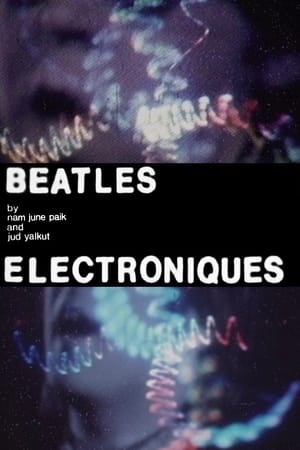
Part of a collection of restored early works by Nam June Paik, the haunting Beatles Electronique reveals Paik's engagement with manipulation of pop icons and electronic images. Snippets of footage from A Hard Day's Night are countered with Paik's early electronic processing.
The final 17 years of American singer and musician Karen Carpenter, performed almost entirely by modified Barbie dolls.
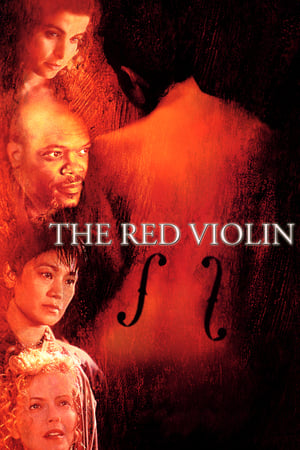
300 years of a remarkable musical instrument. Crafted by the Italian master Bussotti (Cecchi) in 1681, the red violin has traveled through Austria, England, China, and Canada, leaving both beauty and tragedy in its wake. In Montreal, Samuel L Jackson plays an appraiser going over its complex history.
This fantastical movie inspired by the music of Michael Jackson features imaginative interpretations of hit tracks from the iconic 1987 album “Bad”.
A conceptual live concert by Diamanda Galás, "Plague Mass" continues the themes of the suffering and misery of the infected found in her "Masque of the Red Death" trilogy.
Sex as dance and comedy: in Progressive Touch Portnoy studies and expands the relationship between sex, choreography and composing music. He introduces complex compositions from progressive rock and math metal during sex, thereby combating the ostensible simplification of rhythm in human movements and gestures. A group of actors perform the new moves in three slapstick-like scenes. Worth trying at home.
Eye-popping digital moving image work with an equally arresting soundtrack from noise music heavies.
Frank Zappa: New York & Elsewhere is an Austrian released TV documentary directed in 1980 by Rudi Dolezal and Hannes Rossacher, aka DoRo productions, who are most popular for their work with Queen.
Dislocation in time, time signatures, time as a philosophical concept, and slavery to time are some of the themes touched upon in this 9-minute experimental film, which was written, directed, and produced by Jim Henson. Screened for the first time at the Museum of Modern Art in May of 1965, "Time Piece" enjoyed an eighteen-month run at one Manhattan movie theater and was nominated for an Academy Award for Outstanding Short Subject.
Documentary on Frank Zappa.
A huge, run-down apartment in Berlin Mitte. Two women and a man, rehearsals for a movie about love and sex, that will never be shot. Acting and reality mingle into a dangerous mélange.
Frank Zappa: Phase Two is a 2002 documentary about Frank Zappa. It features a lot of footage from Scheffer's previous film, but new material from Malcolm McNab's private achive.
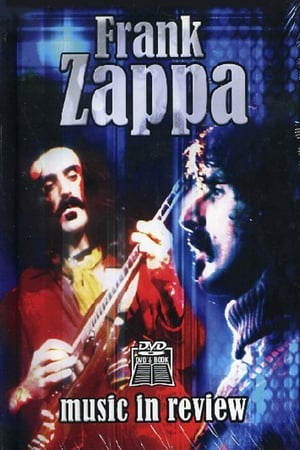
Idiosyncratic composer, unique musician and ground-breaking film director ..Frank Zappa packed more into his short lifetime than most men would manage in two. His restless, challenging, creative spirit meant that he never stood still during a career that bought huge critical and commercial success Zappa sold more than 60 million albums both as a solo artist and with the Mothers of Invention. The life and work of Frank Zappa are examined in this superb new critical review, which features new in-depth interviews with industry insiders, rock journalists and respected critics plus highlights from the songs that re-drew the face of rock music.
Cremaster 5 is a five-act opera (sung in Hungarian) set in late-ninteenth century Budapest. The last film in the series, Cremaster 5 represents the moment when the testicles are finally released and sexual differentiation is fully attained. The lamenting tone of the opera suggests that Barney invisions this as a moment of tragedy and loss. The primary character is the Queen of Chain (played by Ursula Andress). Barney, himself, plays three characters who appear in the mind of the Queen: her Diva, Magician, and Giant. The Magician is a stand-in for Harry Houdini, who was born in Budapest in 1874 and appears as a recurring character in the Cremaster cycle.
In his book "1984", George Orwell saw the television of the future as a control instrument in the hands of Big Brother. Right at the start of the much-anticipated Orwellian year, Paik and Co. were keen to demonstrate satellite TV's ability to serve positive ends-- Namely, the intercontinental exchange of culture, combining both highbrow and entertainment elements. A live broadcast shared between WNET TV in New York and the Centre Pompidou in Paris, linked up with broadcasters in Germany and South Korea, reached a worldwide audience of over 10 or even 25 million (including the later repeat transmissions).
Rock musical adaptation of William Shakespeare's "A Midsummer Night's Dream".
Halloween, New York City, 1981 Live at The Palladium with Ray White, Steve Vai, Bobby Martin, Tommy Mars, Ed Mann, Scott Thunes, Chad Wackerman