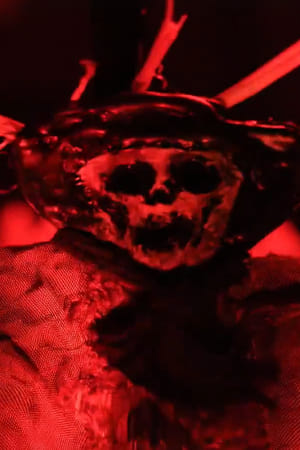
Jack O’ Lantern folktale about the origin of the Will-o’-the-Wisp retold through a haunted doll’s mind’s eye.
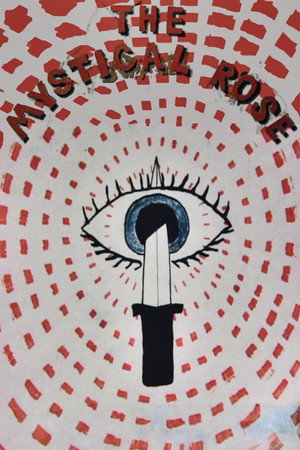
A disturbing cinematic opera from Melbourne film-maker, Michael Lee, presenting an intense emotional collage of film clips, original footage and complex object animation, structured loosely in the form of a Catholic Mass, to communicate the film-maker's traumatic Catholic experience. The film is intended in part as 'anti-imagery' in response to the iconography of Catholicism.
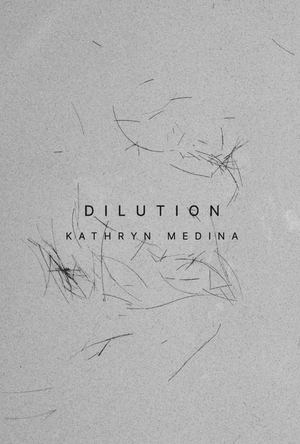
Dilution is an experimental short film that explores the transit between resistance and (di)ssolution, between holding and releasing and a path towards obsessive repetition. They are layers, exposed pores, matter that oscillates between remaining or disappearing. The sound is not a background, but a puncture: friction, tearing, water that drags what still persists. A sensorial testimony of what refuses to vanish completely.
In 2057, a smart house remains standing in a world without humans after a nuclear war, along with the robots inside it. The robots continue their daily routines meaninglessly. While humanity has been destroyed by a power of its own making and greater than itself, this artificial order, in parallel, is also unable to withstand the greater force of nature for long.
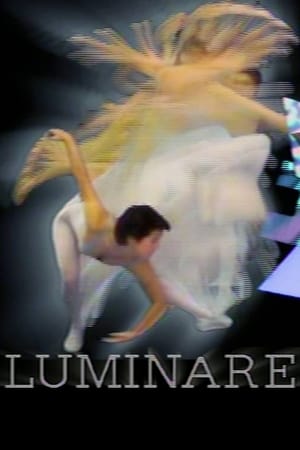
Abstract video art by John Sanborn and Dean Winkler. Dedicated to Ed Emshwiller.
Poème Électronique is an 8-minute piece of electronic music by composer Edgard Varèse, written for the Philips Pavilion at the 1958 Brussels World’s Fair. The Philips corporation commissioned Le Corbusier to design the pavilion, which was intended as a showcase of their engineering progress. The pavilion was shaped like a stomach, with a narrow entrance and exit on either side of a large central space. As the audience entered and exited the pavilion, the electronic composition Concret PH by Iannis Xenakis (who also acted as Le Corbusier's architectural assistant for the pavilion's design) was heard. Poème électronique was synchronized to a film of black and white photographs selected by Le Corbusier which touched on vague themes of human existence.
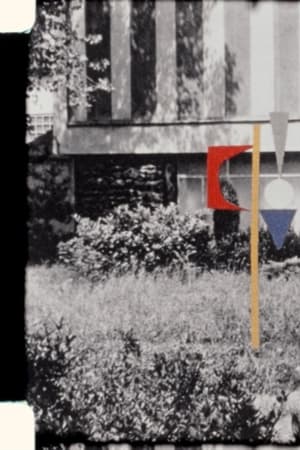
Filmed on 16mm film, this visual expression is rooted in its archival materials and backed up by the poem by Hans Magnus Enzensberger. It speaks of the forgotten people, their lives and their deeds. These two Archives have been found on the flea market in Zagreb. One is of a famous architect and the other one is of a famous composer. This film ponders on this occurrence, on the vanishing of and forgetfulness of humans.
An homage to the influential practice and philosophy of artist Nasreen Mohamedi. The film incorporates Mohamedi’s personal notes and her unique singular vision, drawing upon the aesthetics of the bare line, and its metaphysical journey eliminating physical borders/barriers.
A police officer has a fever dream after having too much sugar.
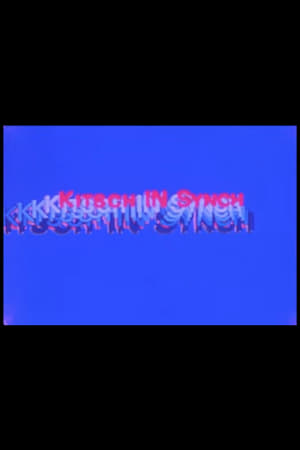
The animation, music, and optical printing of Kitsch in Synch was produced by Beckett and the students in two classes he was teaching at CalArts. Although a group project, it is clear that Beckett was the director. The playful, catchy soundtrack is used to create a cycle of building tension and release. The brightly colored shapes create approximate symmetrical formations and become more densely layered, with glimpses of iconographic objects and even live footage near the end. Preserved by the Academy Film Archive, in partnership with the iotaCenter, in 2007.
Gan Escapism is an experimental short film by Ukrainian-born artist Anna Malina. The film was crafted using a Generative Adversarial Network (GAN) to create a unique and captivating visual experience that blends abstract illustrations and evading sounds to create a surreal and thought-provoking piece of art.
"We Go Past Future" is an experimental paper collage film by Anna Malina. The film reimagines a series of Soviet films from 1919 to 1953, blending them into a unique visual narrative.
Experimental animation film by José Castillo.
Short experimental animation about childhood, school and mathematics based on my exercise book in second grade.
An exploration of Japanese culture by experimental animation artist José Castillo.
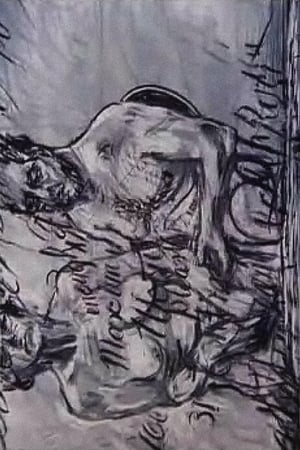
Charcoal animation, taken from from Point of View: An Anthology of the Moving Image (2003).
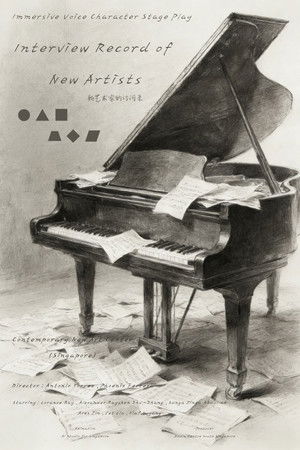
Interview Record of New Artists
A sparkling geometric play of shapes and forms in the M+ Museum of Hong Kong.
Inspired by the energetic German film, Run Lola Run, City Shocks delves into the chaos of urban life through a series of interconnected vignettes, while following a character navigating the bustling streets of a sprawling metropolis.