The story of Annabel's, the most celebrated nightclub in the world, and its 50-year history. Renowned for its discretion, and as a haunt of some of our greatest celebrities, the film offers a hitherto unseen glimpse into the rarefied worlds behind the doors of 44 Berkeley Square.
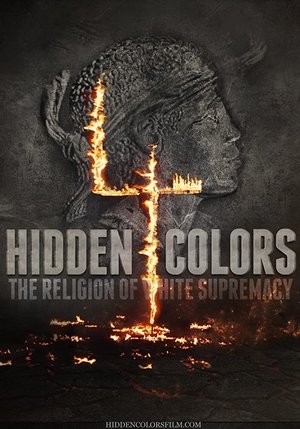
Hidden Colors 4: The Religion Of White Supremacy is the latest follow up film to the critically acclaimed hit documentary series Hidden Colors. In this installment of the Hidden Colors series, the film explores topics such as: The motivation behind European global subjugation The history of rarely discussed vast West African empires How germ warfare is used on melanated people The history of slave breeding farms in America And much more.
The story of the sexual memoirs of a Victorian gentleman who revealed himself as Walter. He documented his liaisons in a frank series of journals which ran to eleven volumes and 1.5 million words, titled 'My Secret Life'. Within the journals he documented details of his liaisons, the names of the women, their social standing, and their conversation. For a century, this material was considered obscene, its publication illegal. Today, however, it's seen as a unique insight into Victorian social and sexual mores, providing valuable information on class, gender, marriage, fidelity and morality. This film looks at the dark life of 'Walter', and examines the way his journals have shaped contemporary understanding of Victorian society. The film also examines the mystery that has surrounded this story - who exactly was 'Walter'? The film asks whether he could have been Henry Ashbee, a wealthy London gentleman who was obsessed with sex and attained a pornographic library of over 15,000 volumes.
“Being French in 2024 means being able to serve as Prime Minister while openly gay.” With these words closing his policy speech on January 30, 2024, Gabriel Attal made history. The documentary *Homos en politique: le dire ou pas?* uses this milestone — the appointment and visibility of France’s first openly gay Prime Minister — as a springboard for a broader inquiry. Journalists Jean-Baptiste Marteau and Renaud Saint-Cricq travel across France to meet LGBTQ politicians of all generations, from Paris to rural towns. Eleven years after the protests against same-sex marriage, has France really changed? Through interviews with figures like Bertrand Delanoë, Sarah El Haïry, Jean-Philippe Tanguy, Franck Riester, and others, the film explores how coming out intersects with politics, homophobia, and representation — questioning whether saying “I’m gay” in politics is still an act of courage or simply a sign of the times.
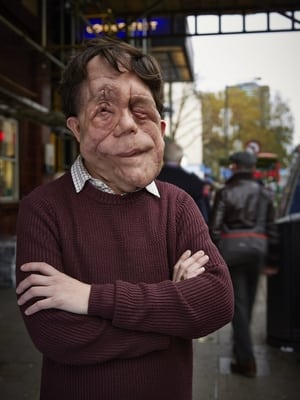
Adam Pearson - who has neurofibromatosis type 1 - is on a mission to explore disability hate crime: to find out why it goes under-reported, under-recorded and under people's radar.
A decade after taking a series of photographs of skinhead members of a far-right group for his book Public Enemies, Leo Regan returns to three members of the gang to see what has happened to them in the intervening years.
Documentary exploring the effect of mass immigration on the dwindling white community of the East End, from the perspective of those who remain and those who chose to leave.
Documentary film about the nationalist movement in Sweden
In the run-up to parliamentary elections in mid-October, Polish filmmaker Marcin Wierzchowski travelled across his country to gauge the atmosphere in a society that is more divided than ever.
This documentary charts 20 years of the French national soccer team, Les Bleus, whose ups and downs have mirrored those of French society.
Born June 8, 1964, Frank Matter films four "twins", born the same day as him, but in other latitudes. Interweaving their life stories with rich archival material, the filmmaker links these Parallel Lives with elements from his own biography, to compose a fascinating fresco where intimate trajectories are part of the advent of the global village.
This ultra-kitsch documentary goes behind the scenes at Murray's Cabaret Club, where Christine Keeler was later a showgirl.
In 1946, Isaac Woodard, a Black army sergeant on his way home to South Carolina after serving in WWII, was pulled from a bus for arguing with the driver. The local chief of police savagely beat him, leaving him unconscious and permanently blind. The shocking incident made national headlines and, when the police chief was acquitted by an all-white jury, the blatant injustice would change the course of American history. Based on Richard Gergel’s book Unexampled Courage, the film details how the crime led to the racial awakening of President Harry Truman, who desegregated federal offices and the military two years later. The event also ultimately set the stage for the Supreme Court’s landmark 1954 Brown v. Board of Education decision, which finally outlawed segregation in public schools and jumpstarted the modern civil rights movement.
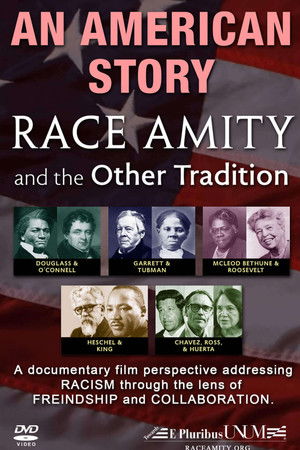
In contrast to the lens that focuses exclusively on the racist traditions that are rooted in America’s social history, the moral counterweight of close, loving, friendship and collaboration, which have always been present in our history, represents “the other tradition.” This “other tradition” is a source of inspiration and presents models of behavior that are instructional and include unknown and uncelebrated legacies to be absorbed and emulated across generations of present day Americans. The documentary discusses the “better in us” a needed collective perspective in the current climate of national disunity across racial, religious, and political lines. This has significant implications for addressing public issues from immigration to health care and the myriad of governmental, educational, business, and religious challenges that we must successfully meet to weave the fabric of unity which is indispensable to survival as a nation.
Narrated by Robert Culp, this special examines racism in the sixties
MORENA tells the uplifting story of the Philippine National Surf Athlete Ikit Agudo, who overcame the pressure to blend into a society obsessed with skin whitening. Within the ocean, she found happiness, strength, and pride in her roots. Inspiring young girls around the world to embrace who they truly are. In the Philippines, skin-whitening remains a billion-peso industry, a legacy of colonial beauty ideals that for generations have led many to neglect their true identity and natural beauty.
Jeffery Robinson's talk on the history of U.S. anti-Black racism, with archival footage and interviews.
Autodeclarado
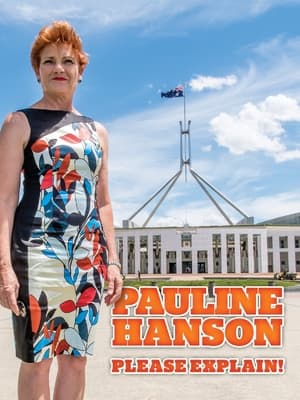
Director Anna Broinowski explores how Pauline Hanson's speech in 1996 and the decades of debate that followed has influenced Australia today; the impact of her political career on modern multicultural Australia, and the people who have helped her transition from local fish shop owner to Member for Oxley. Featuring many of Hanson's critics, opponents, advisors and commentators, from former Prime Minister John Howard, to current members of the media, including Margo Kingston and Alan Jones; and leading Indigenous commentator, Professor Marcia Langton.
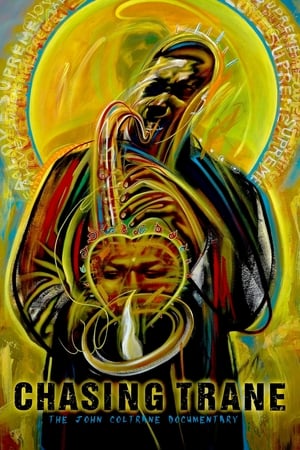
An account of the life of the brilliant jazz musician John Coltrane (1926-67), a gifted saxophonist, an extraordinarily talented thinker whose original, avant-garde work has impacted and influenced people all over the world. A story about music's ability to entertain, inspire and transform.