Recy Taylor, a 24-year-old black mother and sharecropper, was gang raped by six white boys in 1944 Alabama. Common in Jim Crow South, few women spoke up in fear for their lives. Not Recy Taylor, who bravely identified her rapists. The NAACP sent its chief rape investigator Rosa Parks, who rallied support and triggered an unprecedented outcry for justice. The film exposes a legacy of physical abuse of black women and reveals Rosa Parks’ intimate role in Recy Taylor’s story.
Documentary about war photographer James Nachtwey, considered by many the greatest war photographer ever.
A verité legal drama about Judge Kholoud Al-Faqih, the first woman appointed to a Shari'a court in the Middle East, whose career provides rare insights into both Islamic law and gendered justice.
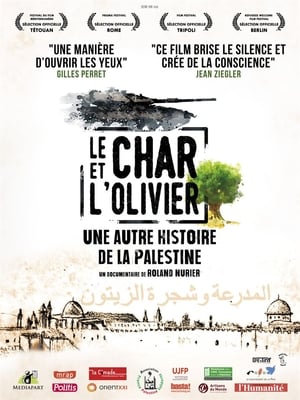
A thought-provoking documentary on the current and historical causes of the Israeli-Palestinian conflict and U.S. political involvement.
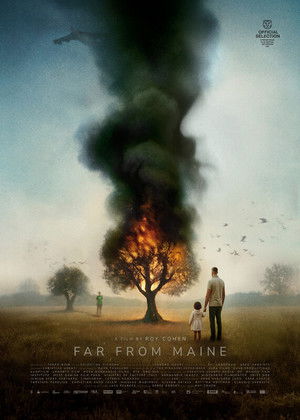
While millions of birds migrate freely in the skies above, Fadia, a Palestinian refugee stranded in Lebanon, yearns for the ancestral homeland she is denied. When a chance meeting introduces her to the director, Sarah, she challenges her to find an ancient mulberry tree that once grew next to her grandfather’s house in historic Palestine, a tree that stands witness to her family’s existence.
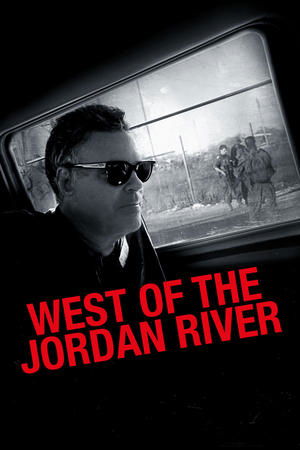
14 years after his first visit, Louis Theroux meets some of the growing community of religious-nationalist Israelis who have settled in the occupied West Bank.
During the worst days of World War II, the British government asks the mathematician Alan Turing to unravel the mysteries of the German Enigma encryption machine, an impossible task to accomplish without the invaluable information that Hans-Thilo Schmidt, a disenchanted but greedy German citizen, had been handing over to the French secret services since 1931.
2003 documentary film produced by Oliver Stone for the HBO series America Undercover about the conflict in occupied Palestine. He speaks with Ehud Barak and Benjamin Netanyahu, former prime ministers of Israel, Yasser Arafat, late president of the Palestinian National Authority, and various Palestinian activists resisting the oppression of the zionist regime.
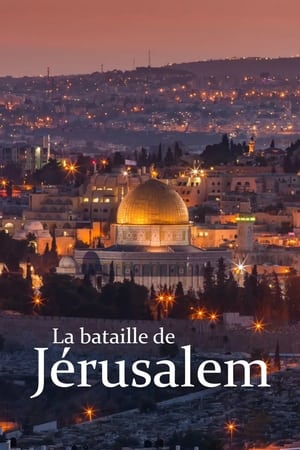
A documentary on how British double-dealing during the First World War ignited the conflict between Arab and Jew in the Middle East. The bitter struggle between Arab and Jew for control of the Holy Land has caused untold suffering in the Middle East for generations. It is often claimed that the crisis originated with Jewish emigration to Palestine and the foundation of the state of Israel. Yet the roots of the conflict are to be found much earlier – in British double-dealing during the First World War. This is a story of intrigue among rival empires; of misguided strategies; and of how conflicting promises to Arab and Jew created a legacy of bloodshed which determined the fate of the Middle East.
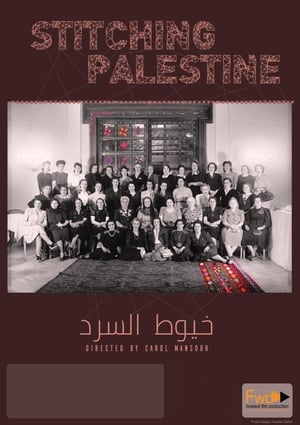
Twelve Palestinian women sit before us and talk of their life before the Diaspora, of their memories, of their lives and of their identity. Their narratives are connected by the enduring thread of the ancient art of embroidery. Twelve resilient, determined and articulate women from disparate walks of life: lawyers, artists, housewives, activists, architects, and politicians stitch together the story of their homeland, of their dispossession, and of their unwavering determination that justice will prevail. Through their stories, the individual weaves into the collective, yet remaining distinctly personal. Twelve women, twelve life-spans, and stories from Palestine; a land whose position was fixed on the map of the world, but is now embroidered on its face.
On June 6, 1944, the Allied Forces executed Operation Overlord, the largest seaborne invasion in history, storming the beaches of Normandy. This pivotal event, known as D-Day, liberated France and Western Europe. A new documentary features interviews with historians, experts, and eyewitnesses, providing detailed insights into the events leading up to this crucial day that played a vital role in bringing an end to World War II.
We gain rare access inside the Jenin Battalion, a new Palestinian armed group that’s formed to fight back against Israeli military raids in the occupied West Bank. Fighter Abu Aseel, not his real name, takes us through Jenin and shows us how the brigade is training and preparing to defend the city for the next time the Israeli army enters. Like many young men in the impoverished refugee camp, Abu Aseel feels he was compelled to take up arms, driven by witnessing decades of violence and oppression against his community. Israel’s new far-right government has accompanied a surge in violence with near-daily military raids across the occupied West Bank.
The story of Italian cinema under Fascism, a sophisticated film industry built around the founding of the Cinecittà studios and the successful birth of a domestic star system, populated by very peculiar artists among whom stood out several beautiful, magnetic, special actresses; a dark story of war, drugs, sex, censorship and tragedy.
Here and Elsewhere takes its name from the contrasting footage it shows of the fedayeen and of a French family watching television at home. Originally shot by the Dziga Vertov Group as a film on Palestinian freedom fighters, Godard later reworked the material alongside Anne-Marie Miéville.
Najwa, Nawal, and Siham, three Palestinian widows, live with their 11 children in a house on Shuhada Street in Hebron. Their house lies on the border; the façade is under Israeli occupation, the Palestinian Authority controls the back. At the entrance to the house is a military post; on the roof the Israeli army has placed a watch point over Palestinian Hebron. The three women, trapped in the middle and constantly surrounded by Israeli soldiers, carry on their difficult lives in a perverse situation: the occupation becomes a routine, the absurd becomes a given. This is the story of an occupation that extends to the staircase and the roof of the house, where it encounters poverty, loneliness, pain, but also the small joys of everyday life. This is an internal prison, the external one is the ongoing occupation.
A short documentary about the making of "The Great Dictator."
The Katyn massacre, carried out by the Soviet NKVD in 1940, was only one of many unspeakable crimes committed by Stalin's ruthless executioners over three decades. The mass murder of thousands of Polish officers was part of a relentless purge, the secrets and details of which have only recently been partially revealed.
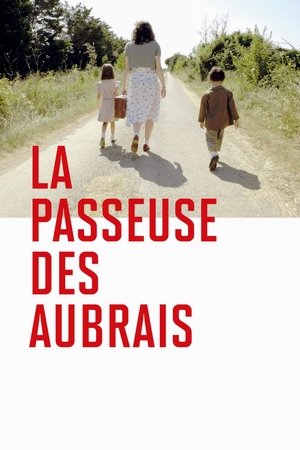
June 1941, during World War II. Reichsführer-SS Heinrich Himmler orders the mass abduction of particularly well-bred young children from Poland and the occupied territories of the Soviet Union in order to be educated in German culture, by both state schools and German families…
An Israeli film director interviews fellow veterans of the 1982 invasion of Lebanon to reconstruct his own memories of his term of service in that conflict.
On March 29, 1947, peasants armed with sticks and knives attacked the French garrisons in Madagascar. The revolt would end twenty months later with the death of the last insurgents, shot down by the expeditionary force. France, accustomed to memory lapses, knew nothing of this insurrection and its trail of torture and abuses. In Madagascar, well after independence, the events of 1947 were never discussed. For more than a generation, parents refused to speak of them to their children. It wasn't until the 1980s that the silence was broken.