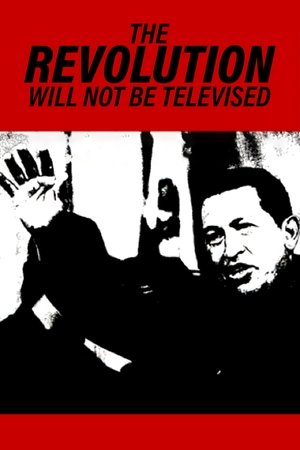
Hugo Chavez was a colourful, unpredictable folk hero who was beloved by his nation’s working class. He was elected president of Venezuela in 1998, and proved to be a tough, quixotic opponent to the power structure that wanted to depose him. When he was forcibly removed from office on 11 April 2002, two independent filmmakers were inside the presidential palace.
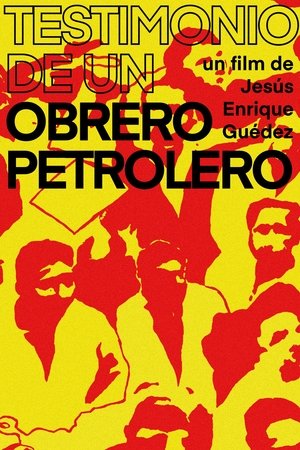
Trade union leader Manuel Taborda, a pioneer of workers' organisations in the oil industry, recounts his experiences and those of his colleagues from 1920 to 1936, with an emphasis on the struggles against foreign companies and the government.
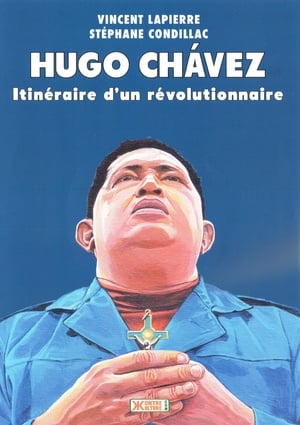
Hugo Chávez: Itinéraire d'un révolutionnaire
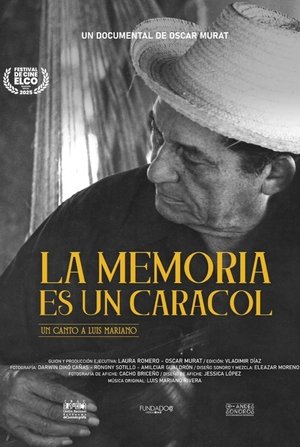
Documentary about the life of Luis Mariano Rivera.
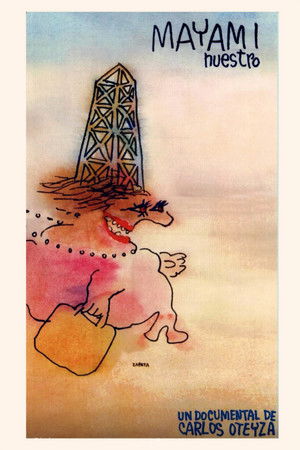
Mayami Nuestro goes beyond the slogan "tá barato, dame dos" (“it’s cheap, give me two”) to force a rethinking of Venezuela’s relationship with oil and national identity. Produced at the height of the oil boom, this 34-minute documentary examines Venezuelan lifestyles in the 1970s and early 1980s, questioning the consumerist fantasies fueled by petro-wealth. Through interviews with merchants, bankers, U.S. academics, and the testimonies of Venezuelans themselves, the film maps the era’s version of the “American Dream” as lived—and projected—abroad. Winner of national and international awards and directed by Carlos Oteyza, Mayami nuestro offers a sharp, historically grounded critique and an open invitation for new generations to reflect on the legacy of oil and its cultural consequences.
Cruz Quinal, "the mandolin king," lives near Cumana in a mountain valley surrounded by sugarcane fields. Perpetuating 16th century Spanish traditions of guitar-making, Cruz fashions such musical instruments as cuatros, marimba, escarpandola, and his own creation, a mandolin with two fretboards. He is an accomplished musician as well. In this moving portrait, Cruz compares himself to a decaying colonial church across the street: revered yet neglected, the village altar stands, paint peeling, under the open sky.
In 1969, the Renovación Universitaria movement and the subsequent raid on the Central University of Venezuela by the government of Rafael Caldera, triggered a strong wave of protest in the Institutes of Higher Education in Venezuela. This documentary collects part of the events that took place in the city of Mérida, Mérida State, where the University of the Andes is located.
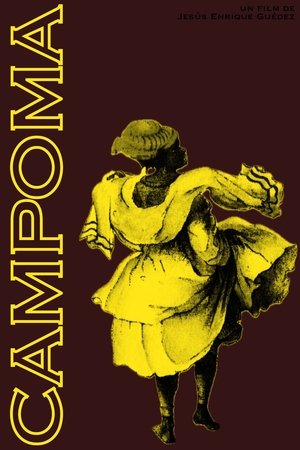
Short that tells the history of Campoma, a small Venezuelan town founded by black slaves.
Imagen de Caracas was an experimental film spectacle, directed by Jacobo Borges and Mario Robles in 1968 for the 400 anniversary of the foundation of Caracas. It needed more than 48768 meters of film and 5000 actors.
The struggle of two men, Osuna and Funes, hungry for power and wealth in a small town in Venezuela, during the dictatorship of Juan Vicente Gómez.
Intertwined stories of people fighting for love, survival and the truth during quarantine.
Documentary about the life of Simón Bolívar, directed by Antonio Bacé.
Several behind the scenes aspects of the movie-making business, which results in the enjoyment the movie going public has in going to the theater, are presented. They include: the production of celluloid aka film stock, the materials used in the production of which include cotton and silver; construction crews who build sets including those to look like cities, towns and villages around the world; a visit with Jack Dawn who demonstrates the process of creating a makeup design; the screen testing process, where many an acting hopeful gets his/her start; the work of the candid camera man, the prying eyes behind the movie camera; a visit with Adrian, who designs the clothes worn by many of the stars on screen; and a visit with Herbert Stothart as he conducts his musical score for Conquest (1937). These behind the scenes looks provide the opportunity to get acquainted with the cavalcade of MGM stars and their productions that will grace the silver screen in the 1937/38 movie season.
In the table that symbolizes the value of traditional women, a woman who wants to break free from her family must face her daughter.
On January 1, 1994, a revolt led by the Zapatista Army of National Liberation broke out in Chiapas. A Spanish director documents the pain of the indigenous population. Six years later, he intends to go further and visit the refugees and the guerrillas. However, the siege of silence is protected by more than sixty thousand soldiers who prevent access to indigenous communities.
Since the death of the Maharishi Mahesh Yogi in February 2008, long-time practitioner of Transcendental Meditation and well-known film director David Lynch has been embraced as the movement’s chief international ambassador. Filmmaker Sebastian Lange, who himself was raised in the movement, presents an intimate look at this new phase in the movement’s evolution.
Ella Brennan is a household name in the restaurant industry. Known today as the inspirational matriarch of the rambling Brennan family of New Orleans and the force of nature behind first Brennan's and then Commander's Palace. Fired by her family at one point, she shouldered on. She was the creator of elaborate New Orleans breakfasts and jazz brunches and revolutionized creole cuisine. A pioneer of the modern American food movement, she pushed her chefs to the forefront helping to launch the celebrity chef phenomenon.
Promotes television sets and the broadcast of New York's first regularly scheduled programs by providing a clinical look at the inner workings of television, including the manufacture of the tubes, lab experiments, and an actual telecast. Shows RCA's production studios in Rockefeller Center, television demonstrations at the 1939–40 New York World's Fair, RCA's Empire State Building transmitter, and remote mobile broadcast units. One of a variety of "Reelisms" shorts produced by Frederic Ullman Jr. and Frank Donovan for RKO in the late 1930s.
Or a day in the life of Ahmed Khawaja. A tutorial that forgets to be a tutorial.
A retrospective on the great election battles of the past in the United States: the Kennedy-Nixon debate in 1960, the first ever to be televised; the Republican campaign of 1972, which proved to be the starting point for the Watergate scandal; and the electoral strategy of Barack Obama in 2008, the first election to fully exploit the potential of the Internet.