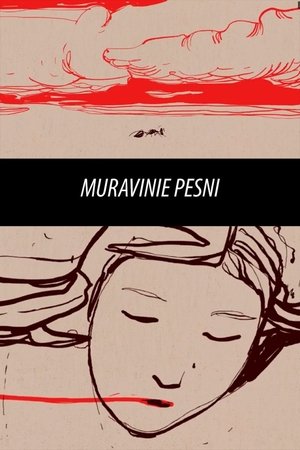
Life drums the playfulness out of a boy as he grows up.
Filmmakers use archival footage and animation to explore the culture surrounding nuclear weapons, the fascination they inspire and the perverse appeal they still exert.
This is a story of love seen from a square, in which a couple gets united, separated and rearranged again. A special kind of puzzle.
Bill struggles to put together his shattered psyche.
Loose impressionistic brushstrokes sketch a series of portraits of two faces, one male and one female, while the verse on the soundtrack tells the tale of both one and a thousand relationships.
Seemingly at random, the wings and other bits of moths and insects move rapidly across the screen. Most are brown or sepia; up close, we can see patterns within wings, similar to the veins in a leaf. Sometimes the images look like paper cutouts, like Matisse. Green objects occasionally appear. Most wings are translucent. The technique makes them appear to be stuck directly to the film.
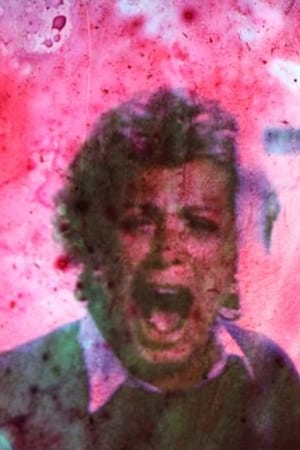
After the title, a white screen gives way to a series of frames suggestive of abstract art, usually with one or two colors dominating and rapid change in the images. Two figures emerge from this jungle of color: the first, a shirtless man, appears twice, coming into focus, then disappearing behind the bursts and patterns of color, then reappearing; the second figure appears later, in the right foreground. This figure suggests someone older, someone of substance. The myth? Preserved by the Academy Film Archive in 2012.
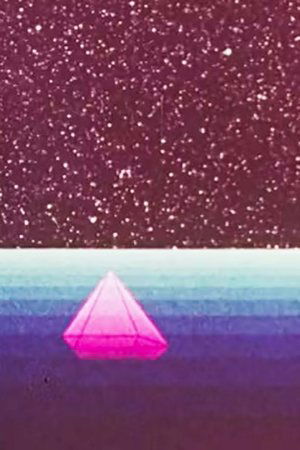
Experimental computer animation from pioneering artist Ed Emshwiller.
Extended editing techniques based on Land’s experiments affect the viewer’s sensory perceptions.
Experimental narrative animation using hobbyist 3D animation and inspired by niche genres of computer-generated erotica.
The film was produced applying mixed techniques on Super 8 film support.
La Costante di Archimede
Katokino
A visual representation, in four parts, of one man's internalization of "The Divine Comedy." Hell is a series of multicolored brush strokes against a white background; the speed of the changing images varies. "Hell Spit Flexion," or springing out of Hell, is on smaller film stock, taking the center of the frame. Montages of color move rapidly with a star and the edge of a lighted moon briefly visible. Purgation is back to full frame; blurs of color occasionally slow down then freeze. From time to time, an image, such as a window or a face, is distinguishable for a moment. In "existence is song," colors swirl then flash in and out of view. Behind the vivid colors are momentary glimpses of volcanic activity.
A colorful collage, with a subtle ecology theme, made largely from footage from trial runs of programs used for many of the other films.
A ballet of squares and octagons in many forms, exhibiting a variety of geometric and sometimes sensuous interactions.
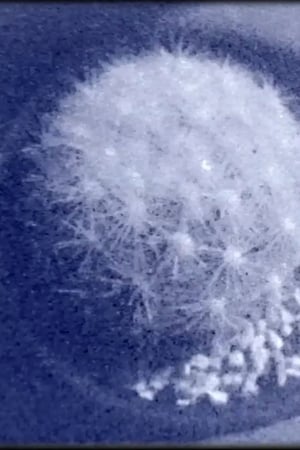
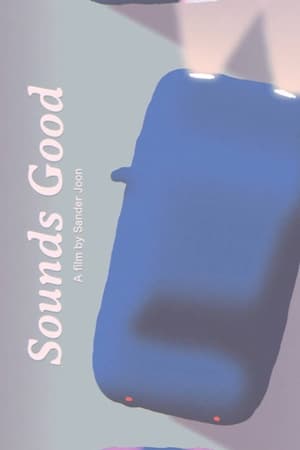
A boom operator attempts to record the noise mushrooms make in this semi-experimental animation inspired by the world of sounds.
SPring-8 Angstrom Compact Free Electron Laser (SACLA) 5 minute pencil and watercolor anime short narrated by Mamiko Noto with music by twoth.
An animated visual interpretation of the song "Autobahn," by German electronic pioneers Kraftwerk. A fast-paced experimental film which proved to be a groundbreaking combination of electronic and manual animation. One of the first films produced specifically for video disk.
In this extraordinary short animation, Evelyn Lambart and Norman McLaren painted colours, shapes, and transformations directly onto their filmstrip. The result is a vivid interpretation, in fluid lines and colour, of jazz music played by the Oscar Peterson Trio.