It is a fetish, a mantra, a secret religion to modern man: work. In times of the financial crisis and massive job reductions, this documentary movie questions work as our 'hallow' sense in life in a way that both humors and pains us.
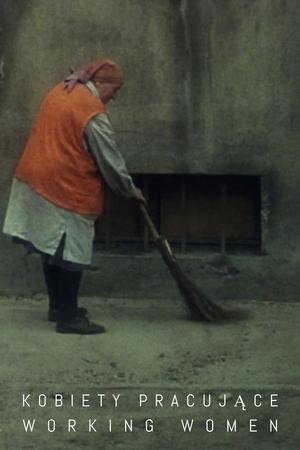
The viewpoints of women from a country that no longer exists preserved on low-band U-matic tape. GDR-FRG. Courageous, self-confident and emancipated: female industry workers talk about gaining autonomy.
Workplace is a documentary made by Gary Hustwit, in association with R/GA, for the 2016 Venice Architecture Biennale.Workplace is about the past, present, and future of the office. It looks at the thinking, innovation, and experimentation involved in trying to create the next evolution of what the office could be. The film follows the design and construction of the New York headquarters of digital agency R/GA (in collaboration with architects Foster + Partners) who have been experimenting with how physical and digital space can better interact. Digital technology has radically changed how and where most of us work, but the physical spaces we work in haven’t kept up with that transformation.
Isaac, a failed actor and Skies employee, shows us the daily life of workers in an average call center, facing the boredom to get to the end of the work day.
In 2019, the director Leos Carax proposes to Estelle Charlier and Romuald Collinet to design, make and animate "Annette", the puppet of his new film. This one will be the child of the couple Marion Cotillard and Adam Driver. Propelled into the world of cinema, begins for this charismatic duo a unique and singular adventure in their career as puppeteers. Faced with the demands of the filmmaker, the impossible, they are held.
A highly choreographed review of the Industrial Age as we know it today – an intense and playful roller coaster ride that demands the viewer confronts how “work works.” Culled entirely from archival footage, the film unfolds in the filmmakers’ trademark, and humorously critical, cinematic voices.
What we tend to identify with the acting profession has little to do with what is really this profession. Thirty-six Spanish actors reflect on their work and contrasted their experiences. As thread, the contrast between the voices of veterans and images of young theater students , for whom everything is still possible. Among the many actors are interviewed Javier Bardem, Antonio Banderas, Victoria Abril, Carmen Maura, Fernando Fernán Gómez, José Luis López Vázquez, José Coronado, Emma Suarez, Alberto San Juan, Ariadna Gil, Ana Belén, Pilar Lopez de Ayala and many other.
Intimate and fragmented moments unfold in a community of zoos and animal rescue centers across Argentina. As histories of these institutions are uncovered, dedicated workers commit both day and night to caring for the remaining enclosed animals, fostering a mutual bond that transcends imagined boundaries between human and animal.
Departing from peripheral details of some paintings of the Bilbao Fine Arts Museum, a female narrator unravels several stories related to the economic, social and psychological conditions of past and current artists.
When illness forces her away from her beloved trauma cleaning business, Sandra Pankhurst faces up to her traumatic past and begins a search for her birth mother.
Der Film portraitiert eine Gruppe von Microsoft-Aussteigern: im Ruhestand mit 32, Multimillionäre und ohne die geringste Idee, was sie mit dem Rest ihres Leben anstellen sollen. Ihre Jahre im Unternehmen, der Hype des Goldrausches und das Adrenalin des Erfolges hat sie ausgebrannt und doch sind sie entschlossen mehr aus ihrem Leben zu machen - vor allem Sinn und Bedeutung in der wirklichen Welt zu finden.
The life and work of a retired model maker.
Handbook of Movie Theaters’ History is a documentary about the history, the development in the present days and the future of movie theaters in the city of Turin, Italy. It mixes the documentary language with comedy and fiction, and is enriched by interviews to some of the most important voices of Turin cinematography. The film follows the evolution of movie theaters by enlightening its main milestones: the pre-cinema experiences in the late 19th Century, the colossals and the movie cathedrals of the silent era, the arthouse theaters, the National Museum of Cinema, the Torino Film Festival, the movie theaters system today and the main hypothesis about its future.
A Mauritanian worker, Sidi, works in France. Like most immigrant workers, he is employed to do the most difficult and dangerous jobs. Sidi and his comrades are exploited systematically and permanently, as much by their employers as by their own countrymen who are constantly able to offer false working papers, slums where immigrants buy at high cost their right to sleep. But faced with racism and economic exploitation, immigrant workers communicate, organise...
Our premise is that work has become an act of self-sabotage. Empty corporate jargon, ever-changing management fashions and self-serving bureaucracy masquerading as efficiency hijacked the purpose of work. Creative documentary The Happy Worker will show how we got to this point and the very human behavior that led us here. We want to show how this unhealthy system is maintained and what keeps us from calling bullshit.
The documentary is a part of "Europe refuses to work" project. The goal of the project has been to gather together ideas and practices that are encouraging from the critique of work, which open up prospects for a more meaningful and sustainable world.
There is a popular theory that it takes at least 10,000 hours of focused practice for a human to become expert in any field. In Japan, there are craftspeople who go far beyond this to reach a special kind of mastery. These people are called Takumi and they devote 60,000 hours to their craft. That's 8 hours a day, 240 days a year, for over 30 years. It's an almost superhuman level of dedication to a life of repetition and no shortcuts. This film asks the question: Will human craft disappear as artificial intelligence reaches beyond our limits?
Stylized with dramatic interiors and a distorted frame rate, this early documentary miniature from Szulkin depicts six sequences of solitary, repetitious labor.
Violeta and Vyollca Dukay live in the south of Kosovo, close to the border with Albania. Faced with a very high unemployment in their country since the end of the war, they became deminers. They’ve been going to the minefields every day for six years now. The unique and very strong relationship that exists between the two sisters helps them to overcome their fear and to keep hoping in spite of the precariousness of their situation and the risks they run each day to earn their living.
36 year old welder Karin works at an agricultural factory in Mecklenburg, Germany.