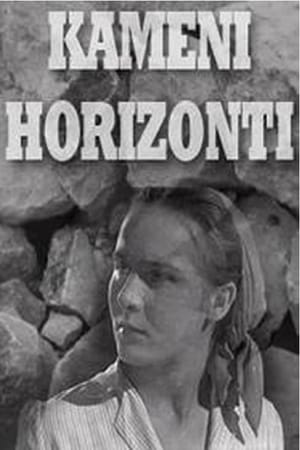
The story of German minority members who, after escaping from Wehrmacht, form a partisan unit named "Ernst Thalmann" in eastern Croatia. The focus is a family whose members fight on different sides of the barricade.
A beautiful but ailing girl is married to a harsh man who doesn't care for her. Only after she dies does he realize that he actually loves her.
In this sun soaked adventure for the entire family, a group of five orphaned children form their own makeshift family while attempting to operate outside the rules of society. Though they must sometimes steal to survive, their loyalty to one another means that they will always have a brother or sister to count on.
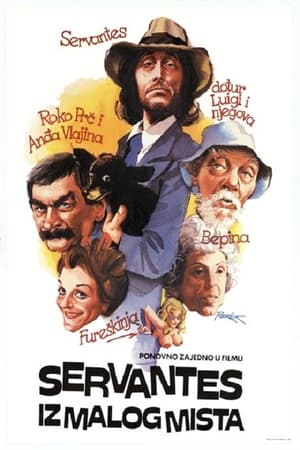
'Malo Misto' lives its own life, but not far behind the times. Hotel manager Roko Prč strives to organise tourism, so he introduces the first nudist beach. His wife Anđa brings two of her cousins from the Dalmatian hinterland and demands Roko to hire them. One of them, a young man named Ikan, earns the attention of a beautiful Swedish tourist. From Chile to Malo Misto returned Tonči, nicknamed Servantes, of course, without any money. He fell on the back of his hardworking aunt Keka, who even without him has enough problems of her own. Servantes also experiences an unexpected romance.
"Long Dark Night" follows the life of the fictional character Iva Kolar: his experiences as a Croatian University student, his role as a Partisan fighting Hitler's troops during W.W. II, his involvement in his nation's post-war government, and his eventual downfall.
The Glembays of Zagreb are a rich family cursed with tragedies and haunted by sinister past. Leone Glembay, a rebelious son of the family patriarch, is becoming disgusted with hypocrisy, perversion and crime that runs in the family.
The adventures of a small town Croatian family during the 1960s. The decade will leave eternal marks on all of their members, but most of the story focuses on the youngest one, a boy, Frula, who discovers the love and fashion of the time.
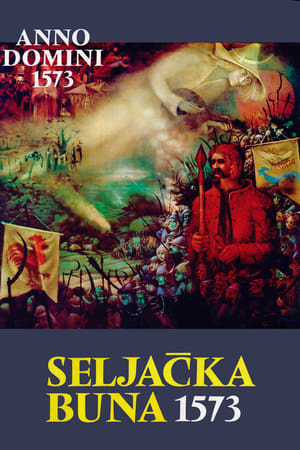
Europe in second half of 16th century was very rough place to live. Peasants of Slovenia and Croatia had even rougher times because of the constant threat of Turk raids and being taxed to death in order to provide defence against the Turks. But, the worst things were arrogant local feudal lords led by Franjo Tahi who were oppresing the common folk. All that led to the great peasant revolt of 1573. The movie is made for the 400th anniversary of the event.
A story about a forbidden love set in a village threatened by swollen rivers. Upon his return home for his father’s funeral, Slaven revives his relationship with his childhood friend, a young sportsman named Marko, his teenage love, and the reason his father kicked him out of the house. Now tempted to reunite, they need to make peace with their own decisions and struggle against the family restraints.
A doctor opens an ordination in the abandoned house of his parents which is supposedly haunted by ghosts, as claimed by its only tenants - the old servant and two maids. He starts having nightmares in which a pretty and young girl shows up.
Siniša Mesjak, an arrogant and ambitious politician on the rise, finds himself in the middle of a scandal. To hide him from the public, the president appoints him as the commissioner of Croatian government on the furthest settled island Trečić, where he is tasked with the organization of local elections. The previous seven commissioners haven't succeeded.
After her husband's death in Germany, an attractive young widow leaves his native village in Herzegovina to work abroad. There she starts an affair with an Italian worker that proves to be unsuccessful, yet she gets pregnant. She does an abortion, which is followed by another blow - her godfather Luka steals her hard-earned money.
Zora learns of her great grandmother’s mortality when the family’s inheritance and land rights come into question.
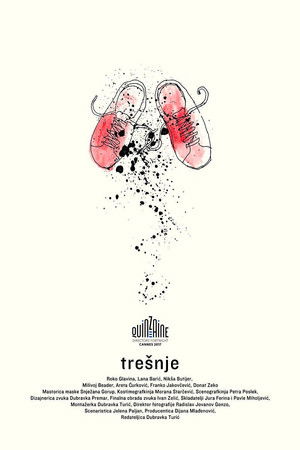
A shy, 14-year-old Deni struggles to find acceptance as her domestic life and friendships collide.
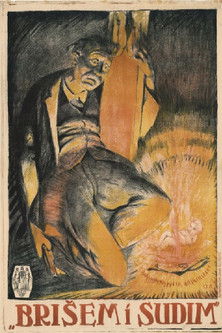
Brišem i sudim is a Croatian film. Only one minute of the film is saved.
A short film in tourist purposes that is considered lost.
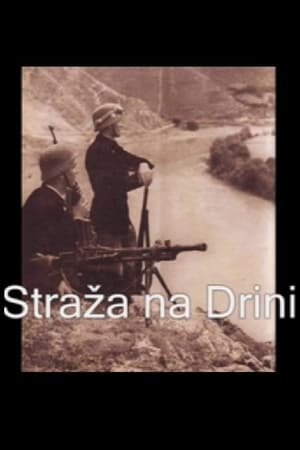
A compilation of week journals made for Nazi-puppet regime in Croatia during WW II which show the warfare of Ustasha forces against Yugoslav partisans and Chetniks in eastern Bosnia.
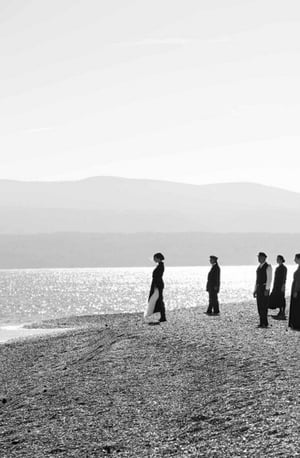
The video installation entitled Partenza (Italian for departure, and used in many of Croatia’s island and coastal dialects) express the global insecurity of contemporary society and the fragility of human existence. Metaphorically, they address a story about departure, waiting and separation, dictated by migrations. In the early 20th century, it was usual yet traumatic for men to leave Croatian islands (mostly bound for the countries of South America) due to poverty and hunger. One of these tragic stories is weaved into the author’s family history. The installation is inspired by the life story of Renata’s great-grandmother who lived on the island of Brač, whose husband went to Chile looking for work in order to secure his family’s future. Like many of the island’s women, she waited for her husband who, like many of the men, never returned.
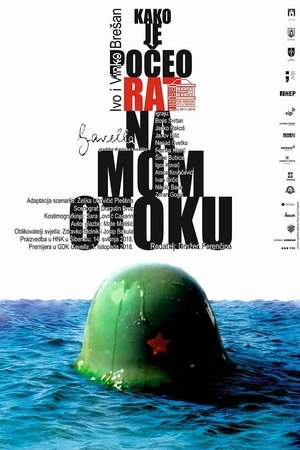
At the beginning of 1991, Yugoslav army did not acknowledge Croatian's independence, and still holding few military barracks in Croatia. Gajski travels to an island to get his son out of the army. Locals have besieged the barracks and organized a festival to try with singing and recitals to get major Aleksa and his soldiers to surrender, but Aleksa has explosives thru the barracks and wants to blow up the island.
A young countess, Nera Keglević, is fighting against believing in witches by using witchcraft. But the problem is that local judge Krajačić is accusing Nera to be witch for revenge.