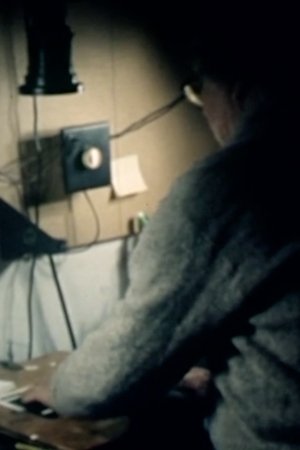
This film describes a psychological state "kin to moonstruck, its images emblems (not quite symbols) of suspension-of-self within consciousness and then that feeling of falling away from conscious thought. The film can only be said to describe or be emblematic of this state because I cannot imagine symbolizing or otherwise representing an equivalent of thoughtlessness itself. Thus the actors in the film, Jane Brakhage, Tom and Gloria Bartek, Williams Burroughs, Allen Ginsberg, Peter Olovsky and Phillip Whalen are figments of this 'Thought-Fallen Process', as are their images in the film to find themselves being photographed."
On the island of Tanna, a part of Vanuatu, an archipelago in Melanesia, strange rites are enacted and time passes slowly while the inhabitants await the return of the mysterious John.
Basically an artist is also a terrorist, the protagonist thinks in an unguarded moment. And if he is a terrorist after all, then he might just as well be one. Not an instant product, but an experimental feature in which diary material is brought together to form an intriguing puzzle.
Works with sound recordings of Dion McGregor, who became famous for talking in his sleep.
An experimental sports film made partly during the Scandinavian Open Championships in Halmstad in 1970, partly during the Chinese players' exhibition tour in Denmark immediately after the SOC. First of all, it is a film about their style, about the artistic culmination that is ping-pong at its best, it records China's comeback into the international sports world.
In the final days of the American Civil War, an emigre Hungarian military officer attempts to map the situation of the enemy. Many veterans of the 1848 War of Independence in Hungary fought on the northern side. Experienced Fiala, Boldogh who struggles with homesickness and the reckless Vereczky all experience their enforced emigration in different ways and news of impending peace elicits different reactions from them all.
Filmmakers use archival footage and animation to explore the culture surrounding nuclear weapons, the fascination they inspire and the perverse appeal they still exert.
The final 17 years of American singer and musician Karen Carpenter, performed almost entirely by modified Barbie dolls.
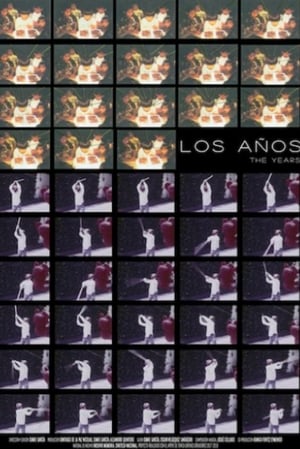
The collective life of the generation born as Jurij Gagarin became the first man in space. Vitaly Mansky has woven together a fictional biography – taken from over 5.000 hours of film material, and 20.000 still pictures made for home use. A moving document of the fictional, but nonetheless true life of the generation who grew up in this time of huge change and upheaval.
Clouds 1969 by the British filmmaker Peter Gidal is a film comprised of ten minutes of looped footage of the sky, shot with a handheld camera using a zoom to achieve close-up images. Aside from the amorphous shapes of the clouds, the only forms to appear in the film are an aeroplane flying overhead and the side of a building, and these only as fleeting glimpses. The formless image of the sky and the repetition of the footage on a loop prevent any clear narrative development within the film. The minimal soundtrack consists of a sustained oscillating sine wave, consistently audible throughout the film without progression or climax. The work is shown as a projection and was not produced in an edition. The subject of the film can be said to be the material qualities of film itself: the grain, the light, the shadow and inconsistencies in the print.
"An experimental documentary on Reverend L.O. Taylor, a black Baptist minister from Memphis, Tennessee who was also an inspired filmmaker with an overwhelming interest in preserving the social and cultural fabric of his own community in the 1930′s and 40s. I combine his films and music recordings with my own images of Memphis neighborhoods and religious gatherings" -Sachs
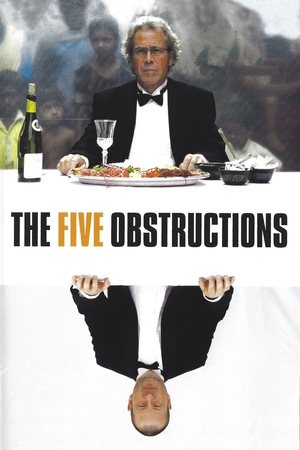
In 1967, experimental filmmaker Jorgen Leth created a striking short film, The Perfect Human, starring a man and women sitting in a box while a narrator poses questions about their relationship and humanity. Years later, Danish director Lars von Trier made a deal with Leth to remake his film five times, each under a different set of circumstances and with von Trier's strictly prescribed rules. As Leth completes each challenge, von Trier creates increasingly further elaborate stipulations.
First part of the collaborative project "Brise-Glace" showing the diverse travels on the icebreaker "Frej". Directed by Jean Rouch.
A meditation on the human quest to transcend physicality, constructed from decaying archival footage and set to an original symphonic score.
This is a 1991 documentary film about the legendary artist and filmmaker, Joseph Cornell, who made those magnificent and strange collage boxes. He was also one of our great experimental filmmakers and once apparently made Salvador Dali extremely jealous at a screening of his masterpiece, Rose Hobart. In this film we get to hear people like Susan Sontag, Stan Brakhage, and Tony Curtis talk about their friendships with the artist. It turns out that Curtis was quite a collector and he seemed to have a very deep understanding of what Cornell was doing in his work.
A cameraman wanders around with a camera slung over his shoulder, documenting urban life with dazzling inventiveness.
Sites Unseen is a 3 channel 16mm projection of the Jewish cemetary in Warsaw, a photograph of a great Aunt who died in Treblinka, and my late grandmother eating her morning cornflakes.
A loose collection of scenes in Hong Kong shot over a five-year period, this film begins with the Umbrella Movement in 2014 and ends right before the summer of 2019, when large-scale social unrest and violent resistance erupted. The everyday scenes capture the ambience and the landscape of change in the city, standing as a quiet prelude to the ensuing conflicts.
An eight-hour contemplative epic, entirely starring sheep.
This is an architectural garden of the variably brash rock-solid liquid-encompassing, but always imitative, human mind as it processes the given light thoughtfully. This film is about that.