Award-winning actress Ruby Dee narrates this powerful documentary about the impact of AIDS on the families, friends and members of the acclaimed Turtle Creek Chorale. In the past decade, 145 member of the Chorale have died, most from HIV and AIDS. Although grief is a constant presence, After Goodbye: An AIDS Story shows that the singers and their loved ones are also engaged in a continual process of healing. This ultimately uplifting and inspirational video is a testament to the amazing strength of the human spirit.
Experimental short-film made by brazilian students about the trópicalia and cinema novo movement. The narrative revolves around the song Géleia Geral from the album Tropicália ou Panis Et Circensis and also around the political, artistical and social time from that period.
The Tiger God project originated during the artist’s residency at Cien Art Village in Hualien in 2021, inspired by a Sikawasay (Amis priest) who said a concrete tiger carried a soul. The work explores encounters between Han folk beliefs and Amis spiritual traditions, reflecting on suppressed indigenous histories in eastern Taiwan under colonial and religious forces. Nighttime fireworks symbolize external impacts on the land, linking concrete animals, mining, and colonial imagination. The ritual opera returns the footage to the land and gods, weaving ritual, research, and reflection into a narrative about silent objects and memory.
A Boy Named Sue chronicles the transformation of a transsexual named Theo from a woman to a man over the course of six years. Following Theo's physiological and psychological changes during the process, as well as their effects on his lesbian lover and community of close friends, A Boy Named Sue tells a story about gender identity, relationships, and how even things that seem permanent can change.
The physical media format of film is in a constant state of unease, but what happens when industry professional and legally blind business owner, Shelby McIntyre, takes it upon himself to open Tampa’s only true video shop?
Based on a poem by a Zimbabwean LGBT activist written in response to the gay hate speech that is being perpetuated president Robert Mugabe. The film was shot in South East London UK with a cast of six women from several African countries playing multiple roles in this portrayal of being a lesbian in homophobic Zimbabwe. Five of the actors and the producer are refugees who fled their countries in fear of persecution for their sexuality.
Agathe, a 22-year-old woman with gender dysphoria, undergoes a chest masculinization operation after almost two years of waiting in a public hospital.
The LA Sisters are outrageous, controversial, always fabulously dressed men and women who feel they are called to minster to the community as 21st century nuns.
Welcome to the curious, surprising and always outspoken world of straight men who go Gay4Pay. Curiously, there is a disproportionate percentage of men working in gay porn who identify as straight. Why would a straight man do gay porn? What motivates him to try this or make a career of it? Why is there such keen interest and debate into the sexuality and personal lives of these men? And what does it say about us, the viewer that so much of gay porn is dominated by images of straight men?
What are they? What do they seek? When all the lights go out, they will wander. And you will never see them.
In the rural desert of Bolivia, where the most important presence is the wind moving between papa flowers and animals, the people who harvest the land, those who built the ancient artifacts and sacred objects and the musicians who play moseñada – songs linked to the first products of the harvest – on the streets of the city have one point in common: labor. With a successful inclusion of stories of enchanted lakes, legends that pass from mouth to mouth – or from orality to audiovisual, in this case – and give a fantastic aura to those lands, Luciana Decker Orozco not only manages to capture life without oscillations . field, but resorts to the incessant movement of images and sound accompaniment to define a sensory and transcendental experience for the viewer.
The original documentary on the Wigstock festival, back in the day when it was a much smaller affair in Thompkins Square Park. A full day of peace, love, and wigs…
An audiovisual essay constructed from Super 8 footage filmed during camera tests for the short film ‘La Trampa’. Through gestures, light, and silences, it reflects on what the image reveals and what it leaves unsaid.
Jonas Mekas recites poems of his, both in English and Lithuanian. Exclusive Mekas interview by the poet Sparrow. The legendary poet-film critic and film diarist waxes philosophical in rare extended setting exhibiting his transcendental poetic humor. Jonas attacks the crass world of TV advertising and sell-out commercial filmmakers. Contributes zen anecdotes and filmmaking advice. Choice clips include Mekas' Film Diaries with deceivingly formalist amateur "home movie" style, but in small bursts of expression in a quick collage. Footage from Jonas' homeland as well as clips of famed pop figures John Lennon, Yoko Ono and Tiny Tim.
Two friends await in the airport for a third friend to arrive. As the passangers come by, pictures not taken accompany a conversation between the two friends.
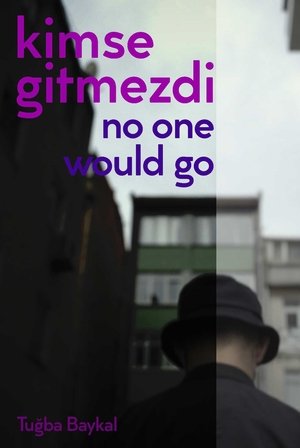
What happens when your child comes out to you? In this feature documentary, parents of lesbian, gay, bisexual and trans-gender individuals in Turkey intimately share their experiences with the viewer, as they redefine what it means to be parents in this conservative society.
Filmed in Berlin, July 1990. Images of workers taking down the wall and street peddlers selling pieces of it to make a living.
“This film is part of a series of films on gay men who survived the Nazi era. I met Walter Schwarze when he was already in his eighties. My camera recorded his first public account of his five-year incarceration as a homosexual at Sachsenhausen concentration camp. He was in his fifties when he met Ali in his hometown of Leipzig; the two men became partners and remained close until his demise. And yet, Walter told me, he felt he had lived in vain because he had not had the good fortune of today's gays, who are able to grow up in freedom. Walter Schwarze died of cancer on May 10, 1998.” Rosa von Praunheim
LESBIANS IN BOYSTOWN reveals the forgotten history of lesbians and queer women in West Hollywood, the first “gay city” in the US. The documentary honors lesbians and queer women through the history of Dyke Marches, the AIDS crisis, lesbian bars and cafes, and lesbian activism from the 1980s to the present day. However, since the late 1990s, lesbian businesses and social gathering places like cafes, bars, and bookstores have been disappearing across the US. Despite our culture’s predilection towards lesbian and queer women’s invisibility, the documentary proves that our world-building continues. The documentary ensures that lesbians and queer women will be visible for future generations while also showing that they are still making a difference today.
In an attempt to represent reality, the boundary between life and art blurs between fragmentary images of someone and the praxis of an essay film.