Happy farmers, a wedding and some giant cauliflowers...
Per Persson left Sweden 40 years ago. In Pakistan he fell in love and became the father of two daughters. Trouble starts when the girls grow up and the family decides to emigrate to Sweden. When they end up living in a caravan outside Hässleholm, all their expectations are dashed.
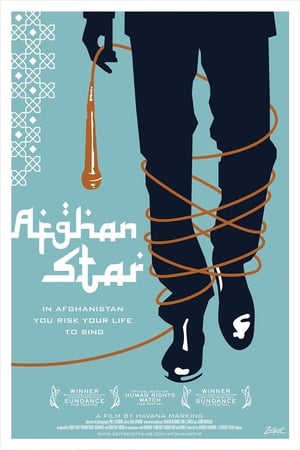
This documentary on the effect the talent competition "Afghan Star" has on the incredibly diverse inhabitants of Afghanistan affords a glimpse into a country rarely seen. Contestants risk their lives to appear on the television show that is a raging success with the public and also monitored closely by the government.
In times of conflict, a companion can be the final thread linking one to human connection. In Call of Duty: Warzone, communication is fractured, making it even harder to truly know those you play with. Dialogue is just a series of terse exchanges of orders and instructions; everything revolves around the game, everything is subsumed by war. Forming a meaningful connection with an anonymous player seems nearly impossible. In The Zone, the protagonists confront this challenge, pushing beyond the fleeting interactions dictated by random matchmaking. They seek to reclaim their humanity, engaging with pressing themes — religion, terrorism, and representation — subtly embedded in the game’s mechanics and geography.
In a community of a Muslim majority, the first woman pastor in the Middle East leads a parish in one of the poorest city of the Mediterranean, in the heart of Tripoli, North Lebanon.
As a gay man, filmmaker Arshad Khan examines his troubled relationship with his devout, Muslim father Abu. Using family archives and movies, Khan explores his struggle with his identity and compares it to his parents attempts to fit into Canada.
This portait of life on the tea plantations is decidedly rosy – clearly, there are no exploited workers here. However, the film provides an intriguing overview of tea production – from the planting of tea seeds to the final shipping of the precious leaves across the globe.
In 1954, a German-Austrian expedition led by Mathias Rebitsch set off for the difficult-to-access Karakoram Mountains, geographically north of the Himalayas. They come across the Hunza, a people who live in the valley of the same name and believe they are descended from the soldiers of Alexander the Great. The documentary conveys impressions of the poor life of the Hunza people, the harvest, a court hearing, festivals and the children's everyday school life. Finally, the expedition sets off again and sets up its main camp on the moraine ridge of a glacier, where they measure the glacier and the earth's magnetic field. Finally, some men from the research community set off for a sub-peak of Batura.
A family with five children flees the war raging in their home village on the Russian border. They end up in Mshanets, a farming village on the other side of the country, remote and unknown. Here the family starts building a new home. At the same time, two documentary makers come to the village, looking for a story. In the Lymar family they find the ideal characters for their film. But one day, when the renovation of their house is almost finished, the family disappears. The filmmakers go in search of their characters and along the way they try to find an answer to the question: what does a person need to feel at home?
Muslim boxer, Bianca 'Bam Bam' Elmir, aims to be the first Australian to win a World Amateur Boxing Championship.
Commentator-comic Bill Maher plays devil's advocate with religion as he talks to believers about their faith. Traveling around the world, Maher examines the tenets of Christianity, Judaism and Islam and raises questions about homosexuality, proof of Christ's existence, Jewish Sabbath laws, violent Muslim extremists.
This short 19-minute documentary is an intimate and moving exploration of the profound and far-reaching impact of surveillance on Muslim American individuals and communities. Premiering at the 2017 Tribeca Film Festival, WATCHED is told through the personal experience of two women, both coming of age in New York. The film charts the devastating toll of surveillance and reveals the scars it leaves behind.
Explores the lives of seven Black Millennials – Atheist, Buddhist, Christians, Muslim, Ifa, and Spiritualist – and the challenges and discoveries with faith and spirituality.
Documentarians Justine Shapiro and B.Z. Goldberg traveled to Israel to interview Palestinian and Israeli kids ages 11 to 13, assembling their views on living in a society afflicted with violence, separatism and religious and political extremism. This 2002 Oscar nominee for Best Feature Documentary culminates in an astonishing day in which two Israeli children meet Palestinian youngsters at a refugee camp.
DRONE is a documentary about the covert CIA drone war. Through voices on both sides of this new technology, DRONE reveals crucial information about the drone war in Pakistan and offers unique insights into the nature of drone warfare.
Equal parts punk and psychedelia, the Flaming Lips emerged from Oklahoma City as one of the most bracing bands of the late 1980s. The Fearless Freaks documents their rise from Butthole Surfers-imitating noisemakers to grand poobahs of orchestral pop masterpieces. Filmmaker Bradley Beesely had the good fortune of living in the same neighborhood as lead Lip Wayne Coyne, who quickly enlisted his buddy to document his band's many concerts and assorted exploits. The early footage is a riot, with tragic hair styles on proud display as the boys attempt to cover up their lack of natural talent with sheer volume. During one show, they even have a friend bring a motorcycle on stage, which is then miked for sound and revved throughout the performance, clearing the club with toxic levels of carbon monoxide. Great punk rock stuff. Interspersed among the live bits are interviews with the band's family and friends, revealing the often tragic circumstances of their childhoods and early career.
Amid December’s festive glow, refugees remain hidden in forests along the Poland-Belarus border. This powerful documentary gives voice to their silent cries.
The Syrian Civil War has created one of the greatest humanitarian crises in the last 60 years. REFUGEES: ENEMIES OR VICTIMS? investigates the very important question of whether the United States is doing enough to uphold its long tradition of helping those in need.
Generation One is a short documentary that explores the perspectives of the American-born children of Arab Muslim immigrants as they navigate their two identities. The film follows the life of a Palestinian-American named Hamoody as he decides to leave his tight-knit Arab community and pursue his independence. With vignette interviews from five other Arab-Americans to supplement Hamoody's story and expound upon certain themes, Generation One sheds light on a range of unique challenges found between the hyphens.
An exploration of the work of a new generation of young Muslim artists, who use their work to explore issues of faith and identity and what it means to be Muslim and Australian in the 21st century.