A short film about Antonio Luna’s aides-de-camp Jose and Manuel Bernal during the aftermath of Luna’s assassination.
Bear (10 minutes, 35 seconds) was Steve McQueen's first major film. Although not an overtly political work, for many viewers it raises sensitive issues about race, homoeroticism and violence. It depicts two naked men – one of whom is the artist – tussling and teasing one another in an encounter which shifts between tenderness and aggression. The film is silent but a series of stares, glances and winks between the protagonists creates an optical language of flirtation and threat.
A divorced journalist Marko Požgaj starts his working day by taking his son to the school. During the day many thoughts and images pass through his mind - the memories of childhood, ex-wife, current girlfriend, but mostly his father who died in a war.
An experimental film about a peaceful and carefree life in a small Dalmatian town, which turns into bloodshed and horror on the eve of the Italian occupation of the country.
Opera by Harry Somers portraying Metis leader Louis Riel and his Northwest Rebellion. 1969 CBC-TV production based on the original 1967 opera.
In 1967, experimental filmmaker Jorgen Leth created a striking short film, The Perfect Human, starring a man and women sitting in a box while a narrator poses questions about their relationship and humanity. Years later, Danish director Lars von Trier made a deal with Leth to remake his film five times, each under a different set of circumstances and with von Trier's strictly prescribed rules. As Leth completes each challenge, von Trier creates increasingly further elaborate stipulations.
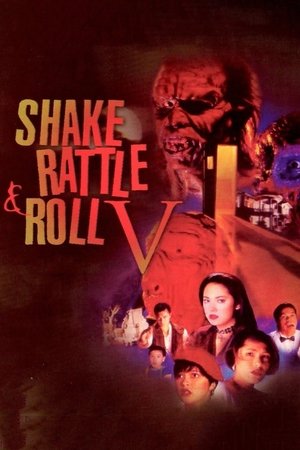
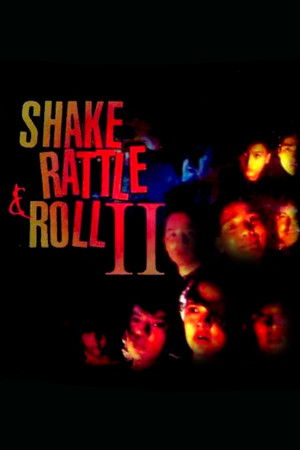
Working as waiters in a private beach resort Andrew fell head over heels for lovely Dovie (Ina Raymundo). Unexpected voluptuous foreign guests led by Carolyn Sapp visit the beach and now Andrew was torn between his attraction to Carol and his love for Dovie. It's a wild and funny tale of action and romance as they encountered a mischievous group of hunks who were out to destroy the beach.
Tabataba tells the story of a small Malagasy village during the independence uprising which took place in 1947 in the south of the country. For several months, part of the Malagasy population revolted against the French colonial army in a bloody struggle. The repression in villages that followed was terrible, leading to fires, arrests and torture. Women, children and the elderly were the indirect victims of the conflict and suffered particularly from famine and illness. One leader of the MDRM Malagasy Party, which campaigns for the independence of the country, arrives in a village. Solo (François Botozandry), the main character, is still too young to fight but he sees his brother and most of the men in his clan join up. His grandmother, Bakanga (Soavelo), knows what will happen, but Solo still hopes his elder brother will return a hero. After months of rumours, he sees instead the French army arrive to crush the rebellion.
A mysterious woman, known as Madame M, kidnaps forty pre-teen girls and transports them to a remote island to train them as the most deadly assassins. CIA operative Jack Chen follows the case for 6 years with no leads, but when a series of assassinations begin to occur, Jack suspects that Madame M is back in business.
Features four distinct, bizarre, existential tales about people whose lives are in transition, who are each asking questions about themselves, their environments, and about God(s).
Sir Robert Beaumont is behind schedule on a railroad in Africa. Enlisting noted engineer John Henry Patterson to right the ship, Beaumont expects results. Everything seems great until the crew discovers the mutilated corpse of the project's foreman, seemingly killed by a lion. After several more attacks, Patterson calls in famed hunter Charles Remington, who has finally met his match in the bloodthirsty lions.
Clouds 1969 by the British filmmaker Peter Gidal is a film comprised of ten minutes of looped footage of the sky, shot with a handheld camera using a zoom to achieve close-up images. Aside from the amorphous shapes of the clouds, the only forms to appear in the film are an aeroplane flying overhead and the side of a building, and these only as fleeting glimpses. The formless image of the sky and the repetition of the footage on a loop prevent any clear narrative development within the film. The minimal soundtrack consists of a sustained oscillating sine wave, consistently audible throughout the film without progression or climax. The work is shown as a projection and was not produced in an edition. The subject of the film can be said to be the material qualities of film itself: the grain, the light, the shadow and inconsistencies in the print.
The Strike Force team is back in this action-packed sequel to "The Hunt For Eagle One"! Terrorists have stolen a Ground Control Encoder...
Surrounded by tensions and secrets, a teenage boy searches for validation and navigates life with a dysfunctional family following an HIV diagnosis.
In the picturesque island of Cuyo, Palawan, an illegal Taiwanese fishing vessel docks carrying the fisherman named Muo Sei, a man looking for something or someone with the name Ploning. He has from sunrise to sundown to look for this "Ploning".
A young woman takes a job as a personal maid for a rich young man. The pair do not get along, but soon due to their classmates' games of love, their relationship grows more complicated than before.
One of the major works by South Korean feminist film collective Kaidu Club, this short is a dynamic, idiosyncratic, and mosaic-like portrait of Korean life, culture, and people who dream of a unified North and South.
Founded in the second half of the 1990s, the experimental film association L'Etna witnessed the transition from film to digital cinema. Its premises, located in the heart of Paris, were unable to withstand gentrification.
A reality show star leaves her family's TV show fame and unknowingly joins a supernatural cult.
Philipp Fleischmann develops special cameras designed to formulate specific relations between the material of the footage (16 or 35 mm film) and the object of the recording. For instance, in his 2013 project “Main Hall,” he deconstructs the main exhibition hall of the Viennese Secession, filming the exhibition architecture with 19 individual cameras and thus creating images that show the view of the exhibition space onto itself. Fleischmann’s recent work, “Untitled (Generali Foundation Vienna)" identifies the film camera as a spacial object-form by itself. Correlating with the history of artistic interventions on site, the object is placed in the former exhibition space of the Generali Foundation at Wiedner Hauptstrasse 15, Vienna, and provided with a cinematographic view.