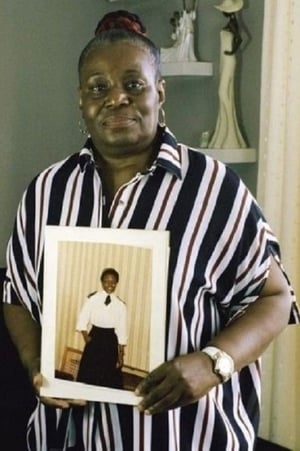
Seven strangers are interviewed to talk about the relationship they have with their mother.
“An Untitled Film” by George Alshevskij-Jones is a short documentary/visual essay about the struggles of moving to seek a better future in a different country. The research for the film was done by observing and talking to people who have left their home country. It doesn’t matter what country a person has left and in which country he has found himself, the general experiences and emotions stay the same. The most important message that I want the film to convey is that everything is possible and home is not a place on a map, but a place in the soul of each person that I spoke to. The unconventional way of showing many people as one is not just a way of making the film more convenient to create, but a way to fit a much information into one consistent image, that the audience is more likely to understand and perceive as the author intended it. My own experience blended in with the experiences of others.
Drahý mistře
The British architect based in Stockholm looks back on major projects of a long career inspired by European Modernism combined with his personal sensitivity to nature and community. Erskine is especially valued for his vital understanding of social interaction, exemplified in commissions for universities and housing complexes built from Scandinavia to Italy. The architect takes the camera on a tour of his buildings while offering revealing comments and interpretations.
Oldemors reise
Artistic director of the National Theater Eric de Vroedt writes and directs a performance about his own mother Winnie, who passed away in 2020. This piece, titled The Century of My Mother, is a family story about the migration from the Dutch East Indies to the Netherlands. It is De Vroedt's way of examining the relationship with his mother and not having to say goodbye to her yet: 'I can let her live on stage, but when the curtain falls, when the play is completely finished, then she is really dead'.
Paris, les grands travaux de Napoléon
Made in Miami is the story of Camila's journey from arriving in Miami from Cuba as a kid to finding her voice and releasing her debut album. The film explores how generations of strong women have shaped the Cabello family and inspired Camila to become the artist she is today.
The “Bowlingtreff” is a bowling alley situated right in the centre of Leipzig opened in July 1987. At that time the quality of life in Leipzig and the whole GDR got worse. Houses collapsed because of poor conditions, public life and amusement was on a very low level. The “Bowlingtreff” was not merely an urban entertainment centre but a revolution in those days. Built with the help of hundreds of volunteers without permission of the state authorities in Berlin the building expresses a free and international architecture known as postmodernism. It is an architecture that was never seen before in Leipzig. Marble and parquet on the floor, a glass roof and beautiful pink pillars. The atmosphere was western as time witnesses remember it.
Robert Kongaika runs from his family to join the military and becomes the first Tongan US Air Force Colonel. This is the true story of the island traditions, faith, and family that made him into the father he is today.
The film juxtaposes/compares two museums: The Museum of Art, Ein Harod, Israel, which Samuel Bickels (1909-1975) built there in 1948, and The Menil Collection in Houston, Texas, built by Renzo Piano (b. 1937) 1986 . The method of natural lighting in Bickels‘s construction was the direct model for Piano, who adopted for his construction at the request of its patroness Dominique de Menil.
Big Time gets up close with Danish architectural prodigy Bjarke Ingels over a period of six years while he is struggling to complete his largest projects yet, the Manhattan skyscraper W57 and Two World Trade Center.
A core group of architects embraced the West Coast from Vancouver to LA with its particular geography and values and left behind a legacy of inspired dwellings. Today, architects celebrate the influence established by their predecessors.
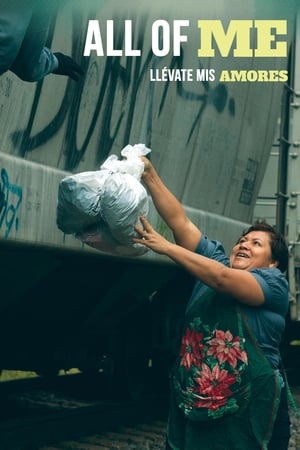
"Take my love" is a documentary film about "Las Patronas", a group of women who daily cook, pack and throw food to the migrants riding the "Beast" train.
This film is a portrait of unique cultural space for Spirits, Gods and People. While permanent theatres are commonly built in most cosmopolitan modern cities, Hong Kong preserves a unique theatrical architecture, a Chinese tradition that has lasted more than a century - Bamboo Theatre.
Kamenná sláva
Fearing for their lives, Afshin, Alain and Patricia fled their country, without their parents, when they were only children. They had to start all over here in Canada in the hope of a better life. Combining real shooting and animated cinema, "Alone" bears the imprint of hope: how does a child manage to rebuild himself in a new country, when he has left everything behind?
Pauline, Norah, Kristina and others wait for hours, sitting under a hut deep in the Bois de Vincennes. In front of the administrative detention center (CRA) in Paris, they have all come to see their loved ones locked up. Lives on hold, awaiting deportation or release. On this stage, these women tell their stories, talk to each other, share their experience, their revolt and their dreams with new visitors. They are the mirror of migrant detention, its reverse view.
No understanding of the modern movement in architecture is possible without knowledge of its master builder, Mies van der Rohe. Together with documentation of his life, this film shows all his major buildings, as well as rare film footage of Mies explaining his philosophy. Phyllis Lambert relates her choice of Mies as the architect for the Seagram building. Mies's achievements and continuing influence are debated by architects Robert A.M. Stern, Robert Venturi, and Philip Johnson, by former students and by architectural historians. Mies is seen in rare documentary footage.
A Liberian refugee SAM REAYAH and his family have been separated for five years and live in uncertainty waiting for family reunion. While Sam and his younger daughter Ruth continue their lives in Buduburam Refugee camp in Ghana, his wife Decontee and his older daughter Joyce have already started a life in Rochester, USA. The film explores the idea of home. Sam's family had a home in Liberia, but they had to give it up. They were forced to build homes elsewhere. They built a home in Ghana. They build a home in The United States. They built homes together, they build homes separate of each other. But which home does the heart want?