Mostly dark, rejecting images which are repeated. A stone wall, the chamber of a revolver which is, at first not recognizable, a close-up of a cactus. The duration of the takes emphasises the photographic character of the pictures, simultaneously with a crackling, brutal sound. (Hans Scheugl)
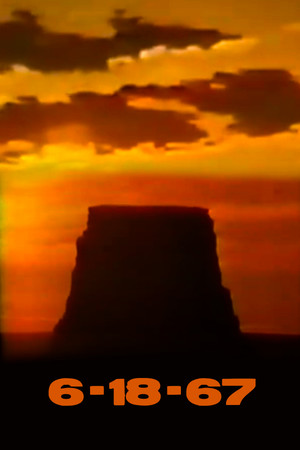
Filmed during the production of the Columbia Pictures western "Mackenna’s Gold," this short work presents a non-narrative visual study of the Arizona desert. Rather than documenting the film set itself, "6-18-67" assembles landscape images, time-lapse photography, and ambient sound into an abstract record of place and duration.
For us, a thought always presupposes a society, a culture and above all the consciousness of time. We are haunted by immortality, human notion par excellence. As if the world was here to fascinate us. And to disappoint us. The film travels around the bulb like the Earth around the Sun. Light makes the film visible. A fragile film, like our existence. In the orbit of the film tragedy and our reality, the image resists the cruelty of the experiment.
A small portrait of the volatility of intimacy and of breaking free from abusive cycles: made in response to a year of collapsing relationships and violent accidents that left me broken, dislocated and stuck in my apartment.
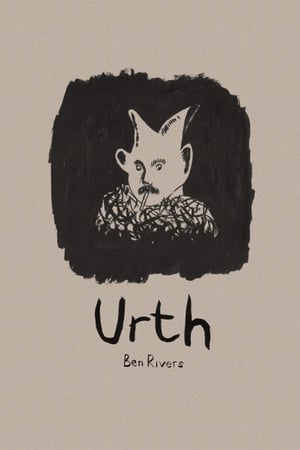
The last woman on Earth: Filmed inside Biosphere 2 in Arizona, Urth forms a cinematic meditation on ambitious experiments, constructed environments and visions of the future. The film considers what an endeavor such as Biosphere 2 might mean today and in the near future, in terms of humankind’s relationship with the natural world.
'The angle of the world allows us to see the real as an outer and inner presence at the same time, an opaque otherness, yet capable of becoming an intimate space. These incommensurable lengths and distances of an interior that opens up: The mysterious movement of the clouds, the cadence of the waves against the light, or the silent slippage of a barely identifiable human silhouette, everything seems transfigured, derealized and reinvented by light in a poetic world that evokes the paintings of Turner or Friedrich, the writings of Poe or Baudelaire.’ — Violeta Salvatierra
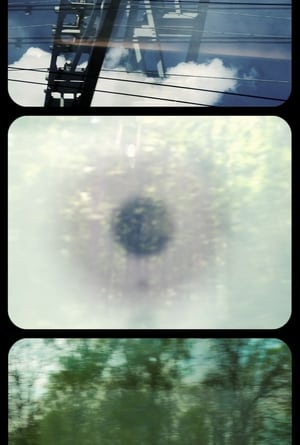
The reception ebbs and flows as the unfamiliar landscape whirls by the window of a plane or train or car. Communication is delayed, fragmented, interrupted. Memories of a distant country.
Vi.sion is the product of an encounter between an expanding ballet troupe and an abandoned school with a marvelous theater, which was to be demolished to make way for a parking lot. It is the home of a place, imbued with memories of a rich and proud past, by the footsteps of a young troop. The time is getting confused. The present and the past blend together and it is the old school that dances with the passion and passion of young dancers. Ghosts, shadows, specters ... They bewitch.
The starting point of this film was a set of 35mm trailers acquired from various abandoned cinemas. This work reveals the veiled and forgotten images used by the commercial film industry.
Nature, gymnastic movements, a cat...
Glen Denny observed: "This film is not ocean, it is panther stalking jungle." Camera flows because it is free to move through space.
Fluidity of stone. Subatomic motion asserting a surface. Mind loop wandering. Visitation of sound matrix. Liquid solid. Nature transforms a planetary cycle. Relations of a timeless void.
Shot at high noon in New York’s financial district, Wallstreet is much like a vertical tickertape, charting the existence of typical office workers. The film’s elongated shadows suggest these workers’ depersonalized, neuter, nearly uniform lives, which flow by without any solid or stable element that might provide definition.
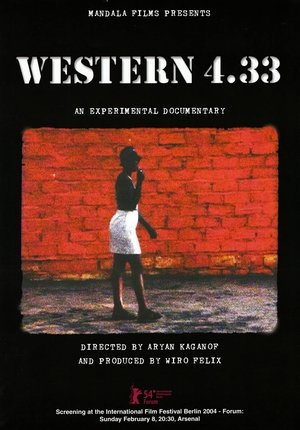
Vertiginous documentary, shot in effective black-and-white, treats two painful histories. The first is a love story about a truck driver who, on his way from Johannesburg (South Africa) to Luderitz (Namibia), is haunted by thoughts of his girlfriend and their recently severed relationship. His memories are expressed in an often recurring scene, in which songs by Alec Empire, Macy Gray and Robert Schumann roughly tell the story. This small history is alternated with the tragic fate of the Namibian Heroro people, many thousands of whom died early last century in concentration camps that had been set up by the German colonisers near Luderitz. The depiction of this history is cruder and more poignant, with slanting frames, odd camera angles and a multi-layered sound sculpture. The dilapidated barracks and officers' quarters are the last remnants of the miscarried, so-called civilisation projects in Africa.
The film takes us through the working day of protagonists, factory workers. Their basic working tool is their body, ready to execute strenuous manual tasks. Day after day the same story, the same faces, the same spaces, the same tasks. Feeling confined, they seek a sheet anchor, a way out, an escape. They venture into the unknown, dance, drift and float in the air.
The Greek island of Syros is visited by a series of unexpected guests. Immutable forms, outside of time, aloof observants to human conditions.
On the Various Nature of Things
El desastre de Annual
This experimental nature documentary by Minna Rainio and Mark Roberts depicts climate change and the wave of extinction from the point of view of our near future. Actually, it depicts the age we live in now, or rather its fateful consequences.
Experimental educational film reveals the emergence of some ideas of Biophysics in historical, philosophical and methodological aspects. The first film from the Biophysics Cycle (1982-1989).