"El campo para el hombre" was a politically militant documentary about the small holdings of land in the north of Spain and the large estates in the south of the country. This film portrays the exploitation and misery of the Spanish peasants, but also their class-consciousness and their will to fight for their rights and freedom. The film was shot in the late years of Franco's dictatorship, so it was made in secrecy (the directors were connected to the Spanish Communist Party).
Director Hannah Livingston spends 6 months tracking two of America's most radical Christian hate groups - a notorious pastor from Arizona and a network of extremist preachers.
Routine Pleasures, Slow Cinema.
The story of community in the Deep South that is forced to deal with the struggles of ignorance, hypocrisy and oppression.
A partnership between the Government of Mali and an American agricultural investor may see 200-square kilometers of Malian land transformed into a large-scale sugar cane plantation. Land Rush documents the hopes, fears, wishes, and demands of small-scale subsistence farmers in the region who look to benefit, or lose out, from the deal.
The villagers of El Dorado, Argentina, shy away from doctors. Then again, they hardly need one. They have almost as many cures for ailments and illnesses as there are residents in the village. 65 year old Jorge can also cure the most dreaded ailment of them all, the much feared espanto.
The documentary tells the story of Uschi, a farmer living free and recluded in the bavarian alps. Shot in epic black and white pictures, Still follows Uschi's life over a ten year period. From an untroubled summer of making cheese through pregnancy and the uncertain future of the parental farm, Matti Bauer portrays Uschi's struggle to keep alive the dream of a way of life that has become rather untypical in this day and age.
Takes us to locations all around the US and shows us the heavy toll that modern technology is having on humans and the earth. The visual tone poem contains neither dialogue nor a vocalized narration: its tone is set by the juxtaposition of images and the exceptional music by Philip Glass.
After 20 years of living in Berlin, the director Olga Delane goes back to her roots in a small Siberian village, where she is confronted with traditional views of relationships, life and love. The man is the master in the home; the woman’s task is to beget children and take care of the household (and everything else, too). Siberian Love provides unrivaled insights into the (love) life of a Siberian village and seeks the truth around the universal value of traditional relationships.
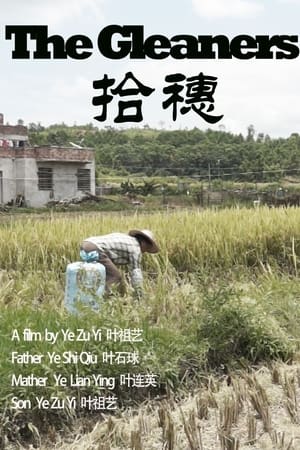
A coming-of-age story about a filmmaker and his family as they struggle to adapt to both a changing world and a traditional one. Can the filmmaker's family accept that he is more interested choosing to document a famine that happened 50 years ago than choosing a wife? Will the family continue to farm their land and grow rice as they always have or sell it to developers? How can they adapt to life in modern China when the country itself is in the midst of identity crisis? The film explores these topics and more in a refreshingly original style that bridges the gap between documentary and narrative feature while providing a delightfully intimate portal into family life in modern China.
Like Don Quixote, Zivan Pujic Jimmy fights for his annual punk festival. A film about failure, ambition, friendship and clinging to your dreams. Glavonic received much praise for this exceptional film that doesn't reveal what's fact and what's fiction.
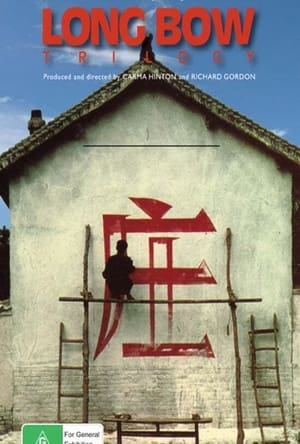
Part Two: SMALL HAPPINESS - Despite the tremendous advances women in China have made, serious problems continue. Long Bow women talk about love, marriage, work, birth control, birth customs and the now outlawed custom of foot binding. Truly moving interviews with Lingqiao and her mother-in-law draw us into their lives.
Guardaram Por Nós
A narrative constructed in the wishful-filmmaking, or “fanumentary”, genre. Rural women artists unite via CR to support one another’s work and to showcase more women’s art publicly available in their community. A refreshing weave that combines animation, nature shots and live action into a story of actualization.
Short documentary about the Oxcroft Land Settlement near Bolsover. Between 1934 and 1939, the Land Settlement Association (LSA) established 1,100 smallholdings within 26 settlements across the country, the objective of which was to re-settle unemployed workers and their families (mainly miners at Oxcroft) and get them working and producing on the land. The film examines ideas of food production, environment and community through the eyes of current residents, some of whom moved onto the estate at its inception in 1936 as the children of original settlers and have never left.
A documentary following Zhou Yuanquiang, a cultural worker in Jingdezhen, China who makes movies with untrained local actors.
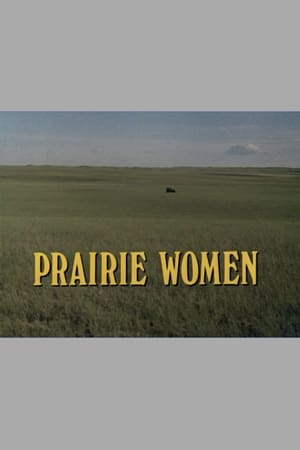
This film illustrates the struggles of Canadian prairies women to achieve a more just and humane society within the farm movement and at large. During the early 1900s, women on the prairies looked for ways to overcome their isolation. Out of the resulting farm women's organizations grew a group of women possessing remarkable intellectual abilities, social and cultural awareness, and advanced worldviews.
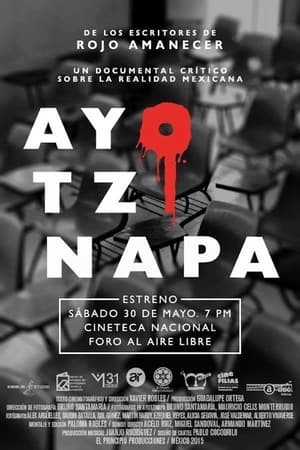
This film is a story, testimony and documentation of the forced disappearance of 43 student teachers, which exposes the criminal complicity between the police and military authorities, between the political and economic elites and criminal organizations in Mexico, which appear to be different forces, but respond to similar interests.
An elegy dedicated to rural life and its inhabitants. A soundscape that evokes the history of the countryside and suggests the loss of a lifestyle and its culture.
The film chronicles everyday struggle of a Russian woman for “ordinary” happiness of her family.