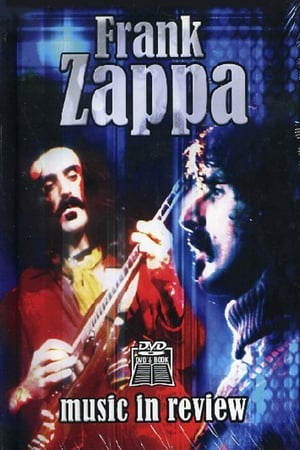
Avant-garde composer John Cage is famous for his experimental pieces and "chance music" but temporarily branched into video in 1992 with this art film about meaningless activity. The work is composed of two segments that are supposed to be played simultaneously: "One 11" contains the artistic statement, and "103" is a 17-part orchestral piece. Also included is a revealing documentary about Cage and director Henning Lohner.
This documentary aims to register this unknown side of James Joyce: His Greek Notebooks. Trieste. Bloomsday, 2013. Dance in slow motion, accompanied by text. By deconstructing the body, we turn it into a memory: of the body, of life, of texts. The biographical references to Joyce and Mando Aravantinou, combined with the diagonal slicing of the image, cancel the realism of the landscape, including that of the Narrator’s space/study. As a culmination, Joyce’s letter “A request for a loan in Greek” functions as a timely denunciation. Various routes through cities, such as Trieste, London, New York, and Athens; languages such as Greek and English. In addition to the primal myth of Ulysses, there is another issue: Greek is “the language of the subject of Ulysses”
Three images of a person running in the void through the movement of speed and abstract images
"[Hutton’s] latest urban film, New York Portrait, Chapter III, takes on a unique tone in relation to Hutton’s ongoing exploration of rural landscape. The very fact that Hutton is dealing with older footage, with archives of memory more than immediacy, gives it a different texture than his earlier New York films. Hutton always found the presence of nature in the city, not only in his many shots of sky and vegetation, but also in the geometry and texture of the city itself, which seemed to project an independence from the human." (Tom Gunning)
A day in the city of Berlin, which experienced an industrial boom in the 1920s, and still provides an insight into the living and working conditions at that time. Germany had just recovered a little from the worst consequences of the First World War, the great economic crisis was still a few years away and Hitler was not yet an issue at the time.
Chapter Two represents a continuation of daily observations from the environment of Manhattan compiled over a period from 1980-1981. This is the second part of an extended life's portrait of New York.
In the fall of 1986, Richard Fung made his first visit to his father's birthplace, a village in southern Guangdong, China. This experimental documentary examines the way children of immigrants relate to the land of their parents, and focuses on the ongoing subjective construction of history and memory. The Way to My Father's Village juxtaposes the son's search for his own historical roots, and his father's avoidance of his cultural heritage.
"An experimental documentary on Reverend L.O. Taylor, a black Baptist minister from Memphis, Tennessee who was also an inspired filmmaker with an overwhelming interest in preserving the social and cultural fabric of his own community in the 1930′s and 40s. I combine his films and music recordings with my own images of Memphis neighborhoods and religious gatherings" -Sachs
A film of and through the trees. Leaves catch, consume and resist the light through the seasons.
An experimental look at the origin of the death myth of the Chinookan people in the Pacific Northwest, following two people as they navigate their own relationships to the spirit world and a place in between life and death.
Maria Lang is my very close filmmaker friend who lives in the southern german countryside. We see her gardening and visiting an exhibition of female impressionist painters.
Shot under extreme conditions and inspired by Mayan creation theory, the film contemplates the illusion of reality and the possibility of capturing for the camera something which is not there. It is about the mirages of nature—and the nature of mirage.
From June 2021 to June 2022, Justin "Jastun" Bland records whatever that is in front of him. He presents an abstract montage of collected videos varying from onscreen recordings to filming special, intimate & mundane in-real-life moments. This short captures our daily routines in life and how we choose to spontaneously record them.
Filmed in 2003 while staying in a Brooklyn Heights apartment, the work centers on a small Greek statue revealed in shifting morning and afternoon light. Beavers weaves these images with views of the East River and Manhattan Bridge, later completing the film in 2010 as a meditative elegy for his friend Jacques Dehornois.
The Black Album places scrutiny on the notion of "Black Excellence" in a revisionist take.
Filmmakers Sam and Amy journey into rural Australia to explore how the legacy of an American legend has transmitted and warped itself over time, and across the globe, resulting in the 30th annual Parkes Elvis Festival.
In the feature documentary, Summer 82 – When Zappa Came to Sicily, filmmaker and Zappa fan Salvo Cuccia tells the behind-the-scenes story of Frank Zappa's star-crossed concert in Palermo, Sicily, the wrap-up to a European tour that ended in public disturbances and police intervention. Cuccia had a ticket to the concert but never made it. Thirty years later, collaborating with Zappa's family, he re-creates the events through a combination of rare concert and backstage footage; photographs; anecdotes from family, band members, and concertgoers; and insights from Zappa biographer and friend Massimo Bassoli. The story is also a personal one, as Cuccia interweaves the story of Zappa's trip to Sicily with his own memories from that summer.
16mm film (color, sound); 16 min.
The Eye explores silent landscapes where nature and absence coexist. Between the memory of places and resilience in the face of time, the film oscillates between beauty and existential vertigo, capturing what persists and what fades.
The first film made by Markopoulos after moving to Europe, Bliss was shot over the course of two days using only available light to create a lyrical study of the interior of the Church of St. John on the island of Hydra.