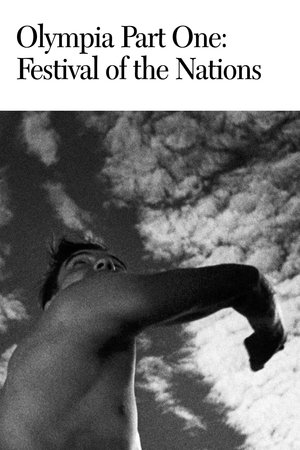
Starting with a long and lyrical overture, evoking the origins of the Olympic Games in ancient Greece, Riefenstahl covers twenty-one athletic events in the first half of this two-part love letter to the human body and spirit, culminating with the marathon, where Jesse Owens became the first track and field athlete to win four gold medals in a single Olympics.
David Olusoga opens secret government files to show how the Windrush scandal and the ‘hostile environment’ for black British immigrants has been 70 years in the making.
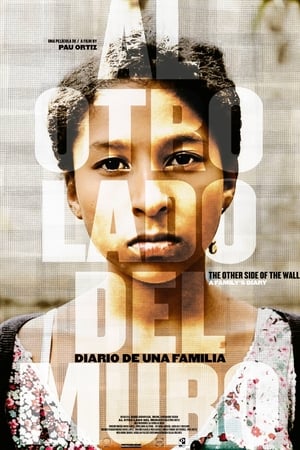
On January 3, 2001 in Lorca there was a traffic accident that caused 12 deaths who were Ecuadorians, worked in agricultural fields and were in an irregular situation in Spain. This documentary reflects the harsh reality experienced by dozens of illegal Ecuadorians offering much cheaper labor in Spain.
What does it mean to be British? Gabriel, a dentist originally from Hong Kong, has lived in Milton Keynes for nearly 50 years. His mixed race son Michael couldn't wait to leave. Now a film-maker, he returns to the city to discover how his father feels about the place he has made home.
Rosa is a Mexican woman who, at the age of 17, migrated illegally to Austin, Texas. Some years later, she was jailed under suspicion of murder and then taken to trial. This film demonstrates how the judicial process, the verdict, the separation from her family, and the helplessness of being imprisoned in a foreign country make Rosa’s story an example of the hard life of Mexican migrants in the United States.
The San Francisco Foundation presents 2013 Community Leadership Awardee, Educators for Fair Consideration (E4FC), with The San Francisco Foundation Award, made to an organization demonstrating exemplary commitment to improving human relations in the Bay Area. E4FC provides direct support to and advocacy for highly motivated, college-bound undocumented students who had come to the United States as children and wished to remain. They are a leader in the field of immigrant work, providing youth tangible support and the space for them to tell their own story. As a result, E4FC's work is an essential part of the DREAMers movement catapulting the organizations role as a leader in both the Bay Area and as a national model in supporting and empowering immigrant youth. www.sff.org/cla
In 1892, Ellis Island, in New York Bay, became the main gateway to the United States for immigrants arriving increasingly from Europe. The story of immigration to the United States from 1892 to 1954, an enthralling polyphonic narrative that embraces both small and great history.
Klaira presents a surprising vision of assimilation and a loving depiction of San Francisco. She and her grandparents explore how the experience of immigration changed their sense of self and altered the fabric of their relationship.
This Ukrainian-Jewish teenager immigrated to San Francisco as a young child. Now on the brink of adulthood, she interviews her grandparents about their new lives yearning to see her American world through their eyes. Yelena understands that life in the US has changed her profoundly.
De Charles de Gaulle à Emmanuel Macron, les gardiens de l'empire
Narratives of Modern Genocide challenges the audience to experience first-person accounts of survivors of genocide. Sichan Siv and Gilbert Tuhabonye share how they escaped the killing fields of Cambodia, and the massacre of school children in Burundi. Mixing haunting animation, and expert context the film confronts our notion that the holocaust was the last genocide.
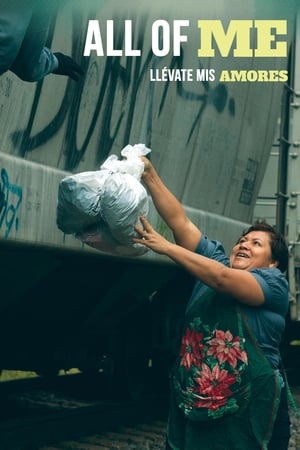
In this tale of labor and family that shines a light on the precarity of temporary work visas, Raymundo Morales leads a crew of workers who have to make the challenging decision to leave their families in rural Mexico to plant commercial pine forests in the United States.
Puente de la Costa Sur, winner of the San Francisco Foundation 2004 Community Leadership Awards (John R. May Award) - for its creative, grassroots efforts to provide education, social justice advocacy, direct services, and community connections enabling immigrant men in rural San Mateo County to improve their living and working conditions
Boys on Film presents ten encounters from across the globe, where the dangerous allure of a risky attraction yields emotional results — proving that the age-old adage of taking the plunge is as relevant — and sexy — as ever before. The 10 short films are: My Uncle's Friend [O Amigo do Meu Tio] (2021); Budapest, Closed City [Budapest, zárt város] (2021); Eden (2020); Chaperone (2022); Break Me [Knus meg] (2018); By His Will [שעשני כרצונו] (2021); Red Ants Bite (2019); Jim (2022); Hornbeam (2022); Too Rough (2022).
The Fall of the I-Hotel brings to life the battle for housing in San Francisco. The brutal eviction of the International Hotel's tenants culminated a decade of spirited resistance to the razing of Manilatown. The Fall of the I-Hotel works on several levels. It not only documents the struggle to save the I-Hotel, but also gives an overview of Filipino American history.
This is the story of an ordinary man transformed by history. A simple baker from Besançon who became a political symbol of resistance. That of a France that knows how much it needs others to grow. Of working classes rejecting the siren calls of populism. He says: "I was nothing and I became a monster" to express the vertigo of his transformation. And so the baker entered politics, visited the United States in the footsteps of Martin Luther King, brought aid to the Ukrainians, and ran for legislative elections. Fearless. Fighting with all his heart. It is this inspiring, touching, and funny human epic that Pedro da Fonseca's camera followed closely, capturing his doubts, his hesitations, and his emotions.
Documentary that shows the changing attitude towards immigrant labor in The Netherlands. The documentary follows three immigrants that arrived in Holland 30 years ago to work in a bakery.
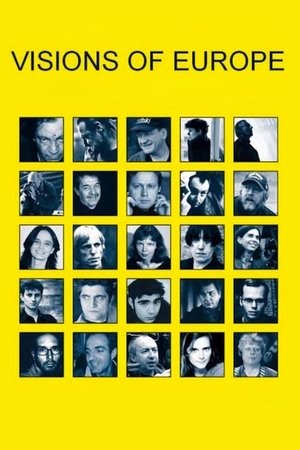
Twenty-five films from twenty-five European countries by twenty-five European directors.
Perdus entre deux rives, les Chibanis oubliés
The filmmaker’s grandmother moved into this house in 1971. When Rolande Ségalini died, everything remained as it was during her lifetime. But what to do with all the accumulated things? As her granddaughter Céline begins to film this material legacy, she realises that her grandmother has remained an enigma to her to this day. Room by room, she inventories, classes, counts, sorts the possessions retrieved from wardrobes, drawers, cabinets and boxes and arranges the objects into new still lives. It is an attempt to understand the deceased woman better and find out more about her. Step by step, the heiress discovers various connections to France’s colonial history.