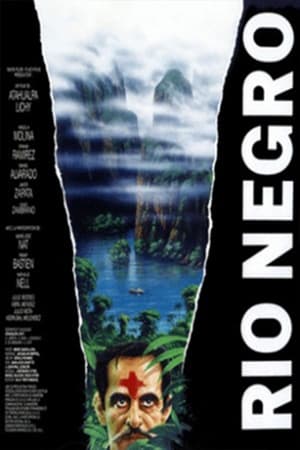
The struggle of two men, Osuna and Funes, hungry for power and wealth in a small town in Venezuela, during the dictatorship of Juan Vicente Gómez.
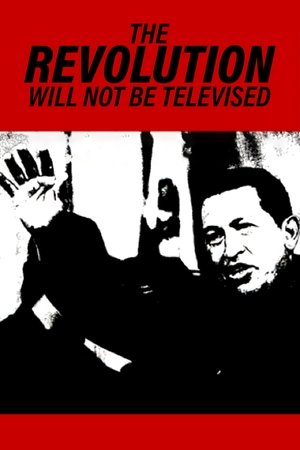
Hugo Chavez was a colourful, unpredictable folk hero who was beloved by his nation’s working class. He was elected president of Venezuela in 1998, and proved to be a tough, quixotic opponent to the power structure that wanted to depose him. When he was forcibly removed from office on 11 April 2002, two independent filmmakers were inside the presidential palace.
Cruz Quinal, "the mandolin king," lives near Cumana in a mountain valley surrounded by sugarcane fields. Perpetuating 16th century Spanish traditions of guitar-making, Cruz fashions such musical instruments as cuatros, marimba, escarpandola, and his own creation, a mandolin with two fretboards. He is an accomplished musician as well. In this moving portrait, Cruz compares himself to a decaying colonial church across the street: revered yet neglected, the village altar stands, paint peeling, under the open sky.
Trade union leader Manuel Taborda, a pioneer of workers' organisations in the oil industry, recounts his experiences and those of his colleagues from 1920 to 1936, with an emphasis on the struggles against foreign companies and the government.
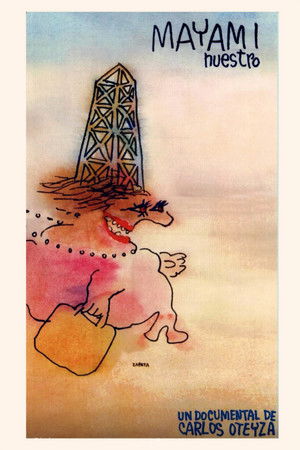
Mayami Nuestro goes beyond the slogan "tá barato, dame dos" (“it’s cheap, give me two”) to force a rethinking of Venezuela’s relationship with oil and national identity. Produced at the height of the oil boom, this 34-minute documentary examines Venezuelan lifestyles in the 1970s and early 1980s, questioning the consumerist fantasies fueled by petro-wealth. Through interviews with merchants, bankers, U.S. academics, and the testimonies of Venezuelans themselves, the film maps the era’s version of the “American Dream” as lived—and projected—abroad. Winner of national and international awards and directed by Carlos Oteyza, Mayami nuestro offers a sharp, historically grounded critique and an open invitation for new generations to reflect on the legacy of oil and its cultural consequences.
Imagen de Caracas was an experimental film spectacle, directed by Jacobo Borges and Mario Robles in 1968 for the 400 anniversary of the foundation of Caracas. It needed more than 48768 meters of film and 5000 actors.
In 1969, the Renovación Universitaria movement and the subsequent raid on the Central University of Venezuela by the government of Rafael Caldera, triggered a strong wave of protest in the Institutes of Higher Education in Venezuela. This documentary collects part of the events that took place in the city of Mérida, Mérida State, where the University of the Andes is located.
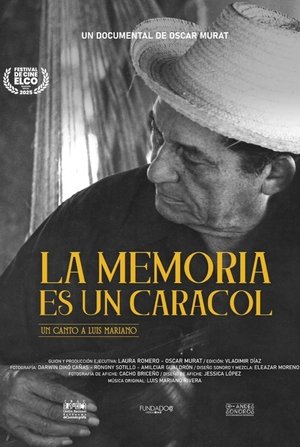
Documentary about the life of Luis Mariano Rivera.
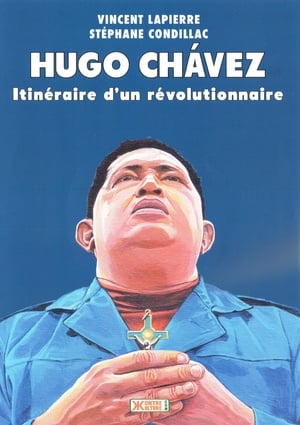
Hugo Chávez: Itinéraire d'un révolutionnaire
Documentary about the life of Simón Bolívar, directed by Antonio Bacé.
A machine-voice makes a "sad film of his homeland" for a dying patient to ease its passing: footage from Kennedy's visit to Venezuela in 61' creeps through montage errors, and a seemingly endless poem comes alive one last time.
Short that tells the history of Campoma, a small Venezuelan town founded by black slaves.
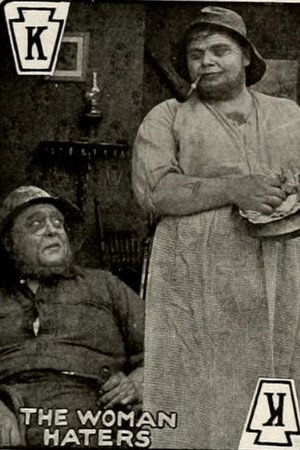
A timid man with a domineering wife takes S&M lessons to get revenge.
Mohan is fascinated by films and eventually meets a big movie star. The actress, in turn, is charmed by his simple ways. His increasing affection for her is merely a game for the actress.
Television registration of the eponymous performance by the Dutch comedian Claudia de Breij. Based on the life story of revue artist Heintje Davids, De Breij sings, dances and tells about a little girl who was told by her father that she was 'too fat and ugly' for the stage. Later, when she had long conquered that stage, there were people who decided that people like Heintje were too Jewish to be allowed to be there. But whoever stopped her, whatever happened: Heintje was there, and she always came back.
Summertime. In a camping, three little girls listen to an old mysterious story about a missing kid. They start to investigate.
When an casual comment about a straying friend leads to despair a woman finds grief returning to her door in kind.
John Evans and Thomas Barnes were both employed by the banking house of H.M. Cruze and Co. They also occupied an apartment together. Barnes received a tip to play C. and S. stock for a rise. But instead of rising it fell, and he was notified by his broker to send five hundred dollars the next morning to cover the margin or be wiped out. He had no money of his own left, and waiting until everyone had left the office, Barnes opened the safe and took out five hundred dollars.
When an unexpected snowstorm strikes Seattle, the dead rise from their graves to prey on the city's helpless citizens. From the confines of their living room, a group of unlikely heroes emerge to stop the flesh hungry hordes, only to discover that zombies aren't the only evil they are up against.