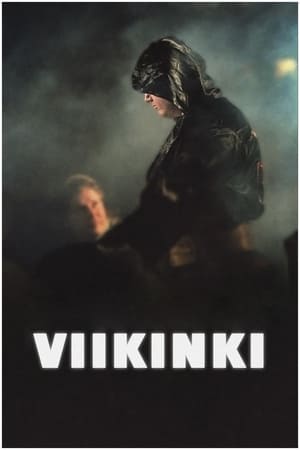
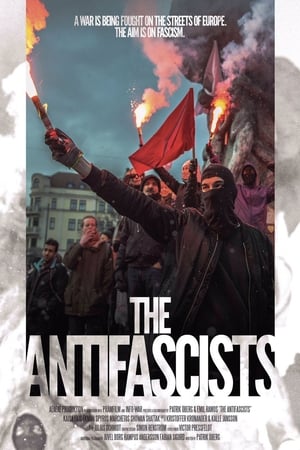
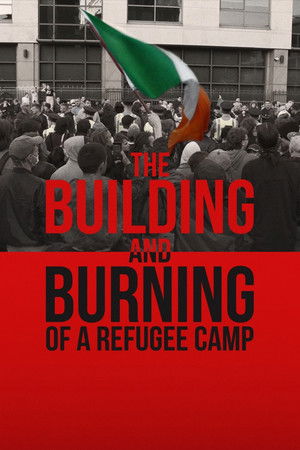
A low-intensity war is being fought on the streets of Europe and the aim is on fascism. This critically acclaimed documentary takes us behind the masks of the militants called antifascists. In 2013 a group of armed nazis attacks a peaceful demonstration in Stockholm where several people are injured. In Greece the neo-nazi party Golden Dawn becomes the third largest in the election and in Malmö the activist Showan Shattak and his friends are attacked by a group of nazis with knives and he ends up in a coma. In this portrait of the antifascists in Greece and Sweden we get to meet key figures that explain their view on their radical politics but also to question the level their own violence and militancy.
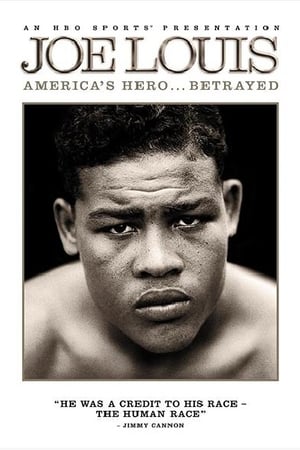
An American story. Traces the career of Joe Louis (1914-1981) within the context of American racial consciousness: his difficulty getting big fights early in his career, the pride of African-Americans in his prowess, the shift of White sentiment toward Louis as Hitler came to power, Louis's patriotism during World War II, and the hounding of Louis by the IRS for the following 15 years. In his last years, he's a casino greeter, a drug user, and the occasional object of scorn for young Turks like Muhammad Ali. Appreciative comment comes from boxing scholars, Louis's son Joe Jr., friends, and icons like Maya Angelou, Dick Gregory, and Bill Cosby.
Recy Taylor, a 24-year-old black mother and sharecropper, was gang raped by six white boys in 1944 Alabama. Common in Jim Crow South, few women spoke up in fear for their lives. Not Recy Taylor, who bravely identified her rapists. The NAACP sent its chief rape investigator Rosa Parks, who rallied support and triggered an unprecedented outcry for justice. The film exposes a legacy of physical abuse of black women and reveals Rosa Parks’ intimate role in Recy Taylor’s story.
Facts about American police officers
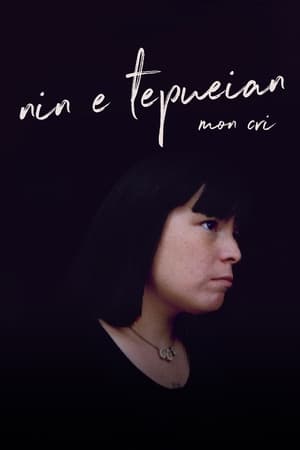
NIN E TEPUEIAN - MY CRY is a documentary tracks the journey of Innu poet, actress and activist, Natasha Kanapé Fontaine, at a pivotal time in her career as a committed artist. Santiago Bertolino's camera follows a young Innu poet over the course of a year. A voice rises, inspiration builds; another star finds its place amongst the constellation of contemporary Indigenous literature. A voice of prominent magnitude illuminates the road towards healing and renewal: Natasha Kanapé Fontaine.
In 1971, after being rejected by Hollywood, Bruce Lee returned to his parents’ homeland of Hong Kong to complete four iconic films. Charting his struggles between two worlds, this portrait explores questions of identity and representation through the use of rare archival footage, interviews with loved ones and Bruce’s own writings.
Exploring the fallout of MIT Media Lab researcher Joy Buolamwini's startling discovery that facial recognition does not see dark-skinned faces accurately, and her journey to push for the first-ever legislation in the U.S. to govern against bias in the algorithms that impact us all.
Breaion King, a 26 year-old African-American school teacher from Austin, Texas - is pulled over for a routine traffic stop that escalates into a violent arrest. Dashcam clips intercut with verite scenes tell a story of racism in law enforcement through the eyes of one of its victims.
Set in motion by a tragic police-involved shooting, two communities of color navigate fraught perceptions of injustice, inequality, and discrimination in the eyes of the law.
Approximately, because so-called "ethnic" statistics are prohibited, there are an estimated 3.3 million black French citizens. Distant descendants of slaves from the Caribbean or "indigenous" peoples from the French colonial empire in Africa, they constitute a minority that is often discriminated against. Isabelle Boni-Claverie, a mixed-race woman raised in the affluent neighborhoods of Paris, daughter of an Ivorian politician and granddaughter of Alphonse Boni, a Black man who became a magistrate of the French Republic in the 1930s, examines what is blocking the social advancement of Black French people and the full recognition of their citizenship.
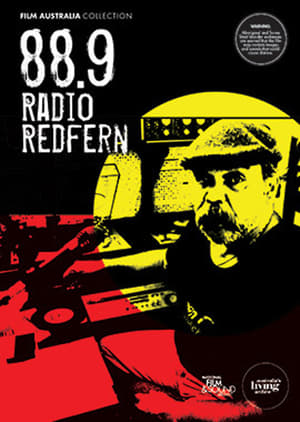
An observational documentary which looks at Sydney’s first community Aboriginal radio station, 88.9 Radio Redfern. Set against a backdrop of contemporary Aboriginal music, 88.9 Radio Redfern offers a special and rare exploration of the people, attitudes and philosophies behind the lead up to a different type of celebration of Australia’s Bicentennial Year. Throughout 1988, 88.9 Radio Redfern became an important focal point for communication and solidarity within the Aboriginal community. The film reveals how urban blacks are adapting social structures such as the mass media to serve their needs.
OJ: TRIAL OF THE CENTURY, premiered on June 12, 2014 and it chronicles the twists and turns of the OJ Simpson murder trial and allows viewers to relive every moment of the investigation first-hand.
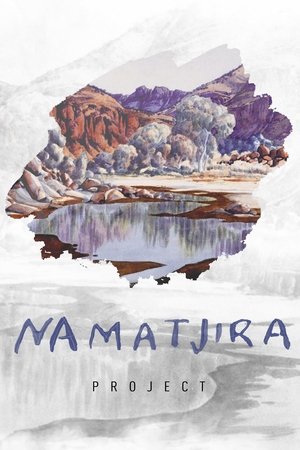
From the remote Australian desert to the opulence of Buckingham Palace - Namatjira Project is the iconic story of the Namatjira family, tracing their quest for justice.
This short 19-minute documentary is an intimate and moving exploration of the profound and far-reaching impact of surveillance on Muslim American individuals and communities. Premiering at the 2017 Tribeca Film Festival, WATCHED is told through the personal experience of two women, both coming of age in New York. The film charts the devastating toll of surveillance and reveals the scars it leaves behind.
A documentary filmed from dusk to dawn during the 2020 George Floyd protests in Minneapolis, Minnesota.
50 years on, the Aboriginal Tent Embassy is the oldest continuing protest occupation site in the world. Taking a fresh lens this is a bold dive into a year of protest and revolutionary change for First Nations people.
The film looks at men and women of color in the U.S. Merchant Marine from 1938-1975. Through chronicling the lives of these men and women who, with a median age of 82, are beset with a host of life-threatening illnesses, the movie tells how they navigated issues of racism, disparities in the workplace, gender and familial relations.
In the history of “The Simpsons,” few characters outside the title family have had as much cultural impact as Apu Nahasapeemapetilon, the Springfield convenience store owner. Comedian Hari Kondabolu is out to show why that might be a problem.
Documentary depicts what happened in Rio de Janeiro on June 12th 2000, when bus 174 was taken by an armed young man, threatening to shoot all the passengers. Transmitted live on all Brazilian TV networks, this shocking and tragic-ending event became one of violence's most shocking portraits, and one of the scariest examples of police incompetence and abuse in recent years.
Hoyerswerda '91