Hosted by Damon Fox, this documentary takes us on a grim dive into the world of the coroner and what they see in their line of work.
During the Feria of Nîmes, a bullfight is filmed from the perspective of the animal, relegating the matador and public to off-screen spectators. A ritual at the frontiers of mysticism, carried by the sacrificial figure of the bull, revealer of our humanity.
Efrain, known as the Reaper, has worked at a slaughterhouse for 25 years. We will discover his deep relationship with death and his struggle to live.
Three images of a person running in the void through the movement of speed and abstract images
A day in the city of Berlin, which experienced an industrial boom in the 1920s, and still provides an insight into the living and working conditions at that time. Germany had just recovered a little from the worst consequences of the First World War, the great economic crisis was still a few years away and Hitler was not yet an issue at the time.
Jon Richardson, one of Britain's most cautious men, is sent on a mission by his wife Lucy Beaumont, to investigate the things they are most scared about.
A hearse cruises the streets of Medellín, while a young director tells his story in this city marked by conflicts, violence and paradoxes. He remembers his childhood and the discovery of his sexuality.
A ritual of grids, reflections and chasms; a complete state of entropy; a space that devours itself; a vertigo that destroys the gravity of the Earth; a trap that captures us inside the voids of the screen of light: «That blank arena wherein converge at once the hundred spaces» (Hollis Frampton).
A quiet morning unfolds as I prepare an andouille for breakfast. Simple and serene, “Breakfast” captures the start of the day in its most peaceful moments.
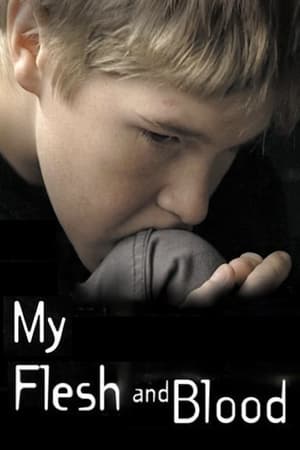
chronicles the life of Josh Keogh, a 15-year-old whose family was shattered when his father died of liver cancer only six weeks after being diagnosed. Filmed over the course of a year, the documentary begins only a few months after James Keogh's death and candidly captures the emotions the grieving son hid from his family and friends.
Chapter Two represents a continuation of daily observations from the environment of Manhattan compiled over a period from 1980-1981. This is the second part of an extended life's portrait of New York.
Until now, they have stood on the sidelines. They have not appeared before the cameras. They have not taken part in public discussion. It is mainly to them that the documentary film by the well-known journalist Ewa Ewart was devoted. It shows the face of the Smolensk catastrophe through the eyes of the victims' families. April 10, 2010 went down in the memory of Poles as a day of national drama. But for the characters in the film, it was the day of their greatest personal drama. Along with the presidential couple, their loved ones passed away in shocking circumstances. For most, the time passing since the Smolensk catastrophe does not bring relief. Ewa Ewart and her film crew accompany the families at various stages of their struggle with difficult emotions. The film is in the process of being made and will include sequences and stills that have not been used anywhere before.
In 2004 the Oregon State Hospital, former site of the film One Flew Over the Cuckoo's Nest, revealed the existence of thousands of corroded copper urns, each containing cremated human remains. Photographer David Maisel captured these beautifully unique urns of forgotten souls on film. Exhibiting their photos revealed secrets, influenced political decisions and reunited families. This film will show how art can stimulate social change and will document the ongoing controversy surrounding a proper memorial for these institutionalized casualties.
A personal journey. A search for "the image of death" along the paths of the incommunicable, during a long walk through the cemeteries of Paris in search of César Vallejo's tomb.
The first film made by Markopoulos after moving to Europe, Bliss was shot over the course of two days using only available light to create a lyrical study of the interior of the Church of St. John on the island of Hydra.
The Water Map is an essayistic journey through the ethnography and landscapes of the Region of Murcia. These places are in the process of disappearing due to the increasing and abundant agricultural exploitation. Water has marked the territory and the culture of the area, and with its disappearance, the memories of four characters fade away.
In 1919 an art school opened in Germany that would change the world forever. It was called the Bauhaus. A century later, its radical thinking still shapes our lives today. Bauhaus 100 is the story of Walter Gropius, architect and founder of the Bauhaus, and the teachers and students he gathered to form this influential school. Traumatised by his experiences during the Great War, and determined that technology should never again be used for destruction, Gropius decided to reinvent the way art and design were taught. At the Bauhaus, all the disciplines would come together to create the buildings of the future, and define a new way of living in the modern world.
What do we have to learn from dead things and the people who love them? For some, vulture culture offers a deeper connection to nature. For others, it is a way of confronting death and processing grief. For others, the ultimate form of artistry.
Sgt. Mike Berry - officer, man of God, and world famous underwater detective, stands on Lake Chesdin's muddy shore, ready to dive for a murder weapon through a kaleidoscope of memories.
“Geometric animation made entirely by sculptural methods: cutting, punching, welding colored leader. HETERODYNE is related to some of my other work as RNA to a protein or polypeptide. It was made in abject (if blissful) ignorance of Paul Sharits’ early work.” –Hollis Frampton