From the Black Earth is a collaboration between Bristol based company Cables and Cameras, and a local farmer Humphrey Lloyd. Employing both lucid speakers and poetic camera work, the film poses stark questions such as; why does food poverty exist in a nation of plenty, and why are people of colour so under represented not only in our countryside and farms, but in the environmental movement more broadly? By giving a platform to people of colour who are connecting with nature and working the land, this short documentary starts to unpick these questions...
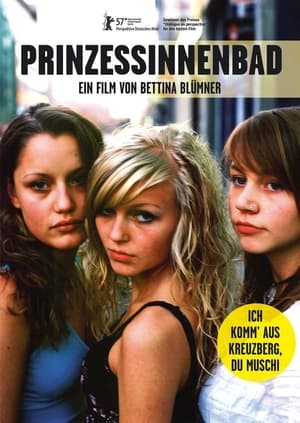
A film about three teenagers - Klara, Mina and Tanutscha - from the Berlin district of Kreuzberg. The trio have known each other since Kindergarten and have plenty in common. The three 15-year-olds are the best of friends; they are spending the summer at Prinzenbad, a large open-air swimming pool at the heart of the district where they live. They're feeling pretty grown up, and are convinced they've now left their childhood behind.
The last ten years have seen a phenomenal explosion in the organic food movement as it has moved from niche market to mainstream. Today, it is the fastest growing segment of the food industry attracting all of the major food corporations. THE NEW GREEN GIANTS looks at a number of these new and old organic corporations and shows how they are managing, or in some cases, failing to live up to the idealistic dreams first espoused by the back-to-the land folk of the late sixties and early seventies. The documentary also looks at some of the bigger questions surrounding organic food. Is it really healthier? Is it truly organic? Is it possible to grow from a mom-and-pop operation to become a huge supplier of major grocery chains? Is it actually sustainable? Is it realistic to think the world can be fed organically?
A day in the city of Berlin, which experienced an industrial boom in the 1920s, and still provides an insight into the living and working conditions at that time. Germany had just recovered a little from the worst consequences of the First World War, the great economic crisis was still a few years away and Hitler was not yet an issue at the time.
A documentary that exposes the shocking truths behind industrial food production and food wastage, focusing on fishing, livestock and crop farming. A must-see for anyone interested in the true cost of the food on their plate.
The film accompanies Jenny Gröllmann, a German actress, during the last two years of her life.
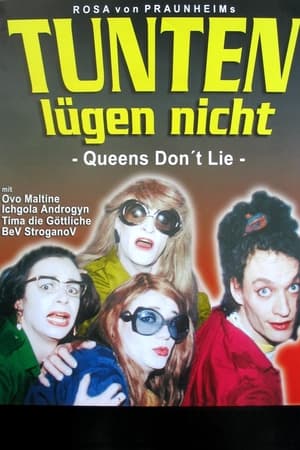
Bosom buddies BeV StroganoV, Ovo Maltine, Ichgola Androgyn and Tima die Göttliche are four Berlin drag queens who met in the mid 1980s. These four queens became Germany’s most popular drag performers and have been busy fertilizing the German cultural scene. Besides being performers, they are also political activists – in AIDS awareness, anti-gay violence, the sex workers movement and the struggle against the extreme right and racism. The film tells their story.
Farmers alone cannot make our food system thrive - it’s up to all of us. That is the message of this enlightening and encouraging film. The good stewardship efforts being made by farmers, consumers and policy makers in the rapidly growing county of Ventura, California will inspire any community interested in preserving agricultural resources.
Drei Frauen
Morgan Spurlock subjects himself to a diet based only on McDonald's fast food three times a day for thirty days without exercising to try to prove why so many Americans are fat or obese. He submits himself to a complete check-up by three doctors, comparing his weight along the way, resulting in a scary conclusion.
Gourmet sandwiches, salads, cakes and also ethnic cuisine, fried fish, ribs or spleen: these are just some of the recipes offered by the army of four-wheeled chefs that fill the streets. But now street food is also a way of life: those who offer it only need a van, some talent and a small investment, while those who eat it simply take to the streets.
Why wheat, one of the staple food of humanity, is becoming a poison for a growing number of people today ? An investigation on the emergence of a new gluten-free products market. And yet, the real cause of this sudden tsunami of grain intolerance remains a mystery. How come all of a sudden, many of us no longer support cereal, highly nutritious in protein? Have recent changes in our eating habits triggered the epidemic? Is wheat not the good old grain we've been eating for 10,000 years? Scientists, activists and committed farmers are trying to uncover the truth on the real qualities of industrial foods.
Filmed in Berlin, July 1990. Images of workers taking down the wall and street peddlers selling pieces of it to make a living.
Located in former West Berlin, Tempelhof Airport reflects the dramatic history of the 20th century. Once a Nazi showpiece, it later became a symbol of freedom during the Berlin Airlift and the Cold War. In 1978, East German citizen Constanze Glien unexpectedly arrived here after her flight was hijacked, changing the course of her life.
In the year Queen Elizabeth marks her 70th on the throne, Fortnum & Mason has challenged home bakers to create a tart, cake, or pudding to honor her legacy. Seven judges headed by Dame Mary Berry invite the final five bakers to London where over one extraordinary day they bake their cakes, tarts, and trifles – hoping it will be the winning recipe.
In the 1960s, a white couple living in East Germany tells their dark-skinned child that her skin color is merely a coincidence. As a teenager, she accidentally discovers the truth. Years before, a group of African men came to study in a village nearby. Sigrid, an East German woman, fell in love with Lucien from Togo and became pregnant. But she was already married to Armin. The child is Togolese-East German filmmaker Ines Johnson-Spain. In interviews with Armin and others from her childhood years, she tracks the astonishing strategies of denial her parents, striving for normality, developed following her birth. What sounds like fieldwork about social dislocation becomes an autobiographical essay film and a reflection on themes such as identity, social norms and family ties, viewed from a very personal perspective.
Crazy Legs Conti is an eccentric New York window washer, nude model and sperm donor, and huge fan of the annual July 4th hot dog eating competition. When he casually breaks the world oyster eating record in New Orleans, he decides to dedicate himself to fulfilling his lifelong dream of becoming a professional competitive eater.
Featuring Michael Pollan and based on his best-selling book, this special takes viewers on an exploration of the human relationship with the plant world — seen from the plants' point of view. Narrated by Frances McDormand, the program shows how four familiar species — the apple, the tulip, marijuana and the potato — evolved to satisfy our yearnings for sweetness, beauty, intoxication.
This documentary shows how the Berliner workers lived in 1930. The director Slatan Dudow shows through images: a) the workers leaving the factory; b) the raise of the rents; c) the "unpleasant" guest, meaning the justice officer that brings the eviction notice; d) the fight of classes of the houses of capitalists and working classes; e) the parks of the working class; f) the houses of the working class, origin of the tuberculosis and the victims; g) the playground of the working class; h) the swimming pool for the working class, ironically called the "Baltic Sea" of the working class; i) the effects of humidity of basement where a family lives, with one member deaf; j) one working class family having dinner while the capitalist baths his dog; k) the eviction notice received from an unemployed family and their eviction.
Short portrait of a hungry seagull outside a sausage stand.