After losing part of her memory in an accident, Leila, a young French woman of Iraqi origin, reconstructs her story by reconnecting with her family and exploring her roots. Through music and cinema, she brings her exiled father's poems to lite, dis-covers the reality of the Middle East, and embarks on a personal quest to understand her identity and find her voice.
Rosa is a Mexican woman who, at the age of 17, migrated illegally to Austin, Texas. Some years later, she was jailed under suspicion of murder and then taken to trial. This film demonstrates how the judicial process, the verdict, the separation from her family, and the helplessness of being imprisoned in a foreign country make Rosa’s story an example of the hard life of Mexican migrants in the United States.
A Palestinian activist's fight for freedom draws a Japanese American filmmaker into confrontation with detention regimes of past and present.
Per Persson left Sweden 40 years ago. In Pakistan he fell in love and became the father of two daughters. Trouble starts when the girls grow up and the family decides to emigrate to Sweden. When they end up living in a caravan outside Hässleholm, all their expectations are dashed.
"Bagong Buhay" is a short experimental film that dispels the common belief that packing up and moving to a new place will magically improve one's quality of life. The film challenges this presumption by portraying two contrasting ways of life through objects and locations, encouraging viewers to think critically about the complexities of what makes a better life. In the Philippines, it's believed that relocating to a new area will bring about positive changes in one's existence. True satisfaction is a complex and multifaceted notion, and "Bagong Buhay" encourages us to ponder that relocating to a new place is not a surefire way to attain it.
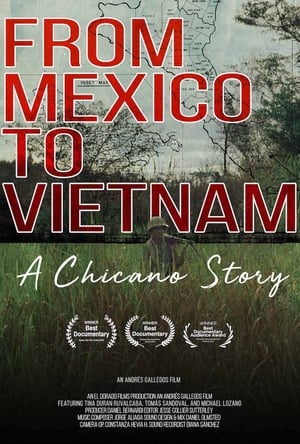
"From Mexico to Vietnam: A Chicano Story" is an inspiring documentary that chronicles the life of Jesus S. Duran, a Mexican immigrant who became a decorated U.S. Army soldier during the Vietnam War. Born in Juarez, Mexico, Duran moved to the United States as a child and enlisted in the Army in 1968. On April 10, 1969, while serving as an M-60 machine gunner with Company E, 2nd Battalion, 5th Cavalry, 1st Cavalry Division (Airmobile), he displayed extraordinary bravery by rescuing several wounded comrades during an intense enemy ambush in Tay Ninh, Vietnam. His valorous actions led to a posthumous Medal of Honor by President Barack Obama. Directed by Andrés Gallegos, the film delves into Duran's personal journey, his family's migration from Mexico, and the broader impact of the Vietnam War on the Chicano and Latino communities.
An undocumented immigrant explores his and his family's immigration trauma while grasping hope through a voicemail.
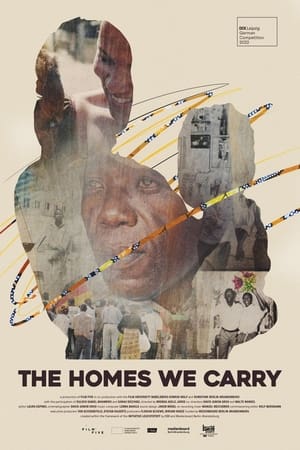
Hammer and compass in Mozambique. We see a GDR flag waved at a rally in Maputo, carried by "Madgermanes", contract workers who once toiled in eastern Germany. Some of them founded families there, like Eulidio. His daughter Sarah grows up with her mother in Berlin. The relationship with her "second home" is slow in growing, partly thanks to Luana, Sarah's baby, whose father, Eduardo is also from Mozambique.
Canada as a refuge for LBGTQ+ immigrants: Yazan from Iraq, Nata from Central Africa, Aida from Iran and Eilyn from Colombia all had to flee their homelands, where violence, threats, hate and rejection prevented them from living their lives and expressing their sexual orientation openly. All they wanted was to be free. From Beirut to Montreal, Quebec City or Vancouver, this ensemble documentary follows the journeys of four people who are determined to change their future. From the terrifying realities they had to flee to the heartbreaking sacrifices they were forced to make, Renaître is a vibrant and luminous tribute to their quiet strength.
Is the solution to Switzerland's future to integrate Germany into the confederation? After all, like Michael Ringier, CEO of the Ringier media group, says, blithely ignoring all minorities, we're very close in culture and language. Oskar Freysinger takes out his guitar and sings his answer. Politicians from French-speaking Switzerland and Ticino think expanding will help the country survive. The former German foreign minister thinks the two countries' traditions are too different. The banker Oswald Grübel is worried about Germany's debts, although he'd be prepared to take over its assets. With serious interviews interspersed with gags (boat people on Lake Constance, the last Habsburger as a peasant), Giaccobbo gathers off-the-cuff reactions which reveal a lot about the different mentalities. The movie laughs at preconceived notions, redefines neutrality and reflects on what designates a nation. Switzerland, which loves to teach the world a lesson, will soon helvetize the planet, oder?
One million people legally cross the U.S.-Mexico border every day in both directions. Among them are women from Ciudad Juárez who cross to give birth in El Paso, Texas. Even with visas that allow them to cross, their journeys are uncertain. Gaby and Luisa, two women from Ciudad Juárez, cross legally into El Paso, Texas, in order to give birth. Two Chicana midwives in El Paso, Lina and Sandra, support the women who cross. After living through the extreme violence that engulfed Ciudad Juárez from 2008-2012 and with the looming threat of obstetrical violence in Mexican hospitals, Gaby and Luisa choose to cross, seeking a safer future for their children and the opportunity for natural childbirth with midwives. They risk losing their visas, getting turned back, and harassment at the hands of U.S. Border Patrol. Against the backdrop of oppressive U.S. border policy, these women's stories of risk and resilience reveal the complexities of life on the U.S.-Mexico border.
Targeted for several failed redevelopment plans dating back to the days of Robert Moses, Willets Point, a gritty area in New York City known as the “Iron Triangle,” is the home of hundreds of immigrant-run, auto repair shops that thrive despite a lack of municipal infrastructure support. During the last year of the Bloomberg Administration, NYC’s government advanced plans for a “dynamic” high-end entertainment district that would completely wipe out this historic industrial core. The year is 2013, and the workers of Willets Point are racing against the clock to forestall their impending eviction. Their story launches an investigation into New York City’s history as the front line of deindustrialization, urban renewal, and gentrification.
Examines how the Immigration and Naturalization Service decides who will be granted asylum in the United States. The applicant must have a "well-founded fear" of persecution in his or her home country. Despite true and terrifying stories of torture and mistreatment, it's often up to how well the translator presents the case and how sensitive are the ears of the asylum officer to decide a person's fate.
Enfants d’octobre
Fliegen heißt, den Himmel suchen
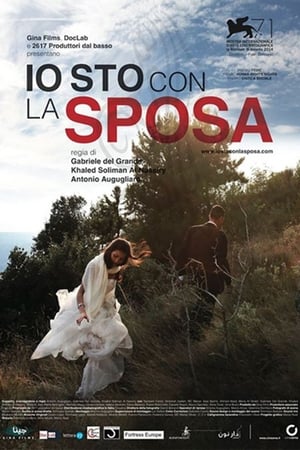
A Palestinian poet and an Italian journalist meet five Palestinians and Syrians in Milan who entered Europe via the Italian island of Lampedusa after fleeing the war in Syria. They decide to help them complete their journey to Sweden, and hopefully avoid getting themselves arrested as traffickers, by faking a wedding. With a Palestinian friend dressed up as the bride and a dozen or so Italian and Syrian friends as wedding guests, they cross halfway over Europe on a four-day journey of three thousand kilometres.
HOMME-RELAIS spotlights Juan Manuel, a doctor turned community leader who, amid migration grief and integration challenges, guides immigrant men through a life-changing program: forging resilience, belonging, solidarity, and hope.
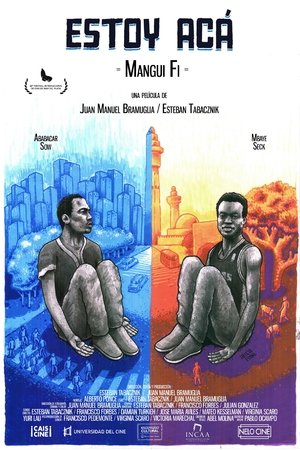
For Ababacar and Mbaye - two Senegalese immigrants who met and established a great friendship in Buenos Aires - the challenge goes beyond adapting to the customs and living conditions in Argentina, or dealing with the indifference and racism they suffer on a daily basis: both came to an instance of their lives in which they must define a course, and in turn accept that their identities and needs have become more complex. The decision to leave their country was driven by the urgent objective of financially supporting their families, but the stay in Buenos Aires crossed them with new people, new ways of seeing things, and even an economic situation different from that which they found at home. Their different ways of seeing things allow them to see in each other a different version of themselves.
Pauline, Norah, Kristina and others wait for hours, sitting under a hut deep in the Bois de Vincennes. In front of the administrative detention center (CRA) in Paris, they have all come to see their loved ones locked up. Lives on hold, awaiting deportation or release. On this stage, these women tell their stories, talk to each other, share their experience, their revolt and their dreams with new visitors. They are the mirror of migrant detention, its reverse view.
A musical docudrama about the brave and outstanding Women of Malolos to whom Jose Rizal addressed his famous letter in Feb 22, 1898.