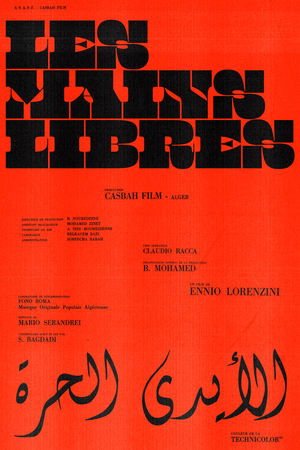
In 1964, Algeria, just two years after the end of the war of independence, found itself catapulted into new contradictions, a still rural territory which responded to the modernity brought by the revolution. Filmed during the winter of 1964-1965 by the young director Ennio Lorenzini, it is the first international Algerian production which paints a rare portrait in color of a multifaceted nation, far from the simplistic vision created by the press and the French army. Produced by Casbah Film, Les Mains Libres (initially titled Tronc De Figuier) bears witness to the stigmata of colonization and the future of free Algeria throughout the Algerian territory and reveals the richness of its landscapes and the diversity of its traditions . The documentary, using the aesthetics of militant cinema of the time, is made up of four scenes: Sea and Desert, The Struggle, The Earth, Freedom.
After reading the book "Guide to Hoggar Climbing," guide Pierre Agresti and his wife Isabelle Agresti set off into the Hoggar massif in the Algerian Sahara and tackled the west face of Garet El Djenoun. After a first attempt in 1967, they successfully reached the summit in 1970 and, with an old camera, made a film that remained unused for 25 years. In 1996, they decided to bring the past back to life through the ascent and encounters with the Tuaregs in the rock salt mines of Amadror. The film was shown in competition at the Trento Film Festival in 1997.
Filmed chronicle by mountain filmmaker Mario Fantin, of the 1964-1965 expedition of the Italian mountaineer Guido Monzino to the summits of Hoggar in the Algerian Sahara with the ascents of Garet el Djenoun, Tizouyag Nord, Saouinan and Iharen. The mountain ranges of the Hoggar desert turn out to be more complex and interesting than most mountaineers suspected at the time.
1953, colonized Algeria. Fanon, a young black psychiatrist is appointed head doctor at the Blida-Joinville Hospital. He was putting his theories of ‘Institutional Psychotherapy’ into practice in opposition to the racist theories of the Algies School of Psychiatry, while a war broke out in his own wards.
Following in the footsteps of Frison Roche, 7 climbers explore the main Hoggar massifs in Algeria. Their main objective is the ascent of the Garet El Djenoun summit via the north ridge, a long climb symbolic of a certain difficulty and a significant commitment, due to its location in the desert. They also attempt the Diedre Agresti, a daring route from the 70s, opened in around ten days on artificial, and unequipped; it is a path that has never been repeated; the objective is to do it free and almost only on wedges, with difficulties up to 7b/c in a sometimes very delicate rock... Excerpts from the film shot in 1970 by Henri Agresti on this same route, allow us to compare the technical and material means of the time to those of today. They also discover the beauty of the Algerian desert, its silence, its rock paintings, the customs of the Tuaregs, etc... a fascinating journey.
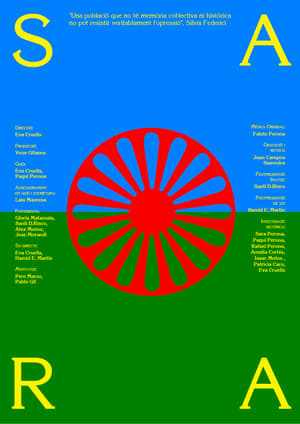
A young woman from Barcelona's La Mina neighborhood inquires into the past of the Roma people in this documentary about the persecution of the Roma people.
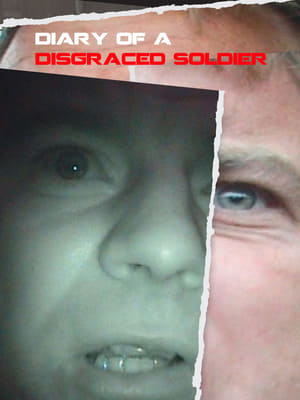
In Iraq 2003 Corporal Martin Webster filmed fellow soldiers beating Iraqi youths during rioting in Al Amara. Two years later, a British newspaper obtained his footage. The story that ran led to outrage across the world.
By the dawn of the 21st century, hip-hop sales had reached an all-time high, but one thing has remained the same. The doors were still locked, and the music industry held the keys. Young artists began to self-market on the Internet, ultimately helping to collapse the music industry as we knew it. It’s Yours explores how it became possible to become a rap star through a Twitter account, YouTube site or Myspace page. It tells this story through the unique perspectives of numerous artists, producers, record industry insiders, and music and cultural critics.
The Hundred Squares: "No more delays," the cry of citizens echoes from the lives of those barely holding out against discrimination and hatred. Struggling with diverse identities in their daily lives, citizens reflect on the meaning of "discrimination" through their own experiences and testimonies. They question and reflect on what is needed to eliminate it and speak out before the camera. The Blooming Equalities: discrimination law that has been on hold for 20 years. A lawyer, a researcher, a religious figure, a writer, and an activist stand in the square again after a year, and, in this time of rampant right-wing extremism and hate, they speak of an anti-discrimination law as "the right answer to ending the insurrection, the last line of defense for human dignity, a current that can no longer be held back, a square that cannot at all harm families, churches, and the nation, and a place where the voices of the less fortunate can be heard."
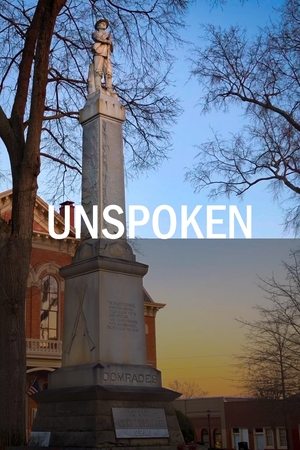
An intimate insider’s journey to uncover buried truths and explore how the community in Monroe, Georgia has been impacted by the 1946 quadruple lynching and decades of racial injustice, shattering a code of silence that has distanced neighbor from neighbor for generations.
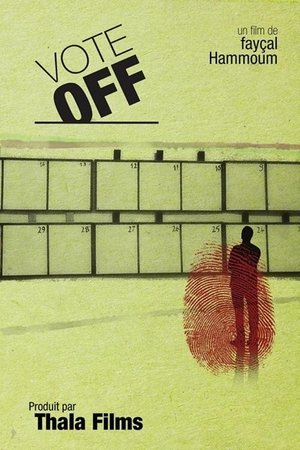
Fayçal Hammoum recounts the 2014 presidential election through non-voting inhabitants of Algiers who, like him, are in their thirties. Be it Bilel, a grocer by default exposed to his customers’ political babbling, or the more politically-charged comments of Younes, a militant FM radio journalist opposed to President Bouteflika’s fourth term, the variety of conversational scenes in no way changes the determination not to vote for an old man who has been invisible for almost two years. The rappers Omar and Brahim are as bereft of hope and voter’s cards as the Tellek webradio DJ, since “the match is fixed”. Moving away from his focus on this subject to film their daily life, the filmmaker draws the portrait of a generation who, as Bilal says with poignant simplicity, “just wants to live
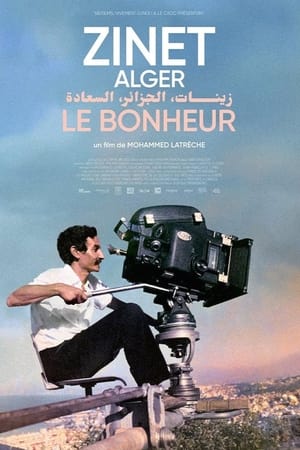
Who remembers Mohamed Zinet? In the eyes of French spectators who reserve his face and his frail silhouette, he is simply the “Arab actor” of French films of the 1970s, from Yves Boisset to Claude Lelouch. In Algeria, he's a completely different character... A child of the Casbah, he is the brilliant author of a film shot in the streets of Algiers in 1970, Tahya Ya Didou. Through this unique work, Zinet invents a new cinema, tells another story, shows the Algerians like never before. In the footsteps of his elder, in the alleys of the Casbah or on the port of Algiers, Mohammed Latrèche will retrace the story of Tahya Ya Didou and its director.
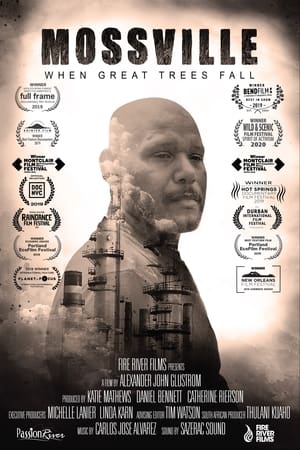
As a centuries-old black community, contaminated and uprooted by petrochemical plants, comes to terms with the loss of its ancestral home, one man standing in the way of a plant's expansion refuses to give up.
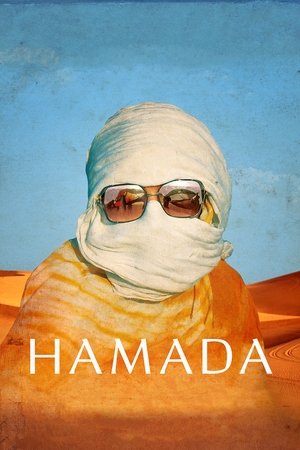
Filled with vitality, humor and unexpected situations, Hamada paints an unusual portrait of a group of young friends living in a refugee camp in the middle of nowhere. Western Sahara is known as “the last colony in Africa” and this conflict is the longest and one of the least known ongoing disputes in the continent, but the Sahrawi people refuse to become invisible.
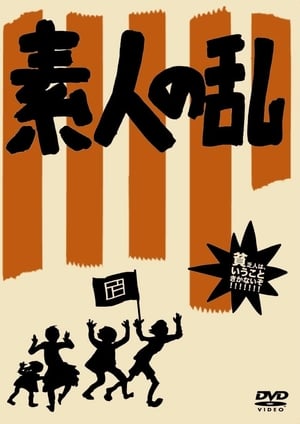
Amateur's Riot (Shirōto no ran) is a Japanese association of activists, committed to the living conditions of the poor people (binbōnin) in Tōkyō. The association was founded in 2005 by Matsumoto Hajime, Yamashita Hikaru, Futatsugi Shin, Mochitsuki Rui and Ogasawara Keita. The protagonists of Shiroto no Ran played an important role in the anti-nuclear demonstrations that appeared in response to the Fukushima nuclear catastrophe.
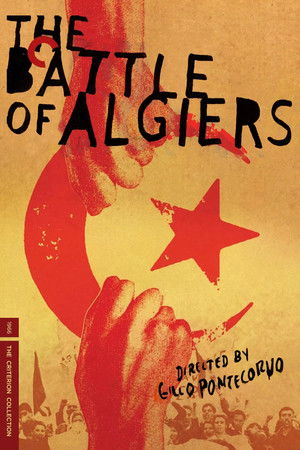
Made just three years after the end of the French-Algerian War (1954-1962), Gillo Pontecorvo's The Battle Of Algiers instantly ignited discussions of this complex historical period. Using the film as a point of reference, this 2004 documentary attempts to reconstruct the Algerian experience of the battle for independence.
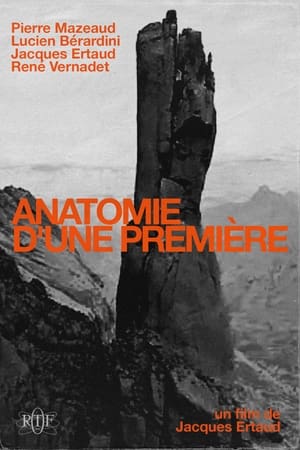
In February 1966, Pierre Mazeaud and Lucien Berardini traveled to the Atakor massif, in the Hoggar mountain range of the Sahara in southern Algeria. There, they attempted a challenging first ascent: the Takouba spur, one of the peaks adjacent to Garet El Djenoun, a legendary mountain in the Hoggar massif, first climbed by Roger Frison-Roche and Raymond Coche in 1935. The documentary, superbly filmed by Jacques Ertaud, won the Grand Prize at the Trento International Mountain Film Festival in 1966.
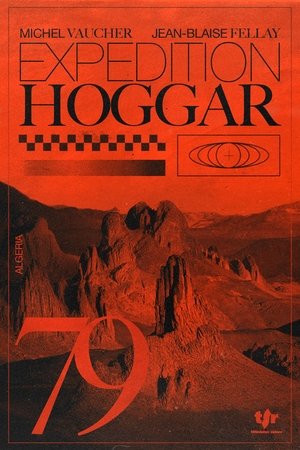
TSR documentary on the 1979 expedition to Algeria in the Atakor massif (Hoggar desert), organized by Geneva mountaineer Michel Vaucher and Jean-Blaise Fellay. The climbers make a dozen ascents including the famous summit of Adaouda (which means "finger" in Tamasheq, the Tuareg dialect), by several routes. Then a new route on the peaks of the southern Tezoulegs. They discover the volcanic geological characteristics of the Atakor massif and meet the nomadic inhabitants of the region, the Tuaregs, who are increasingly settling in the town of Tamanrasset.
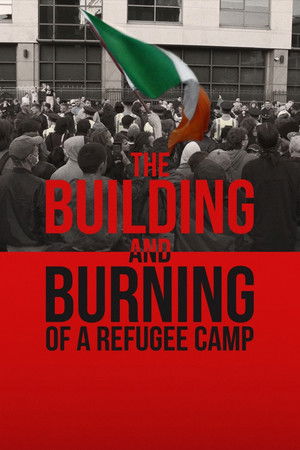
Three men seeking asylum in Ireland find themselves on the streets, caught between restrictive migration policies and an increasingly aggressive far-right movement. Dennis Harvey captures an explosive sequence of events on the streets of Dublin.
A haunting story of the FBI's dark hand in American life. In 2015, Khalil Abu-Rayyan was just a young Muslim man in Detroit, Michigan: to get by, he delivered food for his family's pizzeria. Depressed and lonely, Khalil found solace in smoking weed and looking at extremist material online. Then two young women started messaging him, and he fell in love. But one of them suggested he start doing increasingly violent things. Nothing was as it seemed. And Khalil's life would never be the same. A documentary by Garret Harkawik for the Gravel Institute.