A day in the city of Berlin, which experienced an industrial boom in the 1920s, and still provides an insight into the living and working conditions at that time. Germany had just recovered a little from the worst consequences of the First World War, the great economic crisis was still a few years away and Hitler was not yet an issue at the time.
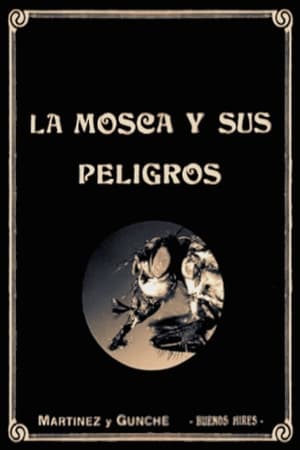
The Dangers of the Fly is an educational film made by Ernesto Gunche and Eduardo Martínez de la Pera, also responsible for Gaucho Nobility (1915), the biggest blockbuster of Argentinean silent cinema. De la Pera was a talented photographer, always willing to try new gadgets and techniques. This film experiments with microphotography in the style of Jean Comandon's films for Pathé and it is part of a series which included a film about mosquitoes and paludism and another one about cancer, which are considered lost. Flies were a popular subject of silent films and there are more than a dozen titles featuring them in the teens and early twenties.
Farmers' wives from Amager selling flowers.
Street Trading. Fishermen's wives from Skovshoved sell their fish from the stalls at Gammel Strand. Anker Kirkeby is in the picture.
Swimming. The Russian swimmer Romantschenko visits Copenhagen. He jumps into the water and swims around in the harbor, and he is later seen together with journalist Anker Kirkeby.
A short, early documentary work showing insects exhibiting extreme strength and agility.
Short documentary released in 1907.
In 1902, Emery and Ellsworth Kolb opened a studio in the Grand Canyon and began making photographs of mule parties, landscapes, river adventures, and nearly every other dramatic scene and incident that occurred in the area. They also successfully navigated the Green and Colorado Rivers in 1911, filming their journey. This film ran in the Kolb Studio in the Grand Canyon from 1915 until Emery's death in 1976.
Short film about the manufacture of bricks.
This film records the vast public response to the early death of Vera Kholodnaya, the first star of Russian cinema.
A method soldier boys have for amusing themselves in their leisure moments. New comrades are frequently initiated by the old-fashioned sport of tossing in a blanket. The newly arrived recruit, who is the victim of their sport, enjoys himself, perhaps, less than the other participants.
On a market day in Kernascleden, two Breton women exchange their hair for a few coins. The hair becomes hairpieces. Last scene, an elegant Parisian removes her hat and exposes her generous wig skillfully coiffed.
Also known as The Operation of Dr. Alejandro Posadas. Filmed with early orthochromatic film in the Hospital de Clínicas de la Ciudad in Buenos Aires.
Gilles Groulx's first film shot in 1955 with a camera borrowed from his brother and edited during his spare time when he worked as an editor at the Radio-Canada news service a few years before he joined the NFB. Silent film, presented as its author left it, where the soil and the dialectic of Groulx's work are already there: documentary realism, the social space to be explored, daily life, the relationship between individual and society, social disparities, the consumer society, seduction and happiness.
Finnish filmmaker and artist Sami van Ingen is a great-grandson of documentary pioneer Robert Flaherty, and seemingly the sole member of the family with a hands-on interest in continuing the directing legacy. Among the materials he found in the estate of Robert and Frances Flaherty’s daughter Monica were the film reels and video tapes detailing several years of work on realising her lifelong dream project: a sound version of her parents’ 1926 docu-fiction axiom, Moana: A Romance of the Golden Age.
The first woman to appear in front of an Edison motion picture camera and possibly the first woman to appear in a motion picture within the United States. In the film, Carmencita is recorded going through a routine she had been performing at Koster & Bial's in New York since February 1890.
A short documentary detailing the forging of a katana.
To popularize the idea of automobile travel, Ford Motor Company produced Ford Educational Weekly, a film magazine distributed free to theaters. One 1916 series featured "Visits to American Cities." In this episode, Los Angeles is featured at the very beginning of the boom created by oil, movies and aircraft. On the occasion of its centennial in 1953, Ford donated its film to the National Archives and Records Service; this copy derives from a fine grain master printed from the Archive's preservation negative. Music by Frederick Hodges.
Documentary about the lost 1914 film "Sperduti nel buio". Film historian Denis Lotto journeys across Europe following the trail of the lost movie.
These two views were taken during the celebrations given in 1896 on the occasion of the millennium of the foundation of the kingdom of Hungary. Horsemen and men on foot parade, all dressed in historic uniforms.