After his wife dies, a blacksmith named Balian is thrust into royalty, political intrigue and bloody holy wars during the Crusades.
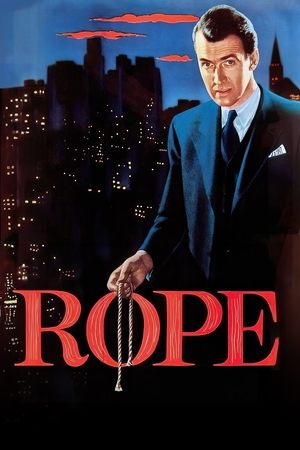
Two young men attempt to prove they committed the perfect murder by hosting a dinner party for the family of a classmate they just strangled to death.
Twelve episodic tales in the life of a Parisian woman and her slow descent into prostitution.
On 25th December 2011 the Georgian Patriarch Ilia II described his 34 year-long leadership as head of the Georgian Orthodox Church as a ‘sunny night’. Beginning in 1989, and going up to the present, the film essay Sunny Night tells of political and social events since Georgian Independence. A variety of formats and sources, disparate images and voices report on protests, recommencements, uproars and wars, and religious identity that centres around the dominant religion of the nation. In the midst of the ongoing shifts and the various state of affairs, the patriarch stands out as the only constant figure. Meanwhile the sermonised religion begins to take on radical forms, going as far as priests forming front row human-chains, leading protests of several thousand orthodox believers chasing a handful of LGBT activist throughout the streets of Tbilisi in May 2013.
In a darkened classroom, the white cracked walls serve as a movie screen. We are in a remote mountain village in Georgia. The light from the projector breaks the darkness: the children's first cinematic experience is about to begin. Among the kids are Iman and Eva, two Muslim girls, for whom the experience becomes a turning point and inspires them to pick up a camera and start filming their daily lives. The girls are growing up in a valley infested by radicalism, where most people live in constant fear that their relatives will sacrifice their lives in the name of God.
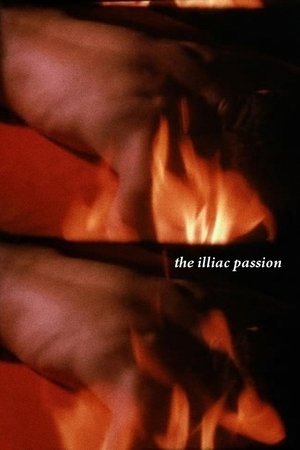
SONG 5: A childbirth song (the Songs are a cycle of silent color 8mm films by the American experimental filmmaker Stan Brakhage produced from 1964 to 1969).
Documentary film about Catholic Church teachings about homosexuality. Describes the "third way", the lifestyle lead by orthodox gay Catholics practicing celibacy out of personal choice, an often overlooked demographic in the debates about homosexuality in the Church.
Miguel, a debutant director, and his young team live a series of tribulations during the shootings of their first film, which unrolls between Lisbon, Venice, Paris and Madrid.
The seven-year-itch hits the marriage of Joe and Emily while Tony's wife Amana is being pursued by her rock star ex-boyfriend who Tony's company manages. Will both their marriages disintegrate when they return to the Marriage Tribunal?
Lacking a formal narrative, Warhol's mammoth film follows various residents of the Chelsea Hotel in 1966 New York City. The film was intended to be screened via dual projector set-up.
There were three sisters — Vera, Nadezhda and Lyubov. Vera, having survived unhappy love, goes to the monastery, where she gives birth to a child. The child dies, Vera commits suicide. Lyuba and grandmother attend church and maintain relations with priest Aleksandr. To Nadezhda that condemns their religiosity, it seems that Lyuba is in love with father Aleksandr. She comes home to him and demands that he stop dating Lyuba. However, it turns out that Aleksandr is in love with Nadezhda. Knowing him better, she reciprocates him, facing a difficult choice, Aleksandr breaks with religion.
A radio astronomer receives the first extraterrestrial radio signal ever picked up on Earth. As the world powers scramble to decipher the message and decide upon a course of action, she must make some difficult decisions between her beliefs, the truth, and reality.
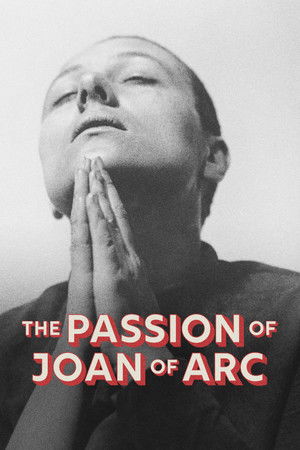
A classic of the silent age, this film tells the story of the doomed but ultimately canonized 15th-century teenage warrior. On trial for claiming she'd spoken to God, Jeanne d'Arc is subjected to inhumane treatment and scare tactics at the hands of church court officials. Initially bullied into changing her story, Jeanne eventually opts for what she sees as the truth. Her punishment, a famously brutal execution, earns her perpetual martyrdom.
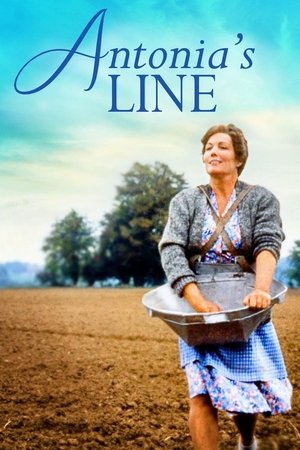
After World War II, Antonia and her daughter, Danielle, go back to their Dutch hometown, where Antonia's late mother has bestowed a small farm upon her. There, Antonia settles down and joins a tightly-knit but unusual community. Those around her include quirky friend Crooked Finger, would-be suitor Bas and, eventually for Antonia, a granddaughter and great-granddaughter who help create a strong family of empowered women.
Maria finds herself caught between two worlds. At school this 14-year-old girl has all the typical teenage interests, but when she’s at home with her family she follows the teachings of the Society of St. Paul and their traditionalist interpretation of Catholicism. Everything that Maria thinks and does must be examined before God. And since the Lord is a strict shepherd, she lives in constant fear of committing some misconduct...
Evangelist Carlton Pearson is ostracized by his church for preaching that there is no Hell.
A neo-nazi sentenced to community service at a church clashes with the blindly devotional priest.
Obsessive scientist Nathan and his lover, the naturalist Lila, discover Puff: a man born and raised in the wild. As Nathan trains the wild man in the civilized ways of the world, Lila fights to preserve the man’s natural state. In the power struggle that ensues, an unusual love triangle emerges.
On Valentine's Day, 1993, Caveh Zahedi decided to ingest 5 grams (a very large dose) of hallucinogenic mushrooms. For the first time in his mushroom-taking history, he had an experience of "divine possession," in which he felt that a divine being took possession of his body and spoke through him, in a voice that was not his, and with knowledge that he himself did not possess. He later tried several times to repeat the experience. I WAS POSSESSED BY GOD is the documentary record of one such attempt.
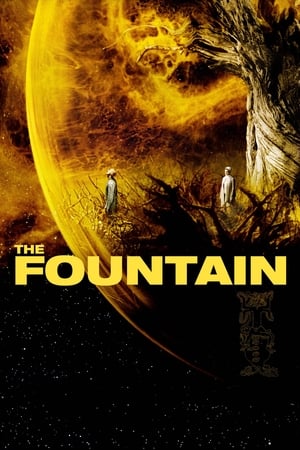
A meditation on freedom and technological approaches to manifest destiny.