In this propaganda film intended to raise money for republicans fighting in the Spanish Civil War, Henri Cartier-Bresson first presents the achievements of the Spanish Republic in the field of public health. He then shows how members of the public and organizations across the world were supporting the fighters.
The life story of Vicente Miguel Carceller (1890-1940), a Spanish editor committed to freedom who, through his weekly magazine La Traca, connected with the common people while maintaining a dangerous pulse with the powerful.
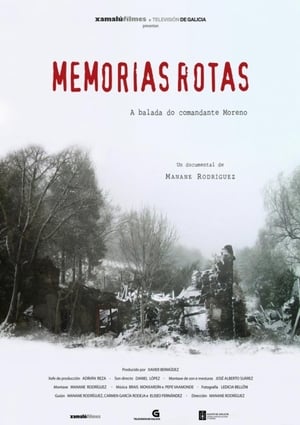
Juan Méndez Bernal leaves his house on the 9th of april of 1936 to fight in the imminent Spanish Civil War. 83 years later, his body is still one of the Grass Dwellers. The only thing that he leaves from those years on the front is a collection of 28 letters in his own writing.
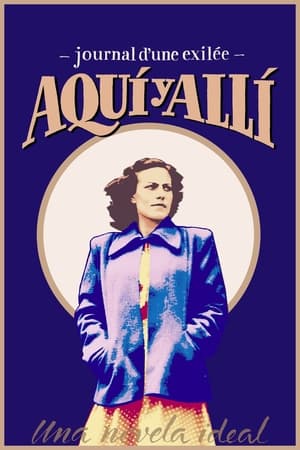
Extranjeros de sí mismos
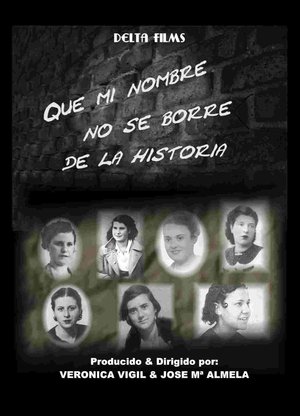
Que mi nombre no se borre de la historia
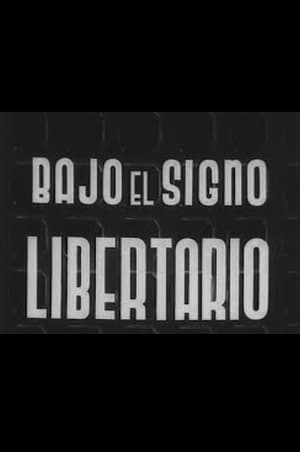
Bajo el signo libertario is a propaganda documentary, with the script and direction of Les (known for his articles in Solidaridad Obrera and the magazine Espectáculo) whose central theme is the reconstruction of the development of life in a libertarian community in the Aragonese town of Pina de Ebro.
Cautivos en la arena
A pro-Republican propaganda documentary made during the Spanish Civil War. It reports on the demonstration held in Barcelona on December 27, 1937 to commemorate the capture of Teruel by the Republican forces.
In November 1936, a few months since the beginning of the Spanish Civil War, the government of the Second Republic moves to Valencia. In this situation, several Valencian artists and intellectuals decide to build four fallas — satirical plasterboard sculptures created to be burnt — to mock fascism.
Dix Jours dans la guerre d'Espagne
Documentary about the Spanish Civil War and its subsequent consequences on the country's society, featuring testimonies from various figures, interviews, and significant photographic and audio documents.
Cantata de la guerra civil
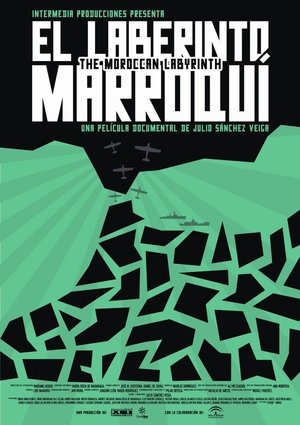
The Moroccan Labyrinth
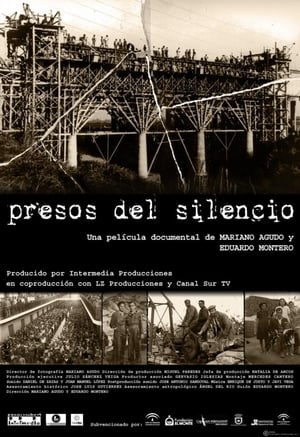
Presos del silencio
The amazing story of Cifesa, a mythical film production company founded in Valencia by the Casanova family that managed to dominate the box office during the turbulent times of the Second Spanish Republic, the carnage of the Civil War and the hardships of the long post-war period and Franco's dictatorship — and survive until the sixties, when Spain was timidly beginning to change.
Biography of the comrade Helios Gómez (1905-1956), painter and draftsman, gypsy and Sevillian, anarchist militant first and then communist.
This documentary is a vision of the Spanish civil war seen by the children of that time: sometimes as a game and other times as a dangerous adventure. A mixture of fascination and fear that was captured forever in the form of drawings.
The military uprising of 1936 tried to eradicate all traces of the social transformation that had brought the Republic. There were villages like Guímara, in the Valley of Fornela (León), whose almost unanimous support to the Republic supposed a hard and systematic repression. This isolated village, of about 85 neighbors, suffered one of the most painful forms of punishment: deportation of adults to concentration camps, separating them from their minor children. In this documentary it is told the chronicle of this terrible repression that sought to subdue and subjugate the population through fear, trying to destroy family ties, solidarity networks between the people and personal and collective subsistence economy. The memory of lullabies from their mothers was the echo that reached their children from the forced exile who lived their elders.
Who made the dams of the Ebro, Entrepeñas, Barrios de Luna and many others? Who rebuilt towns and cities like Belchite, Brunete, Oviedo, Teruel... among many other populations? Who built from airports such as Sondica or Labacolla to municipal stadiums like those of Valladolid and Palencia, to prisions like Carabanchel or Cordoba? Republicans who were prisoners condemned to work as slaves, whose only "crime" had been to defend the democratically elected legality. This documentary tries to recover the memory of these events focusing on the battalion of Republican prisoners of Fabero del Bierzo. It investigates the mechanisms of social construction of silence, fear and forgetfulness that even today can be felt where the events occurred and where the descendants of many of those prisoners still live.
Between 1939 and 1956, the Franco regime shot more than 2,000 republicans in Paterna. They were years of terror, of silence, of arbitrariness, of planned and systematic elimination of any progressive vestige. The documentary portrays the collective effort of the people of Paterna to recover the memory and dignity of those who died defending democracy. Shown through the point of view of those protagonists who were silenced and those voices condemned to oblivion.