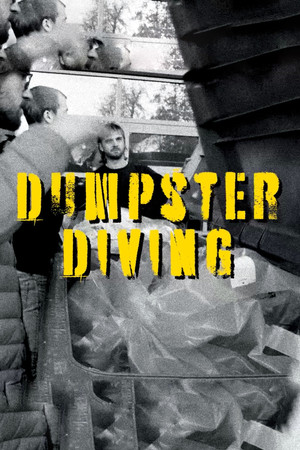
We all love food. As a society, we devour countless cooking shows, culinary magazines and foodie blogs. So how could we possibly be throwing nearly 50% of it in the trash? Filmmakers and food lovers Jen and Grant dive into the issue of waste from farm, through retail, all the way to the back of their own fridge. After catching a glimpse of the billions of dollars of good food that is tossed each year in North America, they pledge to quit grocery shopping and survive only on discarded food. What they find is truly shocking.
“Fresh Start: A Marcus Harvin Story” presents an intimate portrayal of Marcus Harvin’s journey as he transcends his past to make a profound impact on the lives of those around him. The documentary offers a rare glimpse into Marcus’s daily life, capturing his heartfelt mission to share not only food but also compassion through his innovative non-profit organization, Fresh Start. Through candid interviews with key figures in Marcus’s life, including Stephanie Harvin, Babatunde Akinjobi, and Bradley Woodworth, the film illuminates Marcus’s unwavering determination and the vital support system that has helped him achieve his dreams. Viewers are invited to follow Marcus for a day, witnessing his dream project in action—an extraordinary restaurant concept where the only payment required is one’s presence.
As society tackles the problem of feeding our expanding population safely and sustainably, a schism has arisen between scientists and consumers, motivated by fear and distrust. Food Evolution, narrated by Neil deGrasse Tyson, explores the polarized debate surrounding GMOs. Looking at the real-world application of food science in the past and present, the film argues for sound science and open-mindedness in a culture that increasingly shows resistance to both.
Meat is the modern story of the animals we eat, as told by the people who never get to say their piece - from the solitary hunter who believes everyone needs to be educated about their food, to an industrial pig farmer who argues that money isn't his primary driver.
This explores the reality of chefs and cooks as they struggle to create dishes and experiences enjoyed on a daily basis. The restaurant industry is a tough business, not just for profits, but for everyone involved.
The meals based on indigenous ingredients and sustainability at the forefront. Project managers are soon faced with problems ranging from sourcing ingredients to staffing a high-end restaurant in a location inhabited by only 53 people.
After years of overproduction, the Reagan administration unloads over 500 million pounds of surplus cheese on the American public in the 1980s. The pungent dairy product comes to be known as 'Government Cheese.'
Morgan Spurlock subjects himself to a diet based only on McDonald's fast food three times a day for thirty days without exercising to try to prove why so many Americans are fat or obese. He submits himself to a complete check-up by three doctors, comparing his weight along the way, resulting in a scary conclusion.
Jiho Im is a world-class chef who wanders the mountainous Korean peninsula on foot for unorthodox ingredients—acorns, weeds, and moss. Along his way, he cooks meals and develops deep relationships with the elders he meets. When one of his closest friends dies, he faces the challenge of his lifetime: cooking a 108-course feast in her honor for her family.
How safe is the future of the world’s food? This documentary explores a growing crisis in world agriculture. Plant breeding has created today’s crops, which are high yielding but vulnerable to disease and insects. To keep crops healthy, breeders tap all the genetic diversity of the world’s food plants. But that rich resource is quickly being wiped out. (NFB)
In this remarkable journey, Planet Food travels the world to see how control of the spice trails, over the last five millennia, has made great cities and destroyed ancient civilizations. Our guides travel from the Molucca Islands of Indonesia, the original home of cloves and nutmeg, to the Indian province of Kerala, with its native pepper and cardamom. Additional stops include Venice, Beirut, Cairo and other significant places in the spice trade that created and toppled empires.
The Center for Ecoliteracy advances school meal innovation and is pleased to introduce its California Food for California Kids initiative. Using the acclaimed Rethinking School Lunch planning framework and Cooking with California Food in K-12 Schools cookbook and professional development resource, the Center convenes food service directors from across California to support and inspire their work providing more fresh and freshly-prepared food for school children.
While the debate continues about GMOs, Roundup and other toxic pesticides, this powerful film shares remarkable stories of people who regain their health after discovering the secret ingredients in their food and making a bold commitment to avoid them.
Two countries, two restaurants, one vision. At Gabriela Cámara's acclaimed Contramar in Mexico City, the welcoming, uniformed waiters are as beloved by diners as the menu featuring fresh, local seafood caught within 24 hours. The entire staff sees themselves as part of an extended family. Meanwhile at Cala in San Francisco, Cámara hires staff from different backgrounds and cultures, including ex-felons and ex-addicts, who view the work as an important opportunity to grow as individuals. A Tale of Two Kitchens explores the ways in which a restaurant can serve as a place of both dignity and community.
From New York City to the farmlands of the Midwest, there are 50,000 Chinese restaurants in the U.S., yet one dish in particular has conquered the American culinary landscape with a force befitting its military moniker—“General Tso’s Chicken.” But who was General Tso and how did this dish become so ubiquitous? Ian Cheney’s delightfully insightful documentary charts the history of Chinese Americans through the surprising origins of this sticky, sweet, just-spicy-enough dish that we’ve adopted as our own.
A documentary that exposes the shocking truths behind industrial food production and food wastage, focusing on fishing, livestock and crop farming. A must-see for anyone interested in the true cost of the food on their plate.
The last ten years have seen a phenomenal explosion in the organic food movement as it has moved from niche market to mainstream. Today, it is the fastest growing segment of the food industry attracting all of the major food corporations. THE NEW GREEN GIANTS looks at a number of these new and old organic corporations and shows how they are managing, or in some cases, failing to live up to the idealistic dreams first espoused by the back-to-the land folk of the late sixties and early seventies. The documentary also looks at some of the bigger questions surrounding organic food. Is it really healthier? Is it truly organic? Is it possible to grow from a mom-and-pop operation to become a huge supplier of major grocery chains? Is it actually sustainable? Is it realistic to think the world can be fed organically?
Industrial food production has provided the public with an abundance of food at very low prices. But with obesity and diabetes at record levels in Europe, there is clearly a problem with the food we eat. This documentary puts the spotlight on the agri-food industry and reveals how low-cost ultra-processed foods are really made.
This documentary about Rene Redzepi's Copenhagen restaurant follows the proceedings in the kitchen for six months as Noma climbs to the top of the world's 50 best restaurants.
Documentary filmmaker Robert Kenner examines how mammoth corporations have taken over all aspects of the food chain in the United States, from the farms where our food is grown to the chain restaurants and supermarkets where it's sold. Narrated by author and activist Eric Schlosser, the film features interviews with average Americans about their dietary habits, commentary from food experts like Michael Pollan and unsettling footage shot inside large-scale animal processing plants.