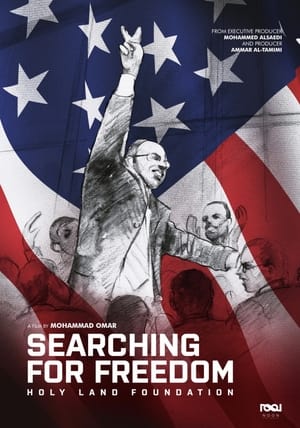
The film "Searching for Freedom: The Holy Land Foundation" is a two part documentary focussing on the story of the Holy Land Foundation, established in the late 80s by three Americans from Palestinian origin, Shukri Abu Baker, Ghassan Elashi and Mohammad El-Mezain. The foundation aimed to supply humanitarian aid to the Palestinians in Palestine and countries hosting Palestinian refugees, it later became the largest charity association in the US to distribute humanitarian aid to Palestinians. After 9/11, the former US President George W. Bush issued a decision to shut down the Holy Land Foundation and freeze its assets. In 2007 the Holy Land Foundation trials began, where five of its members were charged with funding terrorism and sending money to Hamas, a blacklisted political group in the US. A second trial for the Holy Land Foundation members took place in 2008, which issued the convictions of five members of the Foundation and their sentencing of 65 years imprisonment.
In May 1974, the Israeli Air Force carried out an extermination operation against the Palestinian refugee camp Nabatiyeh. With this as a starting point, it is reviewed how the last 50 years of Zionist colonization of Palestine have partly led to the establishment of the state of Israel, partly to the expulsion of a people, the Palestinians, from their land. The film shows scenes of daily life in Palestinian refugee camps. We hear various of the inhabitants talk about their desire to return to their country, and we follow how the resistance movement works to free women from their traditional backward role. At the same time, the emergence of the armed resistance struggle is analysed, and the significance of the latest military technological developments for guerilla wars in the 3rd world is explained.
A video project meant to highlight the human cost in Palestine.
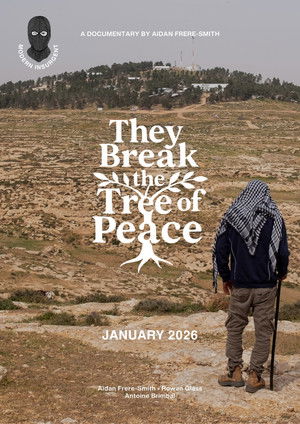
They Break the Tree of Peace explores the reality of life under military occupation in Masafer Yatta, documenting the violence, intimidation, and demolitions carried out and coordinated by illegal settlers and Israeli occupation forces against Palestinian communities.
A portrait of two Palestinian women whose individual struggles both define and transcend the politics that have torn apart their homes and their lives. Farah Hatoum, a widow living with her children and grandchildren, and Sahar Khalifeh, a novelist from the West Bank.
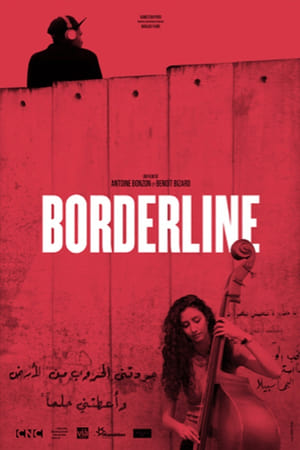
Borderline
Shuja’iyah: Land of the Brave represents one filmmaker’s personal reflection on the meaning of “crimes against humanity” in the context of Israel’s ‘Operation Protective Edge’ waged in the Gaza Strip in 2014, using footage of her family filmed in the summer of 2013 juxtaposed against audio from the summer of 2014. Assali posed the question, when we say ‘crimes against humanity’, what ‘humanity’ are we talking about?”
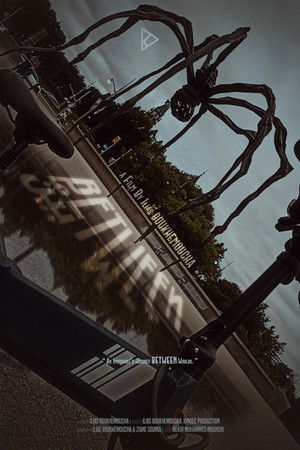
Initially embarking on an unplanned personal filmmaking project, Ilias Boukhemoucha finds himself drawn to the overlooked corners and marginalized communities within Canadian cities.
A thought-provoking documentary on the current and historical causes of the Israeli-Palestinian conflict and U.S. political involvement.
In 2021, the Sheikh Jarrah neighborhood was attacked. The war lasted for 11 days, during which all forms of weapons were used. This left many victims, along with a great loss of buildings and infrastructure. But, maybe more importantly, it created deep psychological effects on all who lived through it, many of them children
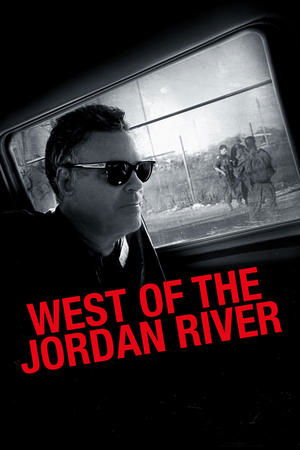
Amos Gitai returns to the occupied territories for the first time since his 1982 documentary FIELD DIARY. WEST OF THE JORDAN RIVER describes the efforts of citizens, Israelis and Palestinians, who are trying to overcome the consequences of occupation. Gitai's film shows the human ties woven by the military, human rights activists, journalists, mourning mothers and even Jewish settlers. Faced with the failure of politics to solve the occupation issue, these men and women rise and act in the name of their civic consciousness. This human energy is a proposal for long overdue change.
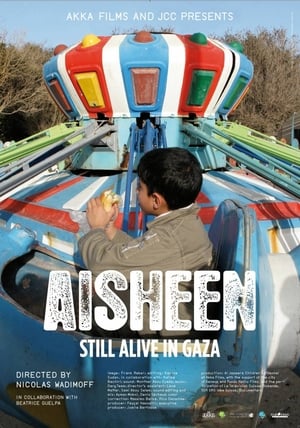
Going behind the usual images of war-torn Gaza, Swiss documentarian Nicolas Wadimoff offers this look at how people survive despite constant threat of danger. Children still play, rappers still create music and families still love one another. In addition to visiting the United Nations Food Distribution Center, Wadimoff films at a derelict amusement park and profiles the DARG TeaM rappers, whose politically charged music proclaims their defiance.
Using only rare archival and newsreel footage, this film tells the story of Palestine from the nineteenth century through current times.
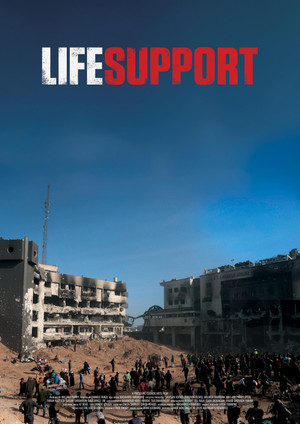
Since October 2023, Gaza has been sealed from the world-except for one group. International doctors breach the blockade, what they find is not just a humanitarian crisis, but a calculated dismantling of life itself.
Something from there is a short film on the substance of our original lands. Weaving between the voices of the artist’s parents, one a refugee and the other not, the film is personal, yet evokes a shared Palestinian experience.
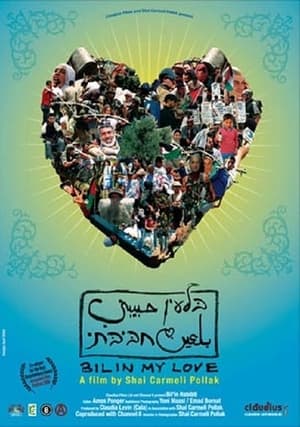
The Israeli filmmaker Shai Corneli Polak records the building of the 'security wall' through Palestinian territory at the village of Bil'in. The villagers protest mostly peacefully, while the Israeli army doesn't react peacefully. By now the Israeli High Court has ruled that the building of the wall was illegal.
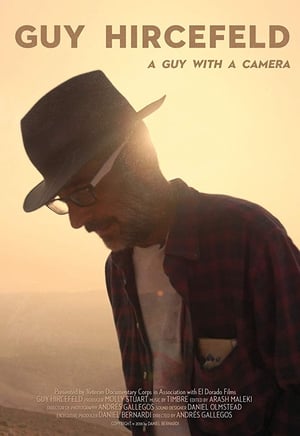
Guy Hircefeld, a veteran who served in the Israeli military at the start of its occupation of Palestine in the 1980s, now fights against the Israeli occupation. His only weapon is a camera.
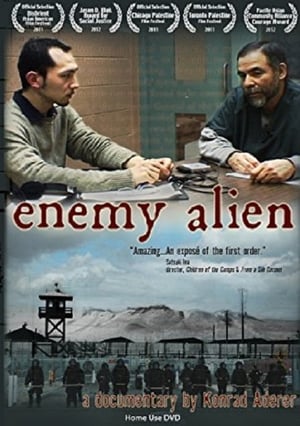
A Palestinian activist's fight for freedom draws a Japanese American filmmaker into confrontation with detention regimes of past and present.
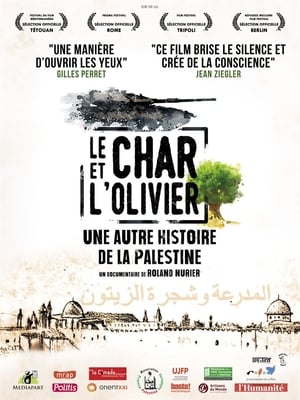
The Tank and The Olive Tree recalls a certain number of forgotten fundamentals and sheds new light on the history of Palestine. By combining geopolitical analysis, interviews with international personalities who are experts on the subject and testimonies from Palestinian and French citizens, this documentary offers the keys to understanding what the media call the Israeli-Palestinian conflict. Enough to rid people's minds of clichés and prejudices! If The Chariot and the Olivier is intended to be educational, it speaks above all of a magnificent territory, and of a people who constantly affirm that “to live is already to resist”...
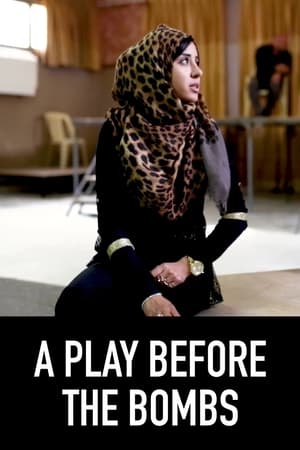
Set in the al-Mishal Cultural Center in Gaza before it was destroyed by an Israeli air strike on August 9, 2018, A Play Before The Bombs is a story that unfolds over a 4 year period. The film follows Abeer Ahmed, a young woman growing up in the Jabaliya Refugee Camp, the largest refugee camp in Gaza, as she and the other members of her cast and crew prepare to put on a play that focuses on a Palestinian woman’s right to receive inheritance. While the content of the play is tailored towards fostering a cultural discussion among Palestinians, neither the play nor the playhouse can escape the omnipresence of the Israeli siege on Gaza. A siege that shatters literal buildings as well as the hopes and dreams of the performers and community members who take refuge within the walls of al-Mishal in search of artistic fulfillment.