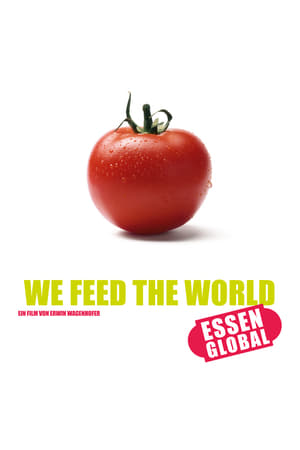
Industrial food production has provided the public with an abundance of food at very low prices. But with obesity and diabetes at record levels in Europe, there is clearly a problem with the food we eat. This documentary puts the spotlight on the agri-food industry and reveals how low-cost ultra-processed foods are really made.
From New York City to the farmlands of the Midwest, there are 50,000 Chinese restaurants in the U.S., yet one dish in particular has conquered the American culinary landscape with a force befitting its military moniker—“General Tso’s Chicken.” But who was General Tso and how did this dish become so ubiquitous? Ian Cheney’s delightfully insightful documentary charts the history of Chinese Americans through the surprising origins of this sticky, sweet, just-spicy-enough dish that we’ve adopted as our own.
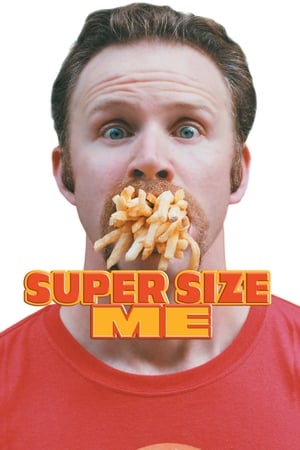
Morgan Spurlock subjects himself to a diet based only on McDonald's fast food three times a day for thirty days without exercising to try to prove why so many Americans are fat or obese. He submits himself to a complete check-up by three doctors, comparing his weight along the way, resulting in a scary conclusion.
A documentary that exposes the shocking truths behind industrial food production and food wastage, focusing on fishing, livestock and crop farming. A must-see for anyone interested in the true cost of the food on their plate.
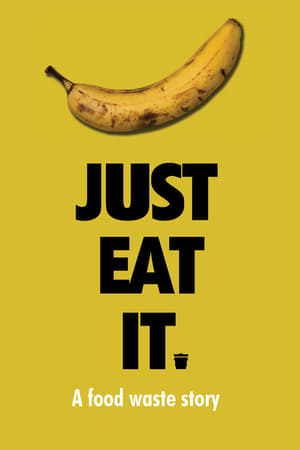
We all love food. As a society, we devour countless cooking shows, culinary magazines and foodie blogs. So how could we possibly be throwing nearly 50% of it in the trash? Filmmakers and food lovers Jen and Grant dive into the issue of waste from farm, through retail, all the way to the back of their own fridge. After catching a glimpse of the billions of dollars of good food that is tossed each year in North America, they pledge to quit grocery shopping and survive only on discarded food. What they find is truly shocking.
Two countries, two restaurants, one vision. At Gabriela Cámara's acclaimed Contramar in Mexico City, the welcoming, uniformed waiters are as beloved by diners as the menu featuring fresh, local seafood caught within 24 hours. The entire staff sees themselves as part of an extended family. Meanwhile at Cala in San Francisco, Cámara hires staff from different backgrounds and cultures, including ex-felons and ex-addicts, who view the work as an important opportunity to grow as individuals. A Tale of Two Kitchens explores the ways in which a restaurant can serve as a place of both dignity and community.
Three young gardeners reflect on their experiences at a Leeds allotment.
Meat is the modern story of the animals we eat, as told by the people who never get to say their piece - from the solitary hunter who believes everyone needs to be educated about their food, to an industrial pig farmer who argues that money isn't his primary driver.
As society tackles the problem of feeding our expanding population safely and sustainably, a schism has arisen between scientists and consumers, motivated by fear and distrust. Food Evolution, narrated by Neil deGrasse Tyson, explores the polarized debate surrounding GMOs. Looking at the real-world application of food science in the past and present, the film argues for sound science and open-mindedness in a culture that increasingly shows resistance to both.
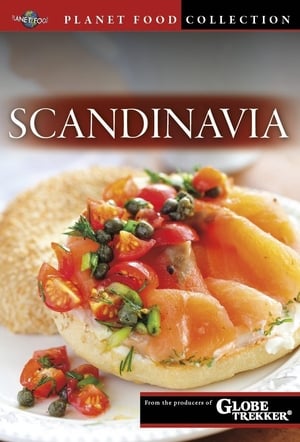
In this remarkable journey, Planet Food travels the world to see how control of the spice trails, over the last five millennia, has made great cities and destroyed ancient civilizations. Our guides travel from the Molucca Islands of Indonesia, the original home of cloves and nutmeg, to the Indian province of Kerala, with its native pepper and cardamom. Additional stops include Venice, Beirut, Cairo and other significant places in the spice trade that created and toppled empires.
With nutritionally-depleted foods, chemical additives and our tendency to rely upon pharmaceutical drugs to treat what's wrong with our malnourished bodies, it's no wonder that modern society is getting sicker. Food Matters sets about uncovering the trillion dollar worldwide sickness industry and gives people some scientifically verifiable solutions for curing disease naturally.
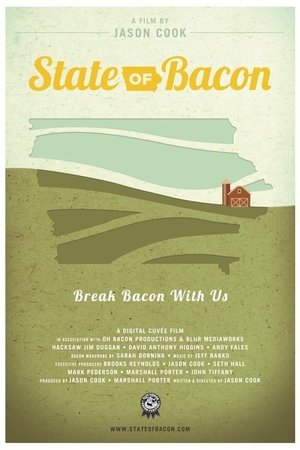
State of Bacon tells the kinda real but mostly fake tale of an oddball group of characters leading up to the annual Blue Ribbon Bacon Festival. Bacon-enthusiasts, Governor Branstad, a bacon queen, Hacksaw Jim Duggan, members of PETA, and an envoy of Icelanders are not excluded from this bacon party and during the course of the film become intertwined with the organizers of the festival to show that bacon diplomacy is not dead.
Documentary filmmaker Robert Kenner examines how mammoth corporations have taken over all aspects of the food chain in the United States, from the farms where our food is grown to the chain restaurants and supermarkets where it's sold. Narrated by author and activist Eric Schlosser, the film features interviews with average Americans about their dietary habits, commentary from food experts like Michael Pollan and unsettling footage shot inside large-scale animal processing plants.
The Politics of Toheroa Soup is Tiana Trego Hall’s personal story of her whānau and their traditional kai, the protected giant surf clam, toheroa. Once a plentiful food source for iwi across New Zealand toheroa were gathered to near collapse after word of their deliciousness spread around the world.
In Ramen Heads, Osamu Tomita, Japan's reigning king of ramen, takes us deep into his world, revealing every single step of his obsessive approach to creating the perfect soup and noodles, and his relentless search for the highest-quality ingredients.
“Food Relovution: What We Eat Can Make A Difference” is an eye-opening and compelling feature documentary that examines the consequences of the meat culture as concerns grow about health, world hunger, animal welfare and the environmental cost of livestock production. It aims to show how these global issues affect everyone and are interrelated, and how making our food choices with a sense of awareness, knowing what we are buying and what we are eating is the first fundamental step towards a better world.
Old Friends is the final installation of a highly popular documentary series consisting of Old Places and Old Romances. In this film, food is the platter on which personal stories of ordinary people from all walks of life are collected, unravelled and served. Just like an old friend who has shared or weathered significant moments with us, most of us connect to certain foods that comfort us and trigger nostalgic recollections of childhood and growing up. By compiling these collective voices of Singaporeans, preserving their intimate takes of joys and woes, love and loss, Old Friends offers future generations a scrumptious taste of the past through our binding passion for food.
A look at man's relationship with Dirt. Dirt has given us food, shelter, fuel, medicine, ceramics, flowers, cosmetics and color --everything needed for our survival. For most of the last ten thousand years we humans understood our intimate bond with dirt and the rest of nature. We took care of the soils that took care of us. But, over time, we lost that connection. We turned dirt into something "dirty." In doing so, we transform the skin of the earth into a hellish and dangerous landscape for all life on earth. A millennial shift in consciousness about the environment offers a beacon of hope - and practical solutions.
He's hungry, and chances are you're also hungry, so tag along. Who knows, you might learn a thing or two.
The film follows Vincent Schiavelli as he returns to Polizzi Generosa, the very town in Sicily his grandparents emigrated from in 1901.