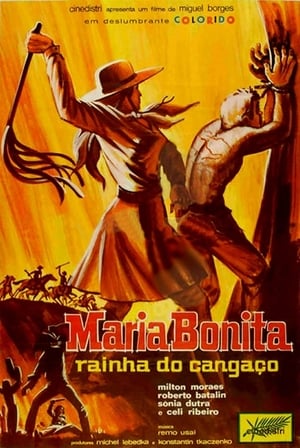
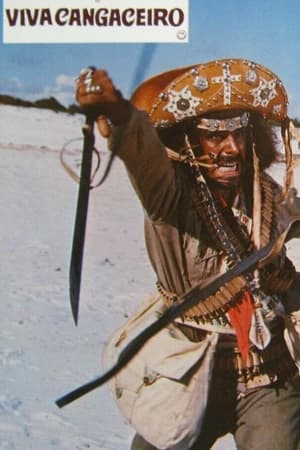
This is a remake of Brazil's first international success in the cinema world. Just as its same name predecessor was, this film is a fictional version of the story of the "cangaceiros." These were bandits who sacked towns and spread terror throughout Northeastern Brazil in the 1930s. This group of outlaws is led by Captain Galdino and his wife Maria Bonita.
In the time of the "cangaceiros" in the badlands of the Northeast of Brazil, the cruel Captain Galdino Ferreira and his band abduct the schoolteacher Olívia, expecting to receive a ransom for her. However, one of his men, Teodoro, falls in love and flees with her through the arid backcountry chased by the brigands.
Based on the novel by Franklin Távora, the film follows the adventures of a father and a son in 18th century Brazil.
A man seeks revenge after his sister get raped by an unknown foreign, identified only by scar and a missing finger. But his payback journey is a long way and bears its surprises.
Romantic biography of Maria Bonita, daughter of a poor farmer who was kidnapped by Lampião and became his lover.
After the proclamation of the Republic, a group of fanatics in the sertão dreamed of and fought for the restoration of the Monarchy. At that bloody time, Fabiano, a quiet boy, becomes a cangaceiro and is attacked by the police. Although wounded, he manages to take refuge on a farm where he is hidden in by Lúcia, the farmer's daughter, with whom he falls in love.
'Bruce' goes to head with bandits who are terrorising and murdering villagers.
Brazil, the 1920s. The sadistic colonel Minas massacres the hometown of a famous cangaceiro (a kind of revolutionary bandit). The only survivor is a young farmer called Espedito; he is nursed back to health by a hermit who thinks he has been sent by God and therefore baptizes him the Redeemer. Espedito/The Redeemer forms his own gang of cangaceiros but doesn’t really understand what he’s doing until he befriends the proverbial European intellectual, a Dutch Oil prospector, who introduces him to important people. Espedito is hired by the Dutchman and a corrupt local governor, but then the Dutchman changes sides …
On the day of Pedro Boiadeiro's wedding, a band of cangaceiros who survived the Angicos massacre invade his home, then proceed to beat him up, and abuse and murder his wife. Pedro sets out to get revenge on each one.
A docufiction film about the fall of Virgulino Ferreira da Silva, widely known as Lampião – the mythical bandit leader from the Brazilian northeast who fought the local power and put his name in history.
Aroeira
The origins of "cangaço", armed brigands in the Northeast between 1935 and 1939, interviews with some survivors of the fighting, police and outlaws movement. Interspersed with testimonials, authentic sequences of films made in 1936 by Benjamin Abraham, an Arab peddler who managed to film the famous band of Virgulino Ferreira da Silva, the "Lampião".
Scenes from the daily life of Virgulino Ferreira da Silva—the cangaceiro leader Lampião—and his group, captured by cinematographer Benjamin Abrahão. Their survival strategies in the sertão landscape, their gestures, habits, clothing, and diet are illustrated. Proud of their status, the group's main members are shown displaying their weapons and combat skills in the caatinga. Maria Bonita and Lampião appear in moments of tension and relaxation, highlighting the harmony of the band and, above all, the rigors of life as a cangaceiro. (Cinemateca Brasileira)
Zé de Julião, Muito Além do Cangaço
In spite of blood ties to both Haifa's Jewish and Arab populations, Moshe leads a rootless existence. Grown weary of his impatient wife Didi and ambivalent about his needy young mistress Grisha, the only relationships Moshe doesn't complicate are with his devoted parents, Jewish Hanna and Arab Yussuf, and with Jules, Moshe's ne'er-do-well childhood friend. But when Jules' real estate developer brother moves to buy a prized piece of property from the Arab side of the family, Moshe's divided ancestry is put to the test.
How to find your way in a suburb of the mega-city of Seoul, that is just one of the things this North Korean refugee hasn't learnt on his citizenship course. He gets lost as soon as he is on his own. At least he speaks Korean.
Tae-il lives a fast life as low level thug. He then learns that he has a terminal illness and not much time left to live. Then, for the first time in his life, he falls in love.
Antônio is an astrophysicist who has just found out he has an inoperable brain tumor. After decades living in the United States, he returns to Brazil and tries to learn more about his biological mother. His quest sends him off into the slums of Rio de Janeiro.
A dying widow plays matchmaker to her 32-year-old unmarried son and sets him up with a nurse that she meets.
Three NYC stories at a climax. Stories about breaking up, losing, leaving, giving away... the things or people you love, you live with, you depend on, which formed your past... The stories are about how difficult this is, how terrifying and how frightening. Yet, you HAVE to do what you have to do. The three girls are met at the turning point of their lives. The film is wonderful written, with few words and a great, exciting pace (though it takes its time and lot of it). Stop: there may be a lot of words, sometimes, but what's important is between-the-lines. The performances are marvellous. Style and location (all shot "on location") remind of this specific independent NYC style of Jarmusch, Poe, Seidelman, Silver, etc.