There is nothing left to do but complain.
Beyond all human restraint lies one's lugubrious layers of paint.
'It was in San Francisco at a punk festival. I was already high and the air was so thick in the rooms that you could cut it with a knife. I had a photograph camera with me; I stood in a corner of the entrance hall and took 36 pictures on slide film. At home I put the slides into a slide projector. I took out the lens and filmed the slides by filming directly from the projector - using single frames according to a certain plan.'
Abandoning the Abaddon-loathed abandoner opens plenty of reclaimed... everything(s).
Don't ask me why, but I feel we're about to cry trying.
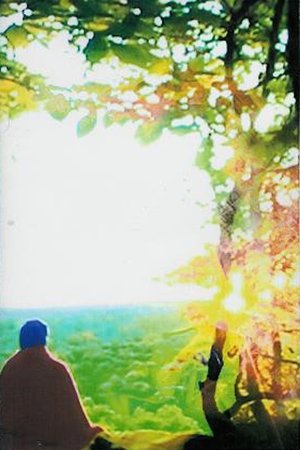
Say Om as you reach home only to realize you never really left/stopped saying Om.
Rather pointless, rather stilted, fetid; not what we want us going after.
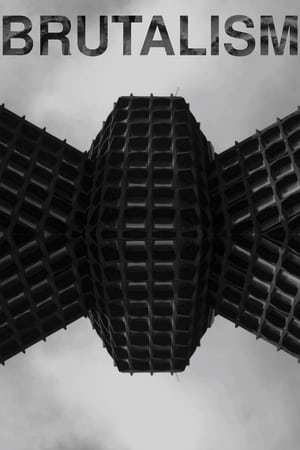
Beneath towering Brutalist architecture, a man is driven to do what must be done.
James Sumner directs and animates the entire Dirty Projectors’ The Getty Address.
A film in five different sections, each containing a different soundscape by Ostrowski. Hand painted film, intense exposure, morphing textures and shapes into a seamless whole; geometrical games sabotaging themselves; and the incessant lure of the abstract paint drift. The soundscapes, of course, build up like fountains of picture, oscillating between contemplative sculptures with electronically manipulated strings and harsh noise attacks on our senses. Despite the use of sound as a central filmic element, Cyanonide stands as a proof of the enduring influence of Brakhage on american avant-film.
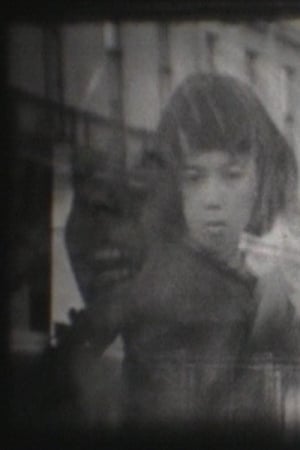
A young girl’s fiery dance, accidentally caught on 16 mm film in the street. The viewer is confronted by the sacrificial and the passionate, the strong and the fragile, the fleeting and the eternal. These are the faces of femininity.
Hiding inside&out, writhing about, taken out&in.
As years and years go by, a tiny civilization makes its way upwards.
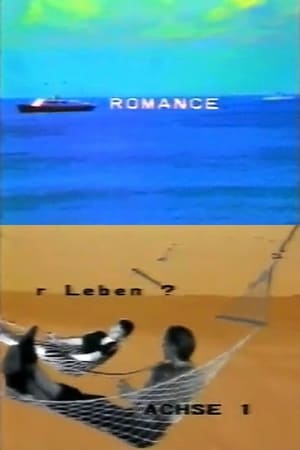
Performance video about a holiday romance at St Ives, Cornwall.
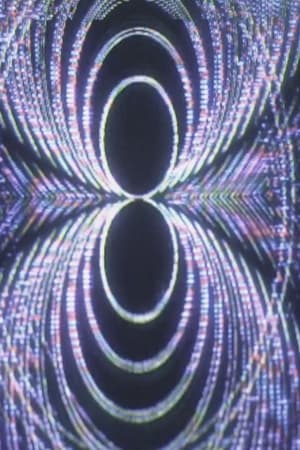
Circuit bent gain controller run into a CRT TV
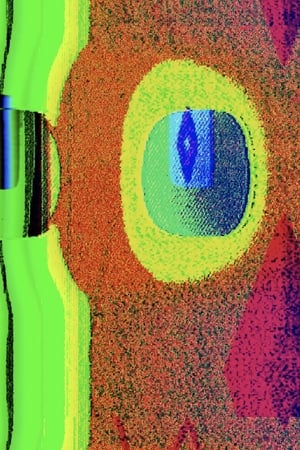
"Frozen Jumper" begins in hit-and-run style with a pulsating textural noise. Flickering, nearly rectangular patterns join on the image plane, at first in black-and-white, bringing to mind the sprocket holes in celluloid film and, not least due to the lack of geometric precision, giving the impression of a pre-digital origin. As the soundtrack rattles on in a minimalistic way, the pattern’s twitchy dance is submerged in various warm hues such as yellow, pink, light green and light blue, which in a different rhythm and to a more agreeable music could be perceived as the signature of slightly retro psychedelia.
As technology accelerates, our species' collective imagination of the future grows ever more kaleidoscopic. We are all haunted by temporal distortion, perhaps no more than when we attempt to remember what the future looked like to our younger selves. As the mist of time devours our memories, the future recedes; each of us burdened by the gaping mouth of entropy. Yet, emerging technology provides a glimmer of hope; transhumanism promises a future free from mortality, disease and pain. Does our salvation lie in digital simulacra? We're here to sell you the answer to that question, for the low, low price of four hundred and seventy seconds.
A coming-of-age story about a high-school girl who wants to use magic, featuring the 11-member experimental band Vampillia
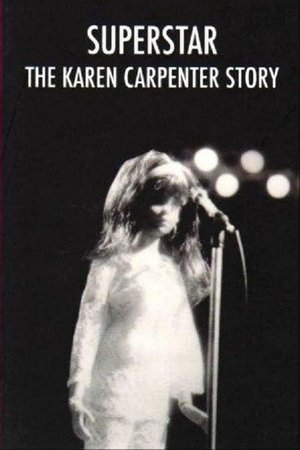
The final 17 years of American singer and musician Karen Carpenter, performed almost entirely by modified Barbie dolls.
A film that places the bright and dark sides of life close together. From an understatement beginning, the movie drives up to an ecstatic highlight with a love act between two young people. The orgasm becomes an enormous image flow into the crematorium's death machine.