The final 17 years of American singer and musician Karen Carpenter, performed almost entirely by modified Barbie dolls.
James Sumner directs and animates the entire Dirty Projectors’ The Getty Address.
A film in five different sections, each containing a different soundscape by Ostrowski. Hand painted film, intense exposure, morphing textures and shapes into a seamless whole; geometrical games sabotaging themselves; and the incessant lure of the abstract paint drift. The soundscapes, of course, build up like fountains of picture, oscillating between contemplative sculptures with electronically manipulated strings and harsh noise attacks on our senses. Despite the use of sound as a central filmic element, Cyanonide stands as a proof of the enduring influence of Brakhage on american avant-film.
Scroll][Stop{{Scroll}}Stop/}{~Scrollllllll
'It was in San Francisco at a punk festival. I was already high and the air was so thick in the rooms that you could cut it with a knife. I had a photograph camera with me; I stood in a corner of the entrance hall and took 36 pictures on slide film. At home I put the slides into a slide projector. I took out the lens and filmed the slides by filming directly from the projector - using single frames according to a certain plan.'
WHAT YOU MEAN WE is a surreal short film by experimental artist Laurie Anderson.
Wax and wane until there is naught but boring pain.
Lines align during acclimated apexes, shadowy vertices, and bright burrows.
A coming-of-age story about a high-school girl who wants to use magic, featuring the 11-member experimental band Vampillia
A young girl’s fiery dance, accidentally caught on 16 mm film in the street. The viewer is confronted by the sacrificial and the passionate, the strong and the fragile, the fleeting and the eternal. These are the faces of femininity.
Performance video about a holiday romance at St Ives, Cornwall.
A film that places the bright and dark sides of life close together. From an understatement beginning, the movie drives up to an ecstatic highlight with a love act between two young people. The orgasm becomes an enormous image flow into the crematorium's death machine.
Shortly before his death, Romitelli together with his friend Paolo Pachini and the poetess Kenka Lèkovich, resurrected the dream of a total scenic art (a furnace of sensations, they called it, an_ initiation rite_) in the manner of the Futurists: rhythms and gleams of light striking metals (for the video part), poems in iron and chrome singing of fusion with matter (Kenka Lekovich), acoustic/electric music highly amplified, filtered, spatialised, in as artificial a manner as possible. An Index of Metals bears vigorous witness to this determination to go beyond: sizzling orchestration, electric and psychedelic; a voice which plays on effects, murmurs with reverb, cackles into a megaphone, screams like a pop star; and an electric guitar score of a kind that no ‘serious’ composer has ever written, sliding across an infinite range of tones with a lightness of touch and blurring of contours.
As technology accelerates, our species' collective imagination of the future grows ever more kaleidoscopic. We are all haunted by temporal distortion, perhaps no more than when we attempt to remember what the future looked like to our younger selves. As the mist of time devours our memories, the future recedes; each of us burdened by the gaping mouth of entropy. Yet, emerging technology provides a glimmer of hope; transhumanism promises a future free from mortality, disease and pain. Does our salvation lie in digital simulacra? We're here to sell you the answer to that question, for the low, low price of four hundred and seventy seconds.
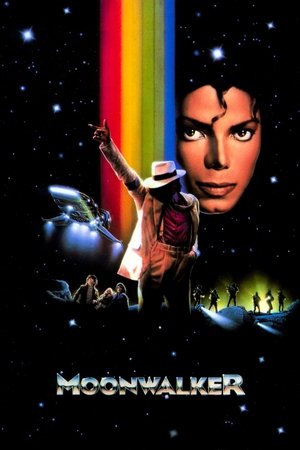
This fantastical movie inspired by the music of Michael Jackson features imaginative interpretations of hit tracks from the iconic 1987 album “Bad”.
An ambient representation of depression with a slowly fading score building towards an uncertain climax.
The film takes us through the working day of protagonists, factory workers. Their basic working tool is their body, ready to execute strenuous manual tasks. Day after day the same story, the same faces, the same spaces, the same tasks. Feeling confined, they seek a sheet anchor, a way out, an escape. They venture into the unknown, dance, drift and float in the air.
Global Groove was a collaborative piece by Nam June Paik and John Godfrey. Paik, amongst other artists who shared the same vision in the 1960s, saw the potential in the television beyond it being a one-sided medium to present programs and commercials. Instead, he saw it more as a place to facilitate a free flow of information exchange. He wanted to strip away the limitations from copyright system and network restrictions and bring in a new TV culture where information could be accessed inexpensively and conveniently. The full length of the piece ran 28 minutes and was first broadcasted in January 30, 1974 on WNET.
Adopting mainly hand contact printing with photographic enlarger, «Metaphysics of sound» started from September of 2006 and completed in July of 2007. With a 35mm soundtrack image, I made a hand-drawn soundtrack on the 16mm film strip. The sounds were made either by directly contact printing the 35mm sound tracks or collaging the scratch images. According to pattern of sound on the 20% blank of 16mm film strip (normally used as space for optical recording), I edited whole image and made structure of film. Hence the margin is a where image is sound, and vice versa. Later, I studied the sound patterns which varied according to the kinds of images used or the concentration of the image, and made various attempts at rearranging the structure of the sound with the image.
Return to 'burn' only to find out you're already in that urn.