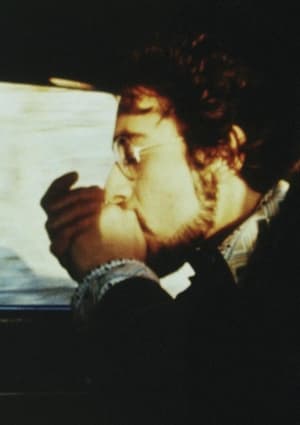
Part of a collection of restored early works by Nam June Paik, the haunting Beatles Electronique reveals Paik's engagement with manipulation of pop icons and electronic images. Snippets of footage from A Hard Day's Night are countered with Paik's early electronic processing.
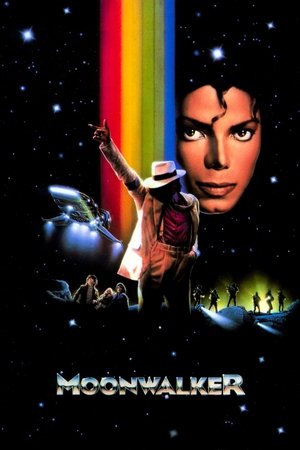
This fantastical movie inspired by the music of Michael Jackson features imaginative interpretations of hit tracks from the iconic 1987 album “Bad”.
Global Groove was a collaborative piece by Nam June Paik and John Godfrey. Paik, amongst other artists who shared the same vision in the 1960s, saw the potential in the television beyond it being a one-sided medium to present programs and commercials. Instead, he saw it more as a place to facilitate a free flow of information exchange. He wanted to strip away the limitations from copyright system and network restrictions and bring in a new TV culture where information could be accessed inexpensively and conveniently. The full length of the piece ran 28 minutes and was first broadcasted in January 30, 1974 on WNET.
A short film recounting the travels of a lonely astronaut confronted by the unknown. Unfolding as a mystery, it becomes a carefully subtle, autobiographical examination of the feeling of loneliness and the existential issue of not understanding life on earth and ones place among it.
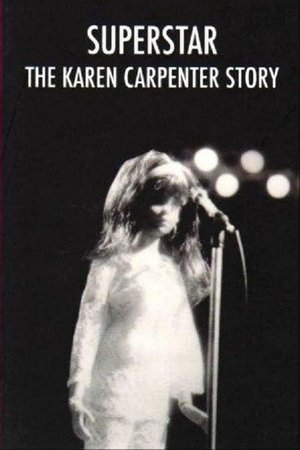
The final 17 years of American singer and musician Karen Carpenter, performed almost entirely by modified Barbie dolls.
Strings together what's strung together (please use yr tether).
Don't ask me why, but I feel we're about to cry trying.
Say Om as you reach home only to realize you never really left/stopped saying Om.
Centrist revelations abound among repetitions & revisitings.
A visual interpretation of the poem by E.E. Cummings about the life cycle of a townspeople and of one ignored couple.
Hand painted directly onto film stock by Margaret Tait, this film features animated dancing figures, accompanied by authentic calypso music.
An experimental music ensemble is recording an album. They want a very specific sound: the sound of thick air. The sound engineer struggles to understand and to find that sound. A tale of sleepless nights and loud music, a noise-injected collage composed of diaristic footage, a found narrative (memories of a popular 60s band), original music and field recordings.
An intimate documentary portrait of world-class improvisational and traditional pianist Mike Garson as he tours, performs, and teaches.
A huge, run-down apartment in Berlin Mitte. Two women and a man, rehearsals for a movie about love and sex, that will never be shot. Acting and reality mingle into a dangerous mélange.
Four types of visual interpretation of four songs by Karol Szymanowski. Polish words by Julian Tuwin, English translation by Jan Sliwinski.
The film is an allegory in which the attempt is made to show the inner process of movement of the composer's soul at the time of the birth of music.
A live performance film capturing an intimate concert by composer, pianist and music producer Ryuichi Sakamoto in New York City. The performance marked the first public unveiling of Sakamoto’s new opus, async, hailed as one of the best albums of 2017 by Rolling Stone and Pitchfork.
Cremaster 5 is a five-act opera (sung in Hungarian) set in late-ninteenth century Budapest. The last film in the series, Cremaster 5 represents the moment when the testicles are finally released and sexual differentiation is fully attained. The lamenting tone of the opera suggests that Barney invisions this as a moment of tragedy and loss. The primary character is the Queen of Chain (played by Ursula Andress). Barney, himself, plays three characters who appear in the mind of the Queen: her Diva, Magician, and Giant. The Magician is a stand-in for Harry Houdini, who was born in Budapest in 1874 and appears as a recurring character in the Cremaster cycle.
Dislocation in time, time signatures, time as a philosophical concept, and slavery to time are some of the themes touched upon in this 9-minute experimental film, which was written, directed, and produced by Jim Henson. Screened for the first time at the Museum of Modern Art in May of 1965, "Time Piece" enjoyed an eighteen-month run at one Manhattan movie theater and was nominated for an Academy Award for Outstanding Short Subject.
An unnamed passer-by is forced to trace a circular route inside an abandoned tram station, facing loss and time. The broken walls act as a channel, transmitting fragmentary, blurred and analogical memories.