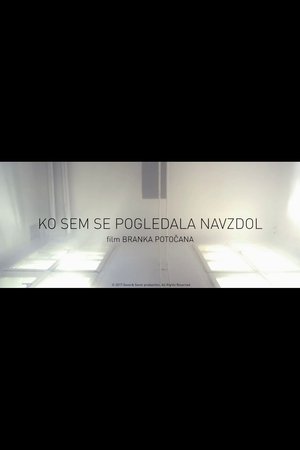
The film takes us through the working day of protagonists, factory workers. Their basic working tool is their body, ready to execute strenuous manual tasks. Day after day the same story, the same faces, the same spaces, the same tasks. Feeling confined, they seek a sheet anchor, a way out, an escape. They venture into the unknown, dance, drift and float in the air.
An unnamed passer-by is forced to trace a circular route inside an abandoned tram station, facing loss and time. The broken walls act as a channel, transmitting fragmentary, blurred and analogical memories.
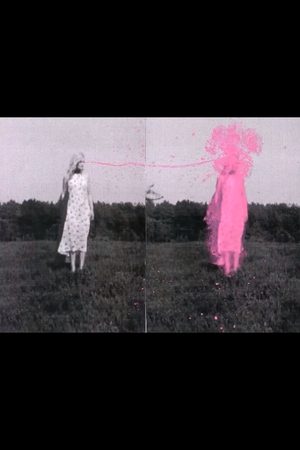
In the unearthly world of E, hand-made meets hi-tech as characters appear to consume one another with their own, trafficked likenesses. Constructing her work entirely from laser-printed film stills (approximately 770 in total) lifted from Niklaus Schilling’s 1972 horror film, Nachtschatten, Zemlianski rips, layers, and paints these images with pastels and charcoal, then scans them back together into a bracing animation set to the eponymous song (“E”) by the Berlin-based band, Comb.
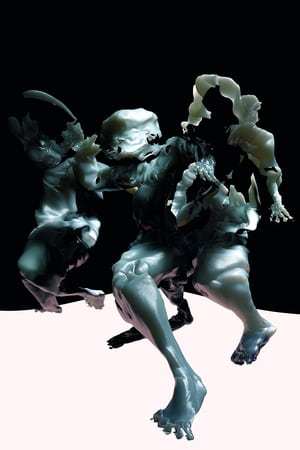
TRAUMA is a collaborative film project by Jesse Kanda and Arca first partially exhibited at MoMA PS1 at the end of 2013. The film follows a nonlinear narrative about the death of a salaryman, a drunk driving infant and takes place within a subconscious world. TRAUMA's score will span through Arca's existing and future works.
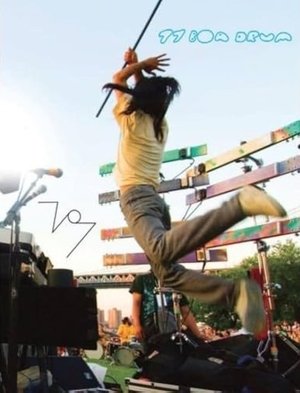
On July 7th, 2007 at 7:07 PM, Japanese group Boredoms, orchestrated a performance by 77 drummers at the Empire-Fulton Ferry State Park in Brooklyn, New York.
To the idly meditating musician received a call from his distant friend with a proposal to write a song about the untimely departed Lady Diana.
Four types of visual interpretation of four songs by Karol Szymanowski. Polish words by Julian Tuwin, English translation by Jan Sliwinski.
A visual interpretation of the poem by E.E. Cummings about the life cycle of a townspeople and of one ignored couple.
An ambient representation of depression with a slowly fading score building towards an uncertain climax.
Eye-popping digital moving image work with an equally arresting soundtrack from noise music heavies.
Hand painted directly onto film stock by Margaret Tait, this film features animated dancing figures, accompanied by authentic calypso music.
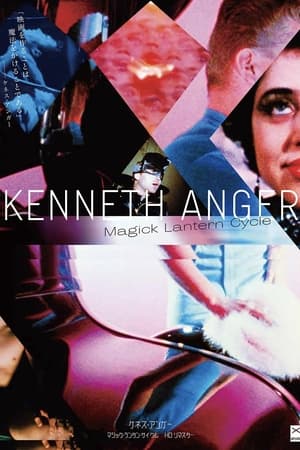
Cinematic magician, legendary provocateur, and author of Hollywood Babylon, Kenneth Anger was a unique figure in post-war American culture. His iconic short films are characterised by a mystical-symbolic visual language and phantasmagorical-sensual opulence that underscores the medium’s transgressive potential. Anger’s work fundamentally shaped the aesthetics of 1960s and 1970s subcultures, the visual lexicon of pop and music videos and queer iconography. These nine films form the basis of Anger’s reputation as one of the most influential pioneers of avant-garde film and video art. Fireworks, 1947, 14 min Puce Moment, 1949, 6 min Rabbit's Moon, 1950/1971, 16 min Eaux d'Artifice, 1953, 13 min Inauguration of the Pleasure Dome, 1954, 37 min Scorpio Rising, 1964, 28 min Kustom Kar Kommandos, 1965, 3 min Invocation of My Demon Brother, 1969, 11 min Lucifer Rising, 1981, 27 min
The film is an allegory in which the attempt is made to show the inner process of movement of the composer's soul at the time of the birth of music.
A film about friendship and the occasional loneliness.
A short film recounting the travels of a lonely astronaut confronted by the unknown. Unfolding as a mystery, it becomes a carefully subtle, autobiographical examination of the feeling of loneliness and the existential issue of not understanding life on earth and ones place among it.
Roda Viva Roda Brasil
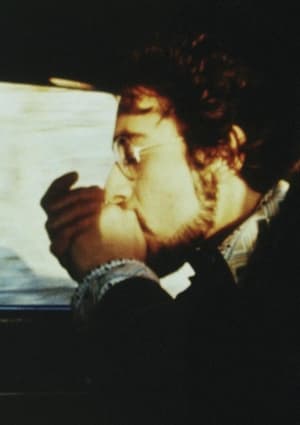
Arguably Larry Gottheim’s most exuberant experiment in the single-shot, single-roll format (and his first with a soundtrack), HARMONICA trains the camera on a friend improvising a tune in the backseat of a moving car. Held out the window, the harmonica becomes a musical conduit for the wind, while Gottheim's film transforms before our eyes into a playful meditation on wrangling the natural elements into art. - Max Goldberg
'It was in San Francisco at a punk festival. I was already high and the air was so thick in the rooms that you could cut it with a knife. I had a photograph camera with me; I stood in a corner of the entrance hall and took 36 pictures on slide film. At home I put the slides into a slide projector. I took out the lens and filmed the slides by filming directly from the projector - using single frames according to a certain plan.'
Wax and wane until there is naught but boring pain.
Lines align during acclimated apexes, shadowy vertices, and bright burrows.